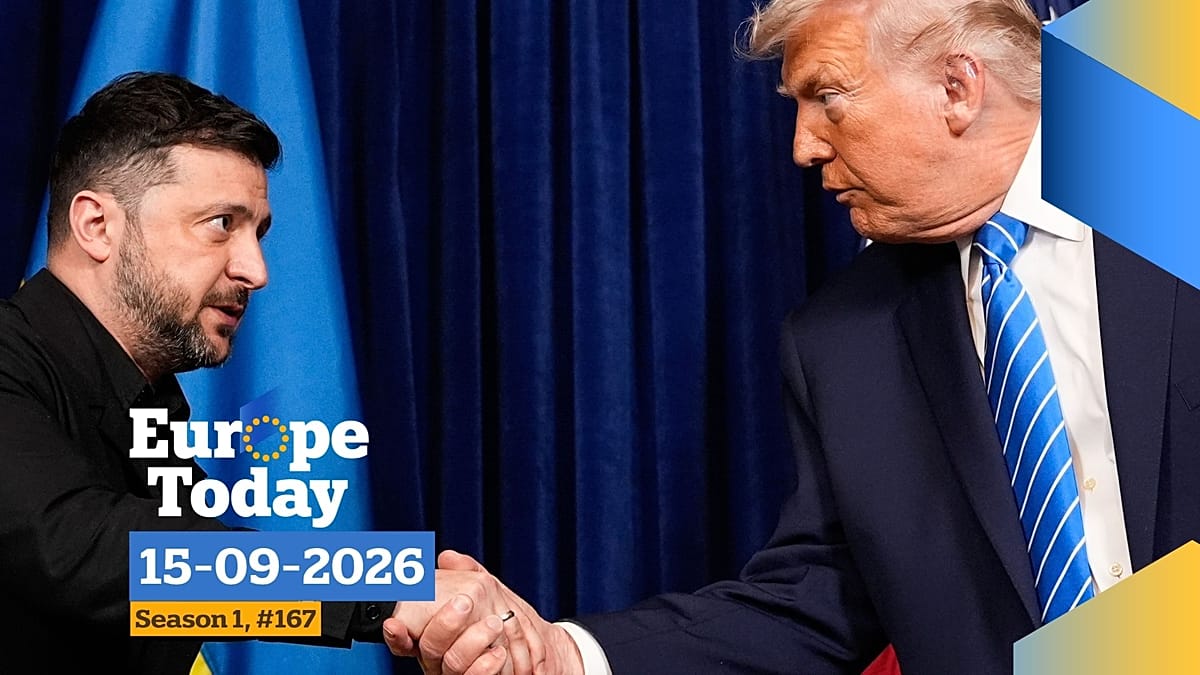
Global markets were rattled on Tuesday as leading figures in artificial intelligence called for a temporary halt to rapid development, sending tech shares tumbling. The selloff came as US President Donald Trump announced that Ukraine and Russia had reached an agreement to cease strikes on each other's energy infrastructure, a claim that, if confirmed, could help stabilise fuel prices worldwide.
Speaking to reporters, Trump said the two warring nations had agreed to pause attacks on energy targets, though neither Kyiv nor Moscow has officially confirmed the deal. The announcement follows a week of heightened tensions, with Poland and Ukraine condemning a Russian strike on a train near the border as a dangerous escalation. European energy markets reacted cautiously, with benchmark gas prices dipping slightly before recovering.
AI slowdown rattles investors
The tech sector faced its worst day in months after a group of prominent AI researchers and executives published an open letter urging a six-month moratorium on the training of systems more powerful than GPT-4. The letter, signed by figures from leading labs and universities, warned of "profound risks to society and humanity." Investors, already nervous about high valuations, responded by dumping shares in major tech companies, wiping hundreds of billions of dollars off global markets.
European tech hubs, from Berlin to Stockholm, felt the ripple effects. The DAX and CAC 40 both closed lower, while the tech-heavy Nasdaq suffered its steepest decline since 2022. Analysts said the selloff reflected growing uncertainty about the sustainability of the AI boom, which has driven much of the recent market rally.
State of the Union preview
Amid the market turmoil, European Commission President Ursula von der Leyen is preparing to deliver her annual State of the Union address tomorrow. The speech is being billed as the most consequential of her mandate, with elections looming across the bloc next year. Von der Leyen is expected to outline priorities on defence, competitiveness, and the green transition, as well as address the challenges posed by the war in Ukraine.
In an interview with Europe Today, Commission Executive Vice-President Roxana Mînzatu said the address would "set the tone for the next phase of European integration." She emphasised the need for the EU to bolster its strategic autonomy, particularly in energy and technology, while maintaining its commitment to climate goals.
Brando Benifei, a Member of the European Parliament from Italy's Socialists & Democrats, struck a more cautious note. "The Commission must deliver on its promises," he said. "Citizens are watching, and they expect concrete action, not just rhetoric."
Middle East tensions
In the Middle East, a series of attacks by Yemen's Houthi rebels wounded more than a dozen civilians in southern Saudi Arabia, according to reports from Doha. The strikes, which targeted civilian infrastructure, have raised fears of a broader regional conflict. European diplomats have called for restraint, urging all parties to return to diplomatic channels.
The developments come as twelve EU states urge the bloc to bolster its Arctic role amid growing Russian and US pressure, highlighting the continent's widening security concerns. Meanwhile, Latvia's Prime Minister said the EU is finally heeding Baltic warnings on Russia, a sign that the bloc's eastern members are gaining influence in shaping policy.
As the day ended, European leaders were digesting the twin shocks of market volatility and geopolitical uncertainty. The coming weeks will test the EU's ability to navigate a rapidly changing global landscape, from the war in Ukraine to the AI revolution.