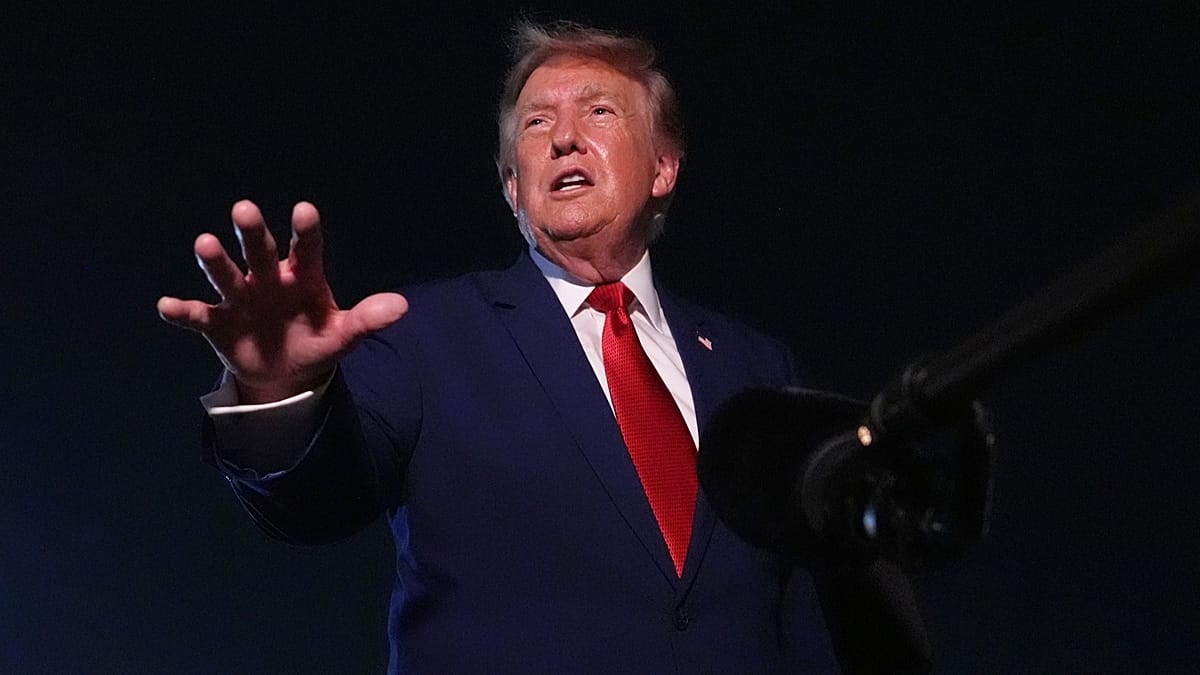
US President Donald Trump has intensified his criticism of Iran's execution of protesters, alleging that Tehran can no longer afford to fund its armed forces and is confronting a humanitarian catastrophe. In a post on his Truth Social platform on Tuesday, Trump wrote that the "failing Islamic Republic of Iran" is withholding pay from large parts of its military while simultaneously killing protesters "at levels not seen before." He described the situation as "a humanitarian crisis of epic proportions" that "must be stopped, now."
Trump's remarks come amid growing international alarm over Iran's use of capital punishment to suppress dissent. Earlier this month, 32 countries, including France, the UK, and Canada, issued a joint statement condemning the Islamic Republic's execution of protesters and calling for an immediate halt. The statement urged Tehran to release those arbitrarily detained and to end what it described as the use of executions to "silence dissent."
The United Nations High Commissioner for Human Rights, Volker Türk, has also voiced concern, stating that Iran is using executions to "create fear." According to Türk, at least 56 people have been executed on national security-related charges since 19 March 2026, including 27 linked to the January protests. He added that more than 100 others are currently at risk of execution.
The Abdorrahman Boroumand Centre, an Iranian human rights organisation based in Washington, has documented at least 901 executions in Iran during the first seven months of 2026. Of these, 56 were on political or national security charges, and at least 29 were connected to the January protests.
Escalating crackdown since January protests
The January 2026 protests erupted after the collapse of the Iranian rial the previous month and quickly spread to more than 180 cities. Security forces responded with a violent crackdown on 8 and 9 January, killing thousands. Iran's Supreme Council of National Security has acknowledged a death toll exceeding 3,000, while the UN Special Rapporteur on Iran puts the figure at at least 5,000. Human rights groups and insiders in Iran believe the actual number of those killed may have surpassed 32,000.
Trump has repeatedly intervened on behalf of detained protesters. In January, he warned of imminent executions and said the United States would take "very severe action" if they proceeded. Days later, he claimed that reliable sources had informed him that the executions of more than 800 detained protesters had been halted—a claim Iranian officials did not confirm.
In April, Trump said that eight Iranian women shown in a photograph circulating online had been sentenced to death and called for their release. The following day, he said they had been pardoned. However, a Euronews Persian investigation, citing two independent human rights organisations, found that only one of the eight women, Beita Hemmati, had actually received a death sentence.
Last month, Trump reposted material about the execution of protesters and, reacting to the killing of Gol-Mohammad Mohammadi, a 23-year-old demonstrator, called the Islamic Republic "barbaric."
The escalating situation in Iran has drawn attention across Europe, where governments are grappling with how to respond. The joint statement from 32 countries, which included several European nations, reflects a broader concern about human rights abuses in Iran. European leaders have also been vocal in their criticism, with some calling for targeted sanctions against those responsible for the executions.
As the international community watches, the question remains whether diplomatic pressure will be enough to halt Iran's use of the death penalty against protesters. For now, the executions continue, and the humanitarian crisis deepens.