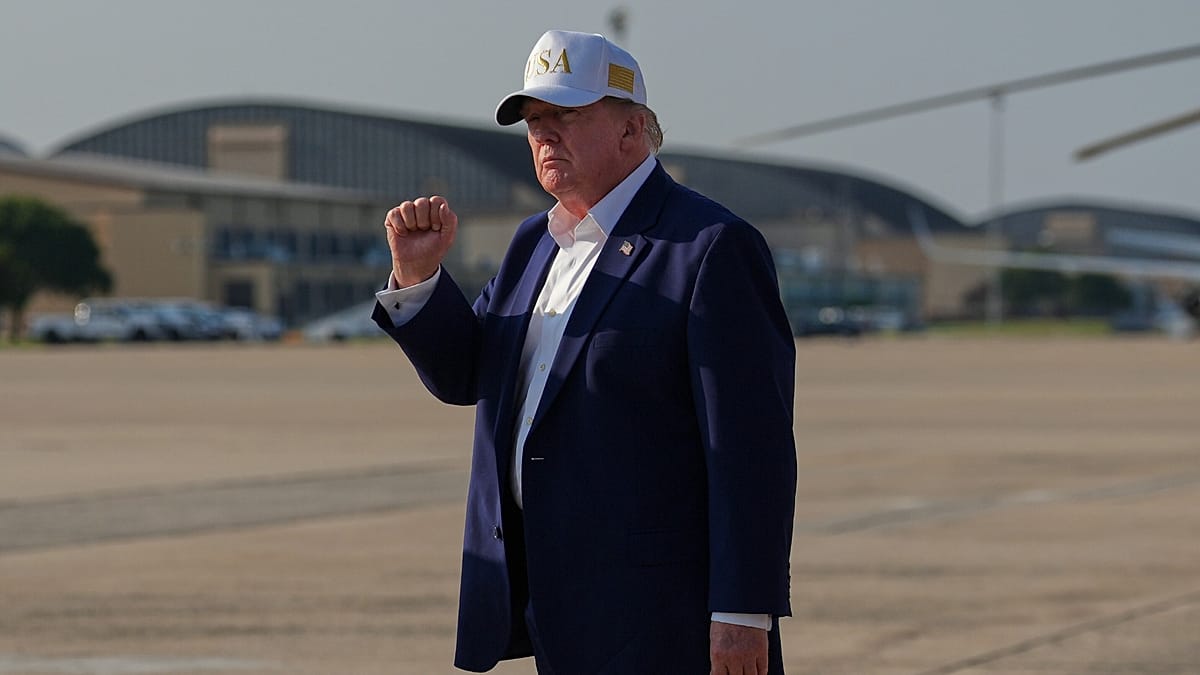
US President Donald Trump has said he will demand compensation from Iran as part of any future peace negotiations, adding a new layer of complexity to already stalled talks over the conflict and the reopening of the Strait of Hormuz. In a series of posts on his Truth Social platform on Monday, Trump said his demands would cover not only damages from the current war but also Iranian attacks on US targets over the past two decades, as well as payments to families of Iranian protesters killed by authorities over the last 50 years.
Trump's announcement came in direct response to Tehran's insistence that US payment of war reparations is a precondition for any resolution. The US president said he was likewise demanding compensation, and that these claims would be put "firmly into any, and all, future negotiations" with Iran. He also said the Islamic republic should be held responsible for deaths and damage it caused in Lebanon, Syria, Yemen and Gaza.
The new demands risk pushing a quick agreement further out of reach. Negotiations on ending the war and reopening the Strait of Hormuz have been deadlocked for weeks, with Iran demanding an end to the US blockade of its ports and the lifting of sanctions on its oil industry. The blockage of the strait has sent fuel prices soaring and rattled global markets, putting pressure on Trump ahead of the November midterm elections.
Mixed signals from Washington
Trump's latest statements follow a pattern of threats and retreats. Last week he warned he would hit Iran "very hard," potentially targeting civilian infrastructure, only to pull back and hint that a peace deal was near. Over the weekend, he said he was "low-keying" his approach to the conflict, suggesting he was prepared to let economic pressure mount rather than launch further military strikes.
According to digital media outlet Axios, Trump did not express frustration with Iran's delaying tactics in an interview published on Sunday. That measured tone contrasts with his combative social media posts, which have become a regular feature of his handling of the crisis.
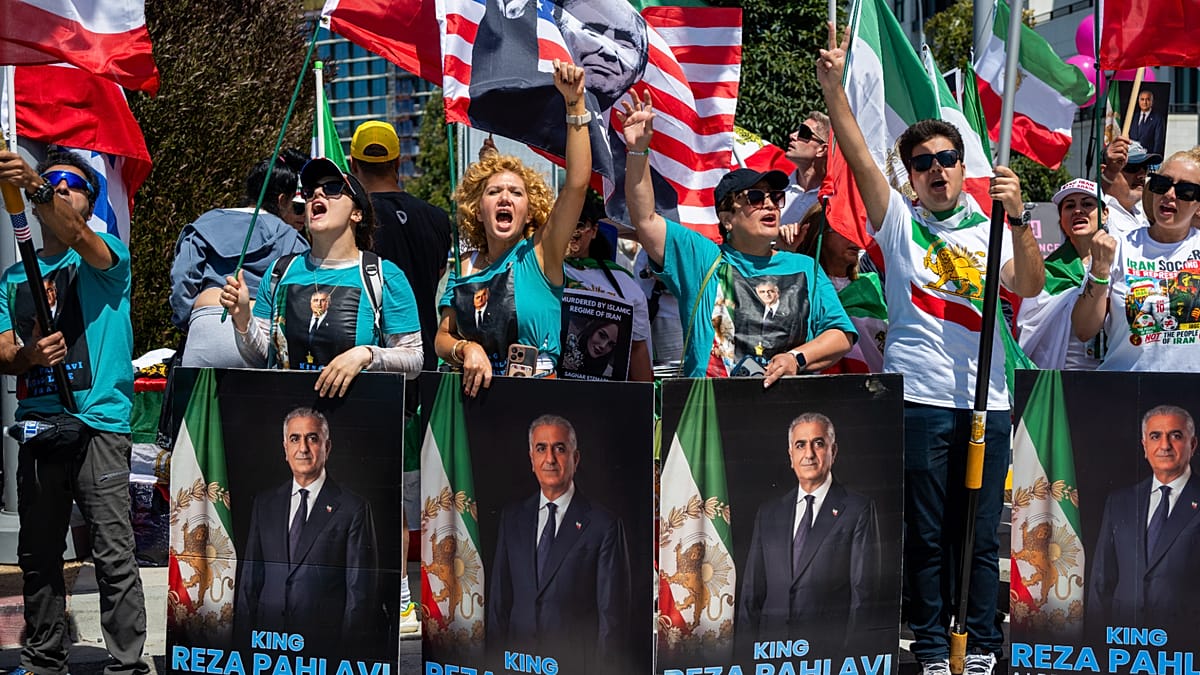
In his Monday post, Trump referenced the bombing of the USS Cole in 2000, an attack he has previously said Iran was "probably involved" in. His demand for compensation also extends to Iranian protest movements, a move that analysts say could be aimed at undermining Tehran's legitimacy while appealing to domestic audiences.
Iran's military reshuffle
Meanwhile, Iran's supreme leader, Mojtaba Khamenei, has appointed Revolutionary Guards general Ali Abdollahi as chief of staff of the armed forces, and Brigadier General Ahmad Vahidi as commander-in-chief of the Islamic Revolutionary Guard Corps, with the rank of major general. The appointments were announced on Khamenei's website on Monday.
Abdollahi previously led the Khatam al-Anbiya, Iran's inter-branch central military command tasked with coordinating operations. He has issued bellicose threats throughout the war, warning regional neighbours earlier this month that "any country serving as a defensive shield for criminal and aggressive America will be engulfed by the flames of war."
These are Khamenei's first senior military appointments since he became supreme leader early in the war, following the death of his father in US-Israeli strikes. The reshuffle signals a consolidation of hardline control over Iran's military as the standoff with Washington continues.
The combination of Trump's compensation demands and Iran's military appointments suggests that both sides are digging in, even as the economic costs of the conflict mount. For European observers, the prolonged closure of the Strait of Hormuz has direct implications for energy prices and supply chains across the continent. The EU has been pressing for a diplomatic solution, but with Washington and Tehran at odds over preconditions, a breakthrough remains elusive.
As the war drags on, the human and economic toll is growing. The US labour market is already feeling the strain, with payrolls falling by 23,000 in July, partly due to the conflict's impact on hiring. European leaders are watching closely, aware that a wider regional conflagration would have severe consequences for the continent's security and economy.