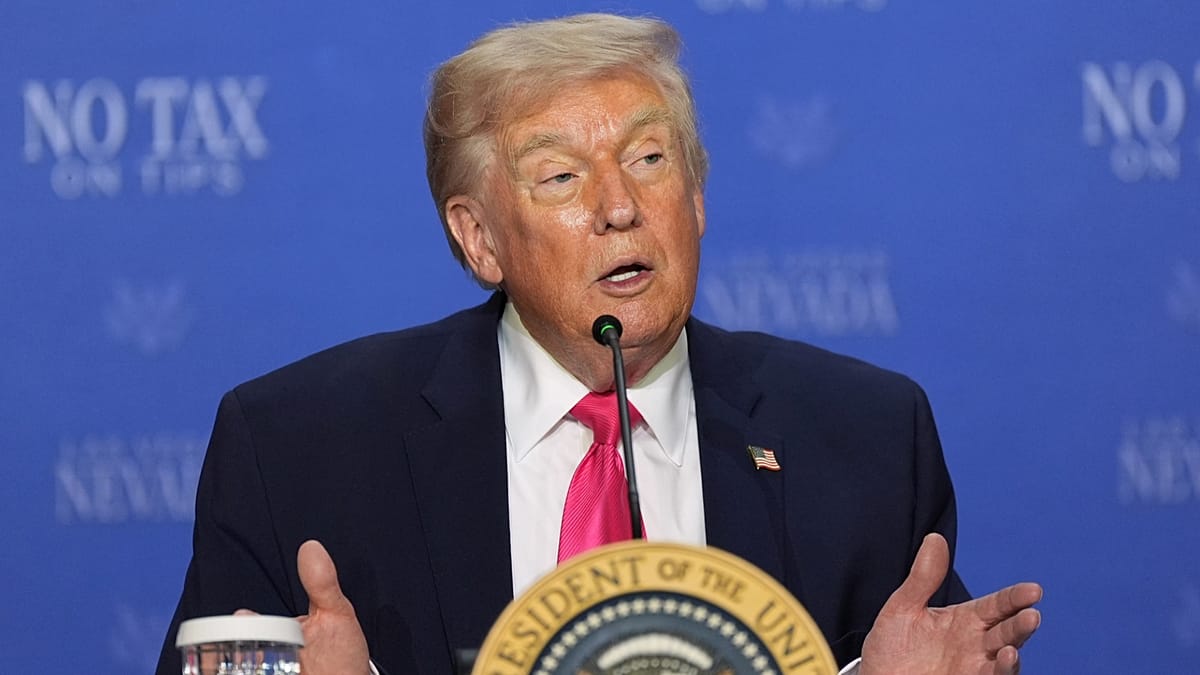
Former US President Donald Trump has targeted UK energy policy, labelling the country "crazy" for not aggressively pursuing new oil and gas extraction in the North Sea. In a post on his Truth Social platform, Trump argued that the UK is better situated for such drilling than Norway, which he claims sells its resources to Britain at inflated prices. "Drill, baby drill! It's absolutely crazy that they don't, and no more windmills!" he wrote, reigniting a transatlantic debate on energy security and costs.
The Geopolitical and Domestic Pressure
The critique arrives amid heightened global energy tensions. Iran's continued control over the Strait of Hormuz, a vital chokepoint for roughly one-fifth of global oil shipments, has amplified calls in some quarters for nations to boost domestic fossil fuel production. In the UK, Chancellor Rachel Reeves has stated the government is working "intensely" to facilitate more drilling through so-called "tie-back sites" adjacent to existing fields. This follows an International Monetary Fund warning that the UK, as a major energy importer, could be among the advanced economies hardest hit by prolonged conflict in the Middle East. This situation contributes to broader challenges for European leaders facing a critical energy reset.
The political pressure to reconsider the UK's 2023 ban on new exploration licences is palpable. However, the practical realities of the North Sea's reserves present a starkly different picture from the one Trump paints.
The Diminishing Returns of the North Sea
Decades of extraction have significantly depleted the basin. Since 1975, approximately 4.1 billion tonnes of oil have been recovered. The North Sea Transition Authority (NSTA) projects only another 218 million tonnes will be produced from existing fields by 2050. Analysis by the Energy and Climate Intelligence Unit (ECIU) suggests that even with new drilling, only an additional 74 million tonnes might be extracted—a mere 1.7% of the total expected yield from 1975 to 2050. In essence, over 93% of the basin's likely producible oil and gas has already been taken.
Campaign group Uplift conducted a separate analysis focusing on energy security. It found that opening major new fields would do little to reduce Britain's reliance on imports. For instance, the Jackdaw gasfield would displace just 2% of current UK gas imports, while the primarily oil-bearing Rosebank field would offset only about 1%. "This would still leave the UK almost entirely dependent on supplies from Norway and other nations," the group concluded.
Furthermore, the notion that increased domestic production lowers consumer bills is economically flawed. Oil and gas prices are set on global markets, and resources extracted from UK waters can be sold abroad to the highest bidder. There is no mechanism guaranteeing British consumers a discount.
The Renewable Alternative and European Context
Concurrently, the push for homegrown renewables is accelerating, partly as a strategic response to geopolitical volatility. The UK's electricity grid is being upgraded to handle more power from remote solar and wind farms. In a significant milestone, renewables generated a record 52.5% of the UK's electricity in 2025, the second consecutive year exceeding the 50% mark. In March, wind energy generation alone hit a new high of 23,880 megawatts, enough to power approximately 23 million homes.
Research from the University of Oxford provides a direct cost comparison. It found that a UK fully powered by renewable energy could save households up to £441 (€510) annually on energy bills. In contrast, maximising oil and gas extraction from the North Sea would save households only between £16 (€19) and £82 (€95) per year—and that saving relies on the government redistributing tax revenues from the industry to offset bills. Dr. Anupam Sen, co-author of the analysis, called the idea that "draining" the North Sea would significantly cut bills or boost security "sheer fantasy."
This energy debate is not confined to Britain. Earlier this year, the UK joined nine other European nations in a landmark €9.5 billion pledge to develop 100GW of joint offshore wind capacity in the North Sea by 2050—enough to power around 134 million homes. This collective ambition underscores a broader European strategic shift, even as the continent grapples with the immediate pressures of global conflicts testing its green ambitions. The economic ripple effects are already being felt, with UK inflation rising partly due to energy price surges linked to Middle East instability.
Trump's intervention, while politically charged, highlights a fundamental tension in European energy policy: the balance between short-term fossil fuel security and long-term renewable transition. The data from the North Sea suggests that, for the UK, the potential benefits of further drilling are marginal at best, while the path of renewables offers greater economic and strategic dividends. The debate continues as European nations navigate an unstable global landscape.