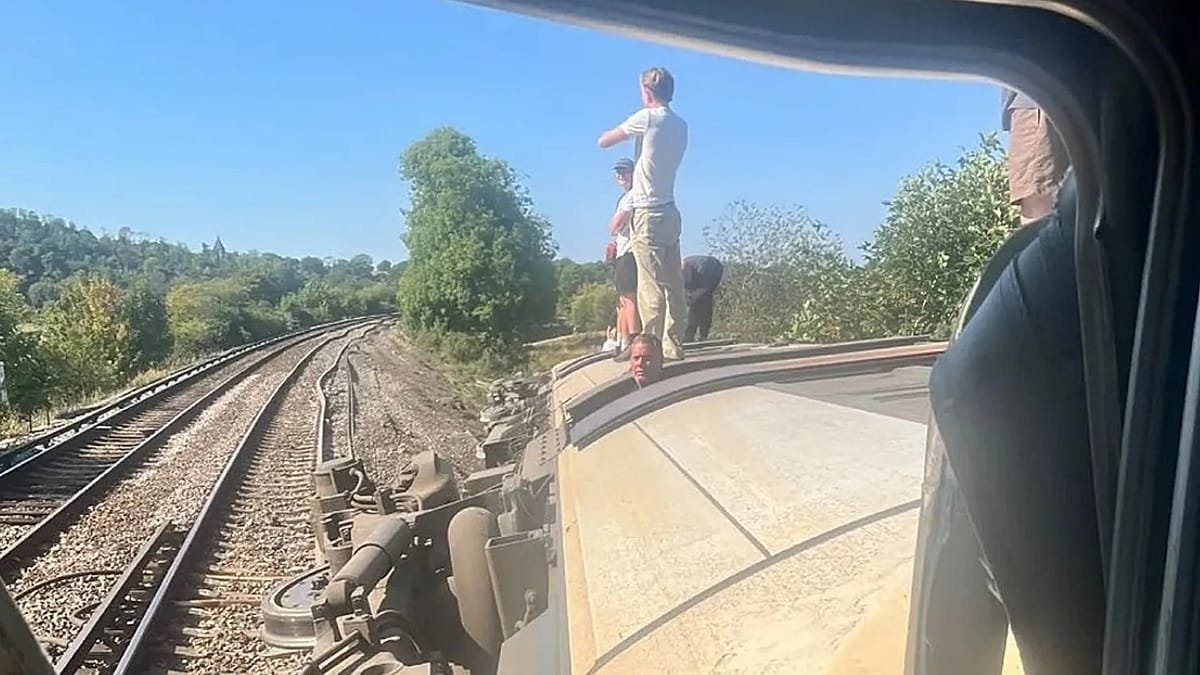
A busy commuter train heading south from London derailed on Thursday afternoon near the town of Lewes in East Sussex, leaving two passengers with serious injuries and nine others hurt, according to emergency services.
The South East Coast Ambulance Service confirmed that two patients were taken to hospital with serious injuries, while nine others sustained less serious injuries. The train, operated by Southern Rail, had departed from London Victoria and left the tracks shortly before 4:00 pm local time, with around 150 passengers on board.
Ian Drummond-Smith of the British Transport Police said a "major incident" had been declared, but stressed that all passengers had been "safely evacuated." Footage from the scene showed at least three overturned carriages and a large emergency response, including paramedics and police.
Investigation under way
The cause of the derailment remains unknown. Investigators from the Rail Accident Investigation Branch are expected to examine the track and the train's systems in the coming days. Southern Rail, which connects London with parts of Surrey, Sussex, and Kent, said it was cooperating fully with the authorities.
The incident is a reminder of the fragility of Britain's rail infrastructure, which has faced scrutiny in recent years over ageing equipment and funding pressures. It also comes amid broader concerns about rail safety across Europe, where several countries are investing heavily in modernising their networks.
While the immediate focus is on the injured and the investigation, the disruption will affect thousands of commuters who rely on the London-to-Brighton line, one of the busiest routes in the southeast. Replacement bus services have been arranged, but delays are expected to continue into the evening.
Local MP Maria Caulfield said she was "deeply concerned" by the incident and urged passengers to follow safety advice. The mayor of Lewes, Councillor James MacCleary, praised the emergency services for their swift response.
This derailment follows a similar incident in the Netherlands earlier this year, highlighting the ongoing challenges of maintaining safe rail travel across Europe. In the UK, the government has pledged significant investment in rail upgrades, but critics argue that more needs to be done to ensure passenger safety.
As the investigation unfolds, questions will be asked about the condition of the track and the train's maintenance history. For now, the priority remains the recovery of the injured and the restoration of normal service on a line that is vital to the region's economy.