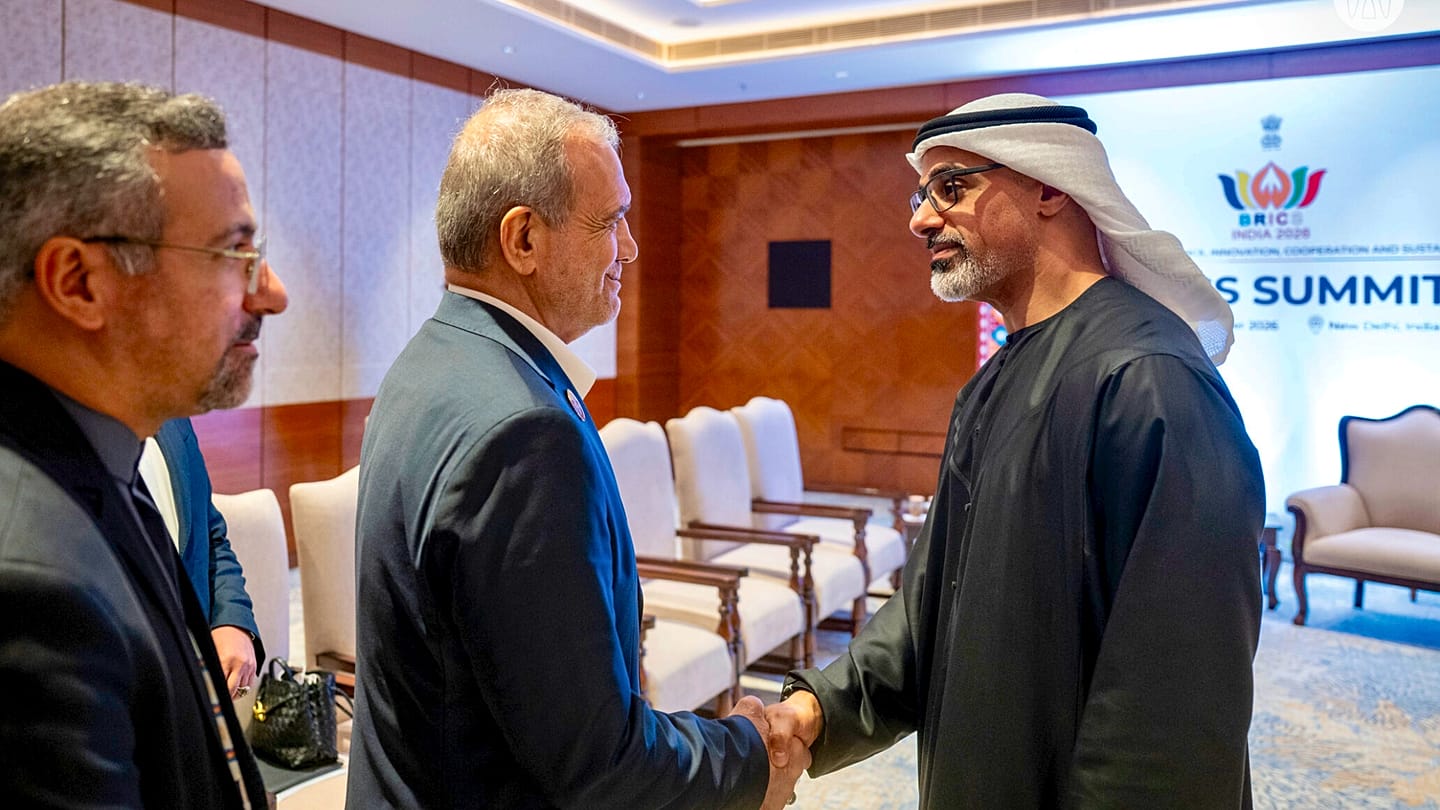
In a significant diplomatic development, the leaders of the United Arab Emirates and Iran held their first face-to-face meeting since the outbreak of the Gulf crisis, on the sidelines of the BRICS summit in New Delhi. The encounter, which took place amid a packed agenda dominated by wars and shifting alliances, marks a potential thaw in relations between two regional powers that have been at odds for months.
The talks come after the UAE suspended trade and financial dealings with Iran in August, a move that underscored the depth of the rift. Emirati officials have repeatedly stressed that rebuilding trust with Tehran would be a long and arduous process, describing it as "a mountain to climb" in the wake of Iranian attacks on Gulf countries. The meeting in the Indian capital, therefore, carries symbolic weight far beyond a simple exchange of pleasantries.
A delicate balancing act
For the UAE, the meeting represents a careful balancing act. On one hand, Abu Dhabi has aligned itself with Western and Gulf partners in condemning Iranian aggression and has imposed economic measures to pressure Tehran. On the other, the Emirates has long pursued a pragmatic foreign policy, maintaining channels of communication even with adversaries. The BRICS summit, which brings together a diverse group of emerging economies, offered a neutral venue for such a high-stakes encounter.
Iran, for its part, has been seeking to break its diplomatic isolation and bolster its economic ties with non-Western powers. The meeting with the UAE leadership is part of a broader push by Tehran to engage with countries that have remained wary of its regional ambitions. The fact that the two leaders met in New Delhi, rather than in a Gulf capital, suggests that both sides are testing the waters without committing to a full-scale rapprochement.
The BRICS summit itself has become a focal point for leaders seeking alternatives to Western-dominated institutions. Russian President Vladimir Putin's presence in New Delhi, as reported in our coverage of the summit, has added a layer of complexity, with the war in Ukraine and other conflicts shaping the discussions. The UAE-Iran meeting, however, was a bilateral affair, and neither side has yet released an official readout of what was discussed.
Analysts note that the UAE's decision to suspend trade with Iran in August was a direct response to Iranian attacks on Gulf shipping lanes and infrastructure, which raised fears of a wider conflict. The suspension hit Iranian exports of non-oil goods, which had been a lifeline for Tehran's economy amid international sanctions. Any easing of these measures would be a significant concession, and it remains unclear whether the New Delhi talks produced any concrete commitments.
The European Union has been closely watching these developments, as the Gulf region is a key source of energy and a vital transit route for European trade. The EU has its own complicated relationship with Iran, particularly over the nuclear file and human rights, but Brussels has also supported de-escalation efforts. A thaw between the UAE and Iran could have ripple effects on European energy security and on the broader geopolitical landscape, especially as European leaders grapple with trade disputes and security challenges.
For now, the meeting remains a tentative step. The UAE has not lifted its trade suspension, and Iranian officials have made no public statements about a change in policy. But the very fact that the two leaders sat down together is a signal that neither side wants a permanent rupture. In a region where communication lines are often severed, this dialogue is a rare and welcome development.
As the BRICS summit continues, the focus will likely shift to other bilateral meetings and the broader agenda of the bloc, which is seeking to expand its influence. The UAE-Iran encounter, however, stands out as a moment of potential reconciliation in a volatile region, and its outcome could shape the Gulf's trajectory for months to come.