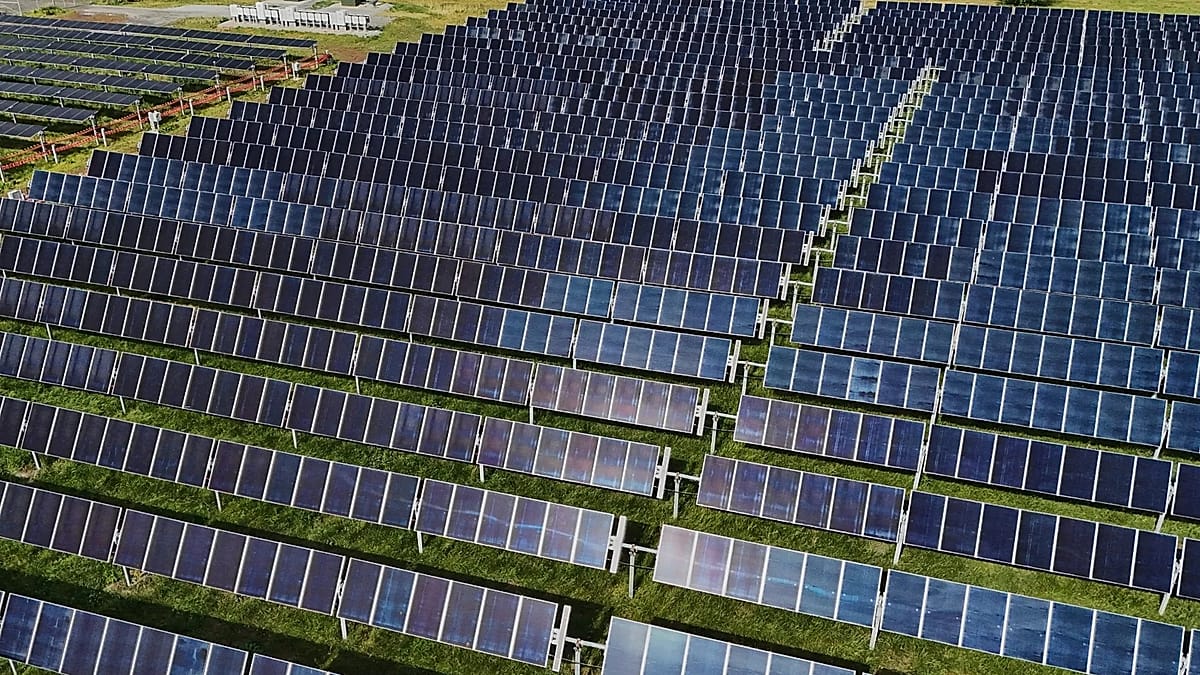
The British company Welink Energy Portugal 2 UK, which owns Solara4—Portugal's largest solar power plant—has initiated insolvency proceedings, according to a report by consultancy BDO cited by the Portuguese weekly Expresso. The 219 MW facility, located near Alcoutim in the Algarve, has been operational since 2021 but has struggled with a series of challenges.
The BDO report, quoted by several Portuguese media outlets, states that the plant has faced "a combination of operational and market challenges that have adversely affected its performance and cash flow generation." Electricity output has consistently missed initial projections, while the broader Iberian market has seen a surge in solar capacity, driving wholesale prices down—sometimes to zero or even negative levels. As a result, revenues have fallen short of expectations.
Beyond market pressures, Solara4 has been hampered by disputes with its contractor, China Triumph International Engineering, a subsidiary of a Chinese state-owned conglomerate. Fires and other technical problems have also disrupted operations.
Failed expansion plans
In 2024, Welink announced plans to "hybridise" the plant with a €400 million investment, adding 50 MW of solar capacity, 264 MW of wind power across 40 turbines, and a 100 MW battery storage system. The goal was to enable uninterrupted electricity production, bringing total installed capacity to over 600 MW.
However, the Portuguese Environment Agency (APA) issued an unfavourable opinion, stating the project would not be "compatible with safeguarding the environmental values present in the affected area." The plan was later revised, reducing the number of wind turbines to just over half, and submitted for public consultation. The APA has yet to make a final decision.
The insolvency process now prioritises finding new investors willing to acquire the asset, according to Expresso. This is not the first time a sale has been considered; the plant was previously close to being sold.
The case highlights broader challenges for solar developers across Europe, where rapid capacity growth has outpaced demand and grid infrastructure. Similar issues have emerged elsewhere, such as Romania's efforts to close its renewables gap with a massive solar farm. Meanwhile, Portugal's energy transition continues to face hurdles, as seen in warnings about the country's pension system and its environmental policies.
For the Algarve region, the insolvency raises questions about the future of one of its most prominent renewable energy projects. Local authorities and environmental groups have expressed mixed reactions, with some welcoming the potential for new ownership that might better align with regional sustainability goals.
As the Iberian energy market evolves, the Solara4 case serves as a cautionary tale for investors and policymakers alike. The balance between expanding renewable capacity and ensuring economic viability remains delicate, and the outcome of this insolvency could set a precedent for similar projects across the continent.