The International Court of Justice (ICJ) delivered a landmark ruling on Thursday, finding that Myanmar committed genocide against its Rohingya minority. The decision, passed by nine votes to six, marks the first time the UN's highest court has concluded that a state perpetrated the crime of genocide.
In a judgment read out in The Hague, ICJ President Yuji Iwasawa stated that "the Republic of the Union of Myanmar has committed genocide against the Rohingya group in northern Rakhine State, in violation of its obligations under the Convention on the Prevention and Punishment of the Crime of Genocide." The court ordered Myanmar to compensate the Rohingya for the damage caused by its brutal 2017 crackdown, unless restitution is made. It also requested an investigation to identify and prosecute individuals responsible for facilitating the genocide.
A historic verdict with global implications
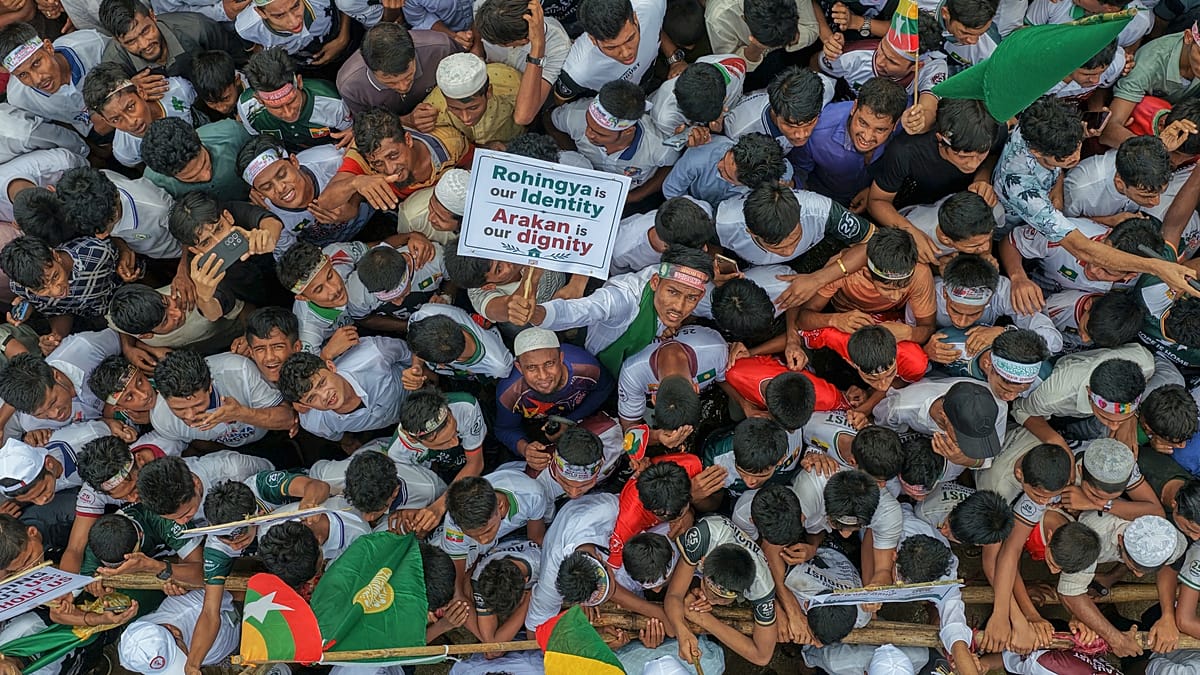
The ruling is a watershed moment for international justice, affirming that states can be held accountable for genocide under the 1948 convention. For the Rohingya, who have faced decades of persecution and displacement, the decision offers a rare measure of official recognition. Over 700,000 Rohingya fled to Bangladesh in 2017 following military operations marked by mass killings, rape, and arson.
Agnes Callamard, Secretary General of Amnesty International, welcomed the verdict. "This is the unequivocal finding of the ICJ. After years of denial, impunity and suppression of truth, this ruling is a historic and authoritative recognition of the atrocities committed against the Rohingya and a rare moment of justice for survivors, victims and their families," she said.
The case was brought by The Gambia in 2019, with support from the Organisation of Islamic Cooperation. While Myanmar has argued that the court lacks jurisdiction and that the military was responding to attacks by insurgents, the ICJ rejected these defences. The ruling is binding, though the court has no enforcement powers, and Myanmar's military junta has shown little willingness to comply with international orders.
For European observers, the verdict underscores the importance of multilateral institutions in upholding human rights. The European Union has previously imposed sanctions on Myanmar's military leaders, and this ruling may prompt further diplomatic pressure from Brussels and national capitals. As the EU considers its own regulatory decisions, the ICJ's action serves as a reminder that international law can still deliver accountability.
The court's order for an investigation into individual responsibility could lead to prosecutions in national courts under universal jurisdiction, a principle that several European countries, including Germany and France, have used to try international crimes. This could open a new chapter in the pursuit of justice for the Rohingya, with European legal systems potentially playing a role.
However, challenges remain. Myanmar's military continues to deny the allegations, and the country is mired in a civil conflict following the 2021 coup. The ICJ's ruling, while historic, is unlikely to immediately change conditions on the ground. Yet it provides a legal foundation for reparations and future accountability efforts.
As the world reacts, the verdict resonates beyond Southeast Asia. It reinforces the principle that genocide is not just a historical crime but a present-day violation that demands a response. For the Rohingya, the judgment is a step toward dignity, even as their future remains uncertain.