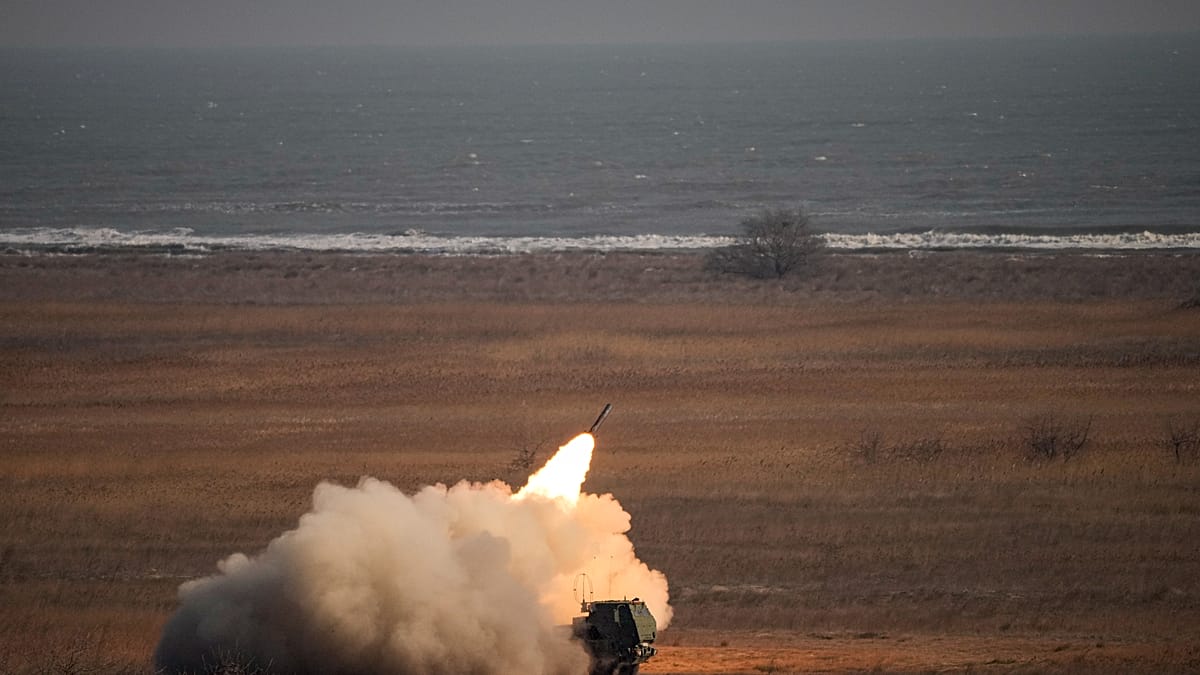
The US military is grappling with significant shortages of ammunition and advanced weaponry following its recent conflict with Iran, according to a new report from the Pentagon's inspector general. The findings, submitted to Congress, detail the heavy toll of "Operation Epic Fury" on American stockpiles and expose vulnerabilities in the defence industrial base.
Between the start of the war on 28 February and 30 June, the operation cost an estimated $33.4 billion (€29 billion), with munitions alone accounting for $22.3 billion. The report warns that the scale of weapons expended has created "strategic inventory shortfalls" and highlighted bottlenecks in the ability of US defence contractors to replenish supplies quickly. Experts estimate it could take roughly three years to restore stocks of advanced missiles and defensive interceptors to pre-war levels.
Equipment losses and base damage
The report also catalogues significant equipment losses, including four F-15 fighter jets destroyed, one F-35 damaged, and seven KC-135 tanker aircraft damaged or destroyed—five of them struck by Iranian munitions while on the ground in Saudi Arabia. Up to 30 MQ-9 Reaper drones, each costing around $30 million (€26 million), were also lost.
Iranian strikes caused extensive damage to US bases across the region, with hundreds of buildings and other structures damaged or destroyed in Kuwait, Bahrain, Qatar, the United Arab Emirates, Saudi Arabia, Iraq, Oman, and Jordan.
Despite the report's findings, President Trump has continued to dismiss concerns about ammunition supplies. In a post on his Truth Social platform on Monday, he insisted the military's stockpiles are "virtually unlimited" and claimed the US is producing "more exquisite and elite weapons than at any time in our history." The Pentagon maintains that the US military has the weapons it needs to fight any conflict.
The shortfall comes at a time when the US is also supporting allies in Europe, particularly in the context of ongoing tensions with Russia. The strain on American arsenals could have implications for European security, as NATO members have relied on US military aid and deterrence. The situation echoes concerns raised in Ursula von der Leyen's State of the Union promises about European defence readiness.
European defence officials are watching closely, as the US munitions shortfall may accelerate calls for greater European strategic autonomy. The war in Ukraine has already highlighted the importance of ammunition stockpiles, and Trump's recent urging for Ukraine to halt refinery strikes underscores the interconnected nature of global security.
The report's release also comes amid broader political turbulence in Washington, including a Supreme Court ruling on mail ballot restrictions and ongoing debates over military spending. For European allies, the question is whether the US can maintain its global military commitments while rebuilding its own arsenal.
Analysts note that the three-year timeline for replenishment could leave gaps in US capabilities, particularly in the Indo-Pacific and Europe. The report recommends that the Pentagon review its procurement strategies and consider expanding domestic production capacity.
As the US military works to address these shortfalls, European nations may need to reassess their own defence postures. The recent trade disputes with the EU add another layer of complexity to transatlantic relations, but security cooperation remains a cornerstone of the alliance.