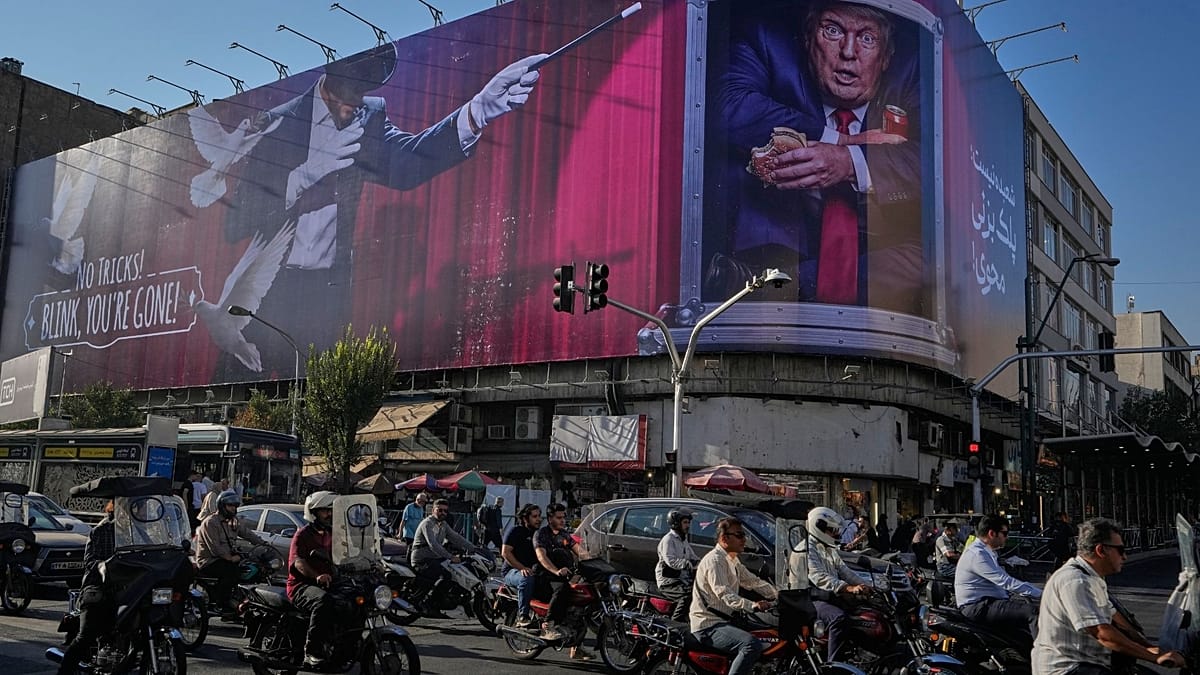
Nearly six months after the outbreak of military conflicts involving the United States, Israel, and the Islamic Republic, a reinstated US naval blockade off Iran's southern coast has brought the nation's primary commercial lifelines to a virtual standstill. Following a brief one-month pause after the Islamabad Memorandum, maritime enforcement resumed in mid-July, tightening a chokehold on the Persian Gulf that has disrupted over 80% of Iran's heavy imports and non-oil exports.
With official inflation nearing 70% and point-to-point food inflation surging to an unprecedented 128%, alongside a nearly 40% drop in non-oil trade compared to pre-war levels, ordinary citizens are bearing the crushing financial weight. In an exclusive series of interviews with Euronews Farsi, Iranians across various sectors described how the blockade has dismantled their livelihoods, forced household austerity, and reshaped daily life.
Stranded cargo and soaring freight rates
The maritime blockade has devastated logistics networks that rely on southern ports like Bandar Abbas. Gisoo, a 45-year-old international shipping specialist based in Tehran, works directly with container movements. "Since the war began, maybe one out of ten cargo ships leaving China actually reaches Iran," Gisoo told Euronews. "Containers that used to take 35 days now sit stuck in Hong Kong, Karachi, or Jebel Ali for months. UAE ports are no longer allowing Iranian dhows to dock."
Maritime freight rates have jumped from $3,000 to nearly $10,000 per container, while overland transport from China now costs at least $16,000. Rerouting cargo via Mersin in Turkey has created massive bottlenecks, leaving shipments stranded for weeks while storage fees accumulate. Land routes also require multiple unloadings and reloadings, which frequently damage sensitive goods. Because Gisoo's income relies on commissions per completed shipment, her earnings have plummeted, she added. Regarding the political fallout, Gisoo voiced scepticism about sudden systemic change, stating that fear from previous crackdowns keeps most people from taking to the streets.
Desert borders and maintenance chaos
With operations at Bandar Abbas down from thousands of daily truckloads to a mere trickle, drivers have been forced to rely on poorly equipped land crossings like Rimdan on the border with Pakistan. Aras, a 60-year-old long-haul trucker from Kermanshah, described the Rimdan border as essentially lawless. "Bandar Abbas is dead. Cargo from Pakistan now enters through Rimdan, but that border lacks basic infrastructure — no facilities, no dust control, just extreme heat," Aras told Euronews Farsi. "Fetching a load from Rimdan to Tehran pays around 250 million tomans (€1,086), but few drivers are willing to go."
Aras further detailed how operational costs for vehicle upkeep have skyrocketed under the blockade. A pair of heavy truck tyres surged from 35 million tomans (€152) before the war to 250 million tomans (€1,086) today, he said. Routine maintenance has become similarly unmanageable, with basic oil changes rising from 6 million tomans (€26) to 21 million tomans (€91), while servicing newer truck models now costs up to 70 million tomans (€304) per session, he added. Required spare parts for modern trucks have virtually disappeared from the market, leaving broken vehicles completely out of commission, he warned. If the blockade persists for another two months, widespread domestic shortages are inevitable, he added. He believes that if economic pressure forces families to the edge of starvation, widespread public protests could ultimately break the status quo.
Emptying markets and shrinking meals
The blockade's ripple effect has severely eroded everyday consumers' purchasing power, driving up the cost of basic food items and essential medical supplies. Mansour, a 40-year-old auto technician and father of two in Tehran, told Euronews Farsi that foot traffic in local grocery stores has visibly plummeted. People are forced to strip away every non-essential expense just to get by, he observed. His own family has stopped buying meat, chicken, and rice in meaningful quantities, relying instead on bread-based meals, he said. At his auto repair shop, the price of basic motor oil rose from 1.8 million to 2.8 million tomans (€12), leaving him with almost no customers over the past two weeks, he added. Mansour said he expected the blockade to spark renewed public protests, although he anticipated heavy security responses.
Hamid, a 46-year-old footwear vendor in Tehran, said the trade shutdown showed almost immediate results. "The blockade's impact is absolute. Critical medical supplies, like haemophilia treatments, have become virtually unobtainable," Hamid told Euronews Farsi. "The surge in fuel and transit costs is devastating millions who rely on ride-hailing services like Snapp to feed their families." "When working-class people can no longer afford bread for their children, the pressure becomes uncontainable," Hamid told Euronews. The widespread poverty visible on Tehran's streets has caused Hamid profound anguish. While he dreaded the hardship of ongoing blockades, he said he viewed fundamental change as the only long-term exit from systemic stagnation.
Small businesses facing bankruptcy
Even domestic businesses that rely on locally produced goods are getting squeezed by indirect supply chain shocks. Mohammad, a 40-year-old restaurant owner operating outside Tehran, told Euronews Farsi that his business has lost roughly 60% of its customers since the war began. "People simply cannot afford to eat out anymore," he said. "My suppliers have raised prices so much that I barely break even. I am considering closing down."
The humanitarian crisis unfolding in Iran has drawn international attention, but diplomatic efforts remain stalled. Qatar's daily diplomacy to restart US-Iran talks and reopen the Strait of Hormuz has yet to yield results. Meanwhile, the blockade continues to tighten, with no end in sight for the Iranian people.