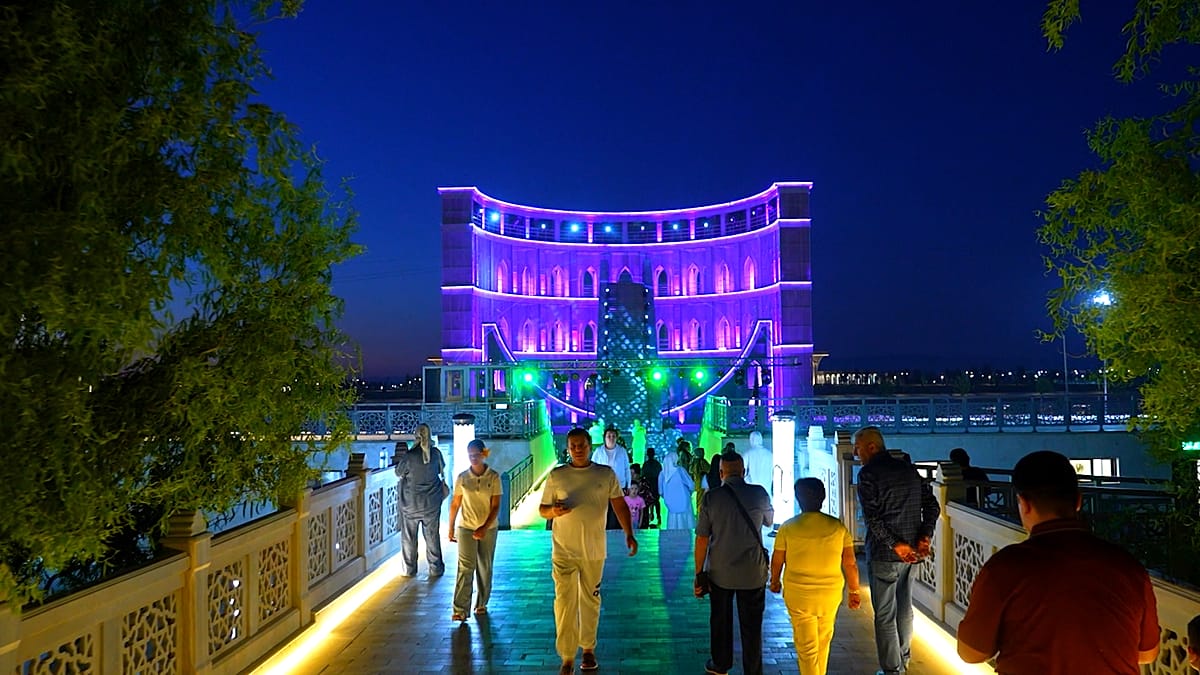
For centuries, the great trading hubs of the Silk Road welcomed merchants, pilgrims, and wanderers. Today, their daytime allure is well known, but as the sun dips below the horizon, a different kind of energy takes over. With temperatures cooling, parks, pedestrian streets, and public squares fill with families, friends, and visitors eager to enjoy the outdoors. Restaurants extend their hours, cultural venues stay open late, and the evening becomes the most vibrant part of the day—especially during the scorching summer months.
Samarkand: a city that glows after dusk
Samarkand, with its iconic Registan Square, the Gur-e-Amir Mausoleum, and the Shah-i-Zinda necropolis, is a daytime magnet. But after dark, these landmarks remain alive, bathed in architectural lighting installed in recent years. Situated about 740 metres above sea level, the city enjoys cooler evenings even in peak summer, making a post-sunset stroll a daily ritual. Local guide Khurshid Narimov explains: “During the day, summer temperatures can be difficult, so people prefer going out in the evening. Families come here to walk, children play around the illuminated monuments, and visitors can continue exploring long after sunset.”
Narimov notes that the lighting has encouraged people to linger around historic sites, extending their visits well beyond daylight hours. He recommends exploring the “Boqiy Shahar” (Eternal City) complex, the Imam al-Bukhari Memorial, and traditional craft workshops, many of which stay open in the evening. Australian tourist Jamie Mikic was struck by the sight of local families gathering outdoors after dark: “I love seeing children playing, families walking together and people enjoying the parks. It creates a welcoming atmosphere and gives visitors the opportunity to experience everyday life while exploring the city.”
Bukhara: where night brings music and mingling
A few hours west, Bukhara follows a similar rhythm. As the heat subsides, the historic centre buzzes again—narrow lanes fill with strollers, cafés do brisk business, and gathering spots like Lyabi-Hauz, Poi Kalyan, and the Ark Fortress come alive. Tour guide Dildora Safarova describes the transformation: “During the day you see the natural colour of the brick architecture. At night, the monuments are illuminated and the streets become livelier. Musicians perform, dancers invite visitors to join them, and people stay outdoors until late.”
Rooftop terraces overlooking the old city have become prime evening destinations, offering panoramic views of illuminated minarets and domes while serving traditional green tea, Uzbek dishes, and contemporary fare. Many venues pair local cuisine with live music and cultural performances that stretch into the night. The compact layout of the old city makes it easy to explore on foot after dinner, and Safarova points out that artisan workshops, embroidery shops, and souvenir stores remain open, allowing visitors to watch craftspeople at work and chat with them directly.
Khiva: a quieter, more intimate evening
Further west, Khiva offers a more serene experience. Most evening life is concentrated within the walls of Ichan-Kala, a UNESCO-listed old town where monuments, museums, and narrow streets sit in close proximity. Tour guide Anaposhsha Boltaeva says many visitors choose the evening for a simple reason: “The museums stay open until the evening, and people enjoy walking through Ichan-Kala when it is cooler. Many visitors like photographing the monuments at night because the lighting highlights details that look different from daytime.”
Evenings are also popular with local families, who frequent nearby parks and the recently developed Arda Khiva complex before returning to the historic centre for a leisurely stroll. The quieter atmosphere encourages a slower pace, perfect for those who prefer to absorb the city's history without the daytime crowds.
Tashkent: a modern capital that never sleeps
The capital, Tashkent, takes evening activity to another level. As Uzbekistan's largest city, it offers a broader range of options—parks, shopping districts, open-air terraces, and pedestrian streets that stay busy well past midnight, especially on weekends and in summer. Serbian tour guide Stefan Pavlović was surprised by the city's nocturnal charm: “Many people don't expect this when they first think about Uzbekistan. After sunset the parks are full, people are walking, meeting friends and enjoying the cooler weather. There is a very relaxed atmosphere.”
Even at 11pm, cafés continue serving customers while families, young people, and tourists remain outdoors. Walking has become one of the most popular evening pastimes, supported by extensive public spaces and comfortable night-time temperatures. Each destination offers its own flavour: Samarkand and Khiva invite exploration of illuminated historic centres, Bukhara combines architecture with music and dining, while Tashkent's parks and cafés reflect the pulse of a modern capital.
As temperatures drop, spending time outdoors becomes part of daily life, making the evening one of the busiest—and most rewarding—times to experience Uzbekistan. For travellers planning a summer visit, the advice is simple: save your energy for after dark. And if you're looking for other ways to beat the heat, consider Rome's extended night tours or Greece's August 15th celebrations as alternative summer experiences.