Across Uzbekistan, the rhythm of the seasons dictates the landscape and the lives of those who work the land. From the foothills near Tashkent, where grapes ripen under the watch of the mountains, to the sun-baked plains of Jizzakh, where melons swell in the summer heat, each region follows its own agricultural calendar. For travellers, tracing this calendar has become a way to connect with rural communities and witness age-old traditions firsthand.
Agriculture remains a cornerstone of Uzbekistan's economy, feeding domestic markets and exporting fresh produce to neighbouring countries and beyond. In recent years, a growing number of farms have opened their gates to visitors, blending traditional farming with agritourism. This shift allows travellers to participate in harvests, taste produce at its peak, and gain insight into the techniques that sustain these communities.
Vineyards beneath the foothills of Parkent
Just outside Tashkent, the gentle slopes of Parkent district are carpeted with vineyards, a region long celebrated for grape cultivation. Benefiting from mountain moisture and a favourable microclimate, the area produces both table grapes and varieties destined for export. One family-run vineyard, established in 2006 on former pastureland, now welcomes visitors to walk through the vines, learn about cultivation, and observe the harvest that begins in mid-August.
Owner Iskandar Urmonov is steering the farm toward organic production. “We want to turn our vineyards into organic vineyards. By applying different natural fertilisers, we want to make them organic. If we establish organic vineyards, the door to Europe will be open,” he explains. Unlike many vineyards, these vines rely largely on natural moisture rather than irrigation. “We grow grapes naturally, on rain-fed land, without irrigation. The moisture comes from snow and rain,” Urmonov adds.
Several grape varieties ripen in succession until late autumn. While Tayfi is primarily exported, Rizamat remains a favourite on the domestic market, and Kishmish can be dried into raisins, extending the value of the harvest beyond the picking season.
Summer harvest in Jizzakh
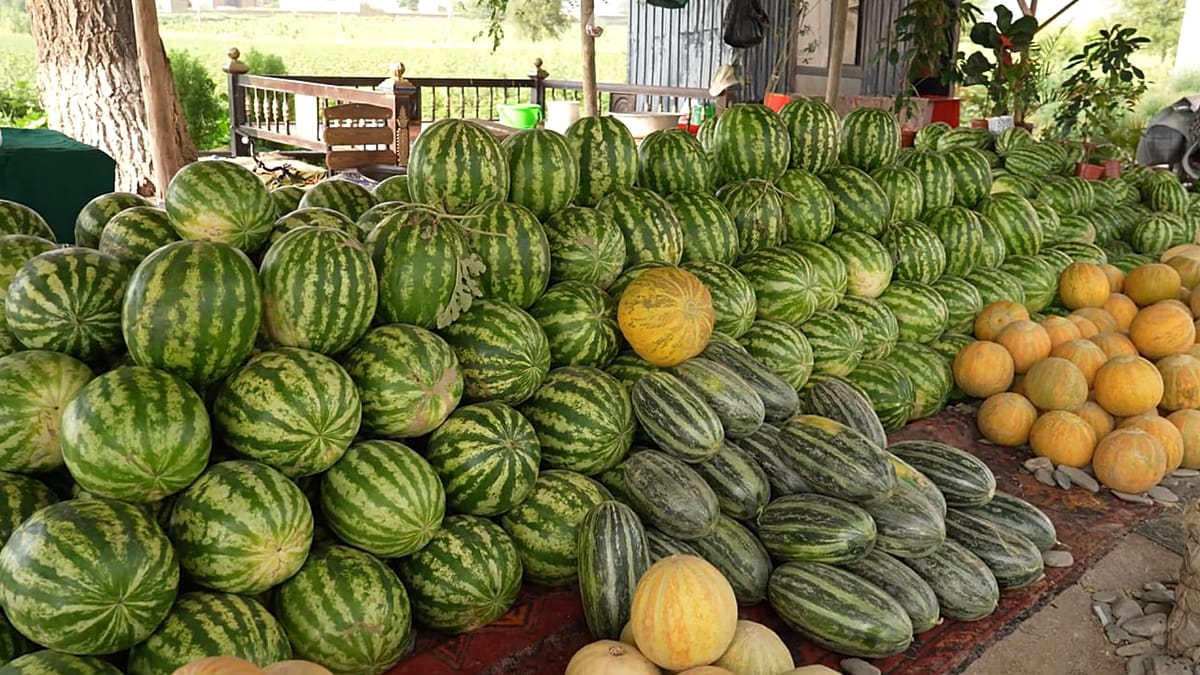
A few hours to the south-west, the fields of Jizzakh enter their busiest period. During summer, melons and watermelons mature under long days of intense sunshine, making the harvest a defining event of the region. Planting begins as early as March, with young plants protected beneath plastic covers before the heat arrives. By July and August, harvesting is in full swing, and fresh produce is dispatched to markets and export destinations.
Farmer Bobomurod Mirsaliddinov credits the region's climate for the distinctive flavour of its melons. “The main advantage is that we have the 'Mirzachul Melon' brand. It is recognised because of its unique taste and flavour,” he says. Producers are also experimenting with new varieties and more efficient methods. “We want to move to the 'one field-one product' system, so buyers can easily find the crop they are looking for.”
Local knowledge still guides buyers in choosing ripe fruit. “There is a saying passed down from our ancestors: 'Choose the light watermelon and the heavy melon,'” says resident Alisher Azimov. He also advises checking the stem: “If the stem is still fresh, the watermelon has just been harvested.”
Earlier harvests in Surkhandarya
Further south, Surkhandarya's warmer climate allows fruit to ripen earlier than elsewhere in Uzbekistan. Farmer Yusuf Meliboyev manages a ten-hectare orchard where apples, peaches, plums, and grapes grow together. Different apple varieties mature between June and October, extending the harvest over several months. “The greatest demand is for Gala apples and then Fuji apples,” he says. “Because the weather in Surkhandarya is very hot, our apples become especially sweet.”
The orchards use drip irrigation supplemented by canal water when needed, and beehives are placed among the trees during flowering to improve pollination. Elsewhere in the region, almond cultivation has expanded rapidly, with large orchards covering thousands of hectares, supported by water-saving irrigation systems designed for the dry climate. Operations manager Suhrob Akabirov emphasises the importance of efficient water use: “Every single tree has its own drip irrigation system.” After harvesting, almonds are processed, dried, and prepared for export; around 70% of production is sold abroad, with the remainder supplying the domestic market.
While each region follows its own agricultural calendar, the pattern remains closely tied to climate, water, and local expertise. Visiting during harvest season offers a unique opportunity to experience working farms, taste produce at its freshest, and better understand the agricultural traditions that continue to sustain rural communities today. As Uzbekistan deepens its international ties, including new partnerships with Azerbaijan and ambitious plans for business and export growth, agritourism is poised to play a growing role in connecting visitors to the country's rural heart.