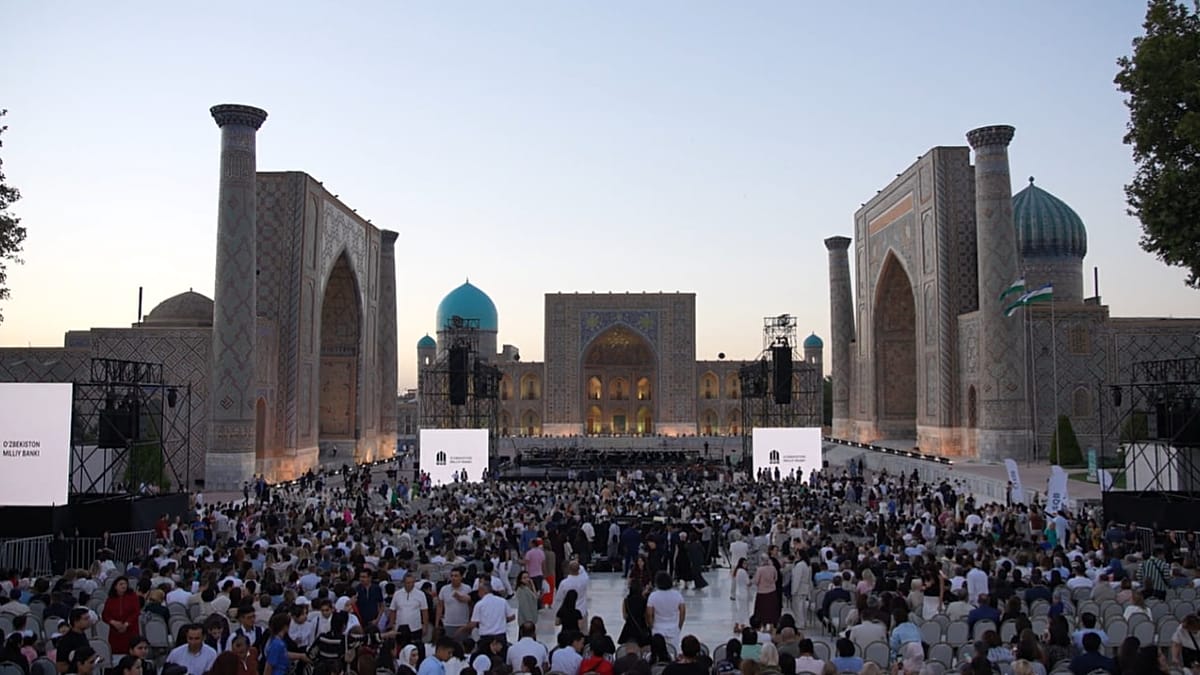
Uzbekistan is recalibrating its tourism strategy, moving beyond simply counting arrivals to focus on increasing the economic impact of each visitor. With inbound tourist trips rising from 6.63 million in 2023 to 11.68 million in 2025—a 46.8% jump from the previous year—authorities are now targeting higher-value travellers and longer stays.
The economic returns are already evident. Tourism services exports climbed from €1.88 billion in 2023 to €3.09 billion in 2024, reaching €4.2 billion last year, according to the Uzbek presidency. This growth has been fueled by new air routes, regional travel packages, and a push to diversify beyond the iconic Silk Road cities of Samarkand, Bukhara, and Khiva.
From Volume to Value
“Today, our priority is not simply increasing the number of tourists. We are equally focused on attracting higher-value visitors who contribute more to the economy through their spending,” Abdulaziz Akkulov, chairman of Uzbekistan’s Tourism Committee, told Euronews. The strategy includes promoting the country as a safe destination amid global uncertainties and offering financial incentives, such as a 50% VAT refund for tourism companies and hotels during the summer season.
Uzbekistan is also working to extend visitor itineraries beyond the well-trodden heritage routes. Akkulov emphasized the importance of developing joint regional tourism packages with neighbouring Central Asian states, making the country part of a broader multi-country experience rather than a single stop.
Air Links as a Catalyst
International air access is central to this plan. Uzbekistan Airways has expanded its fleet from 26 to 45 aircraft over five years and signed a firm contract for 14 Boeing 787-9 Dreamliners, with options for eight more, deliveries starting in 2031. “Our goal is to establish Tashkent as a strategic hub between Europe and Asia, and between America and Asia,” said Shukhrat Yadgarov, deputy chairman of the airline’s board for commerce and tourism.
Direct flights from European cities are a priority. Akkulov noted that Uzbekistan is strengthening cooperation with European countries, showcasing its tourism potential at major exhibitions, and working to increase direct flight connections. This aligns with broader efforts to reduce travel time for long-haul visitors from Europe, Asia, and the Americas.
Domestic transport is also being upgraded. High-speed train fleets are expanding, new airports are under development, and transport corridors are being built to ease travel from Tashkent to regions like Karakalpakstan. “The rapid growth means we must move even faster in expanding transport infrastructure,” Akkulov said.
The push for longer stays and higher spending reflects a broader trend in Central Asian tourism, where countries are competing for a share of the growing market. Uzbekistan’s focus on value over volume could serve as a model for other Silk Road destinations seeking sustainable growth.