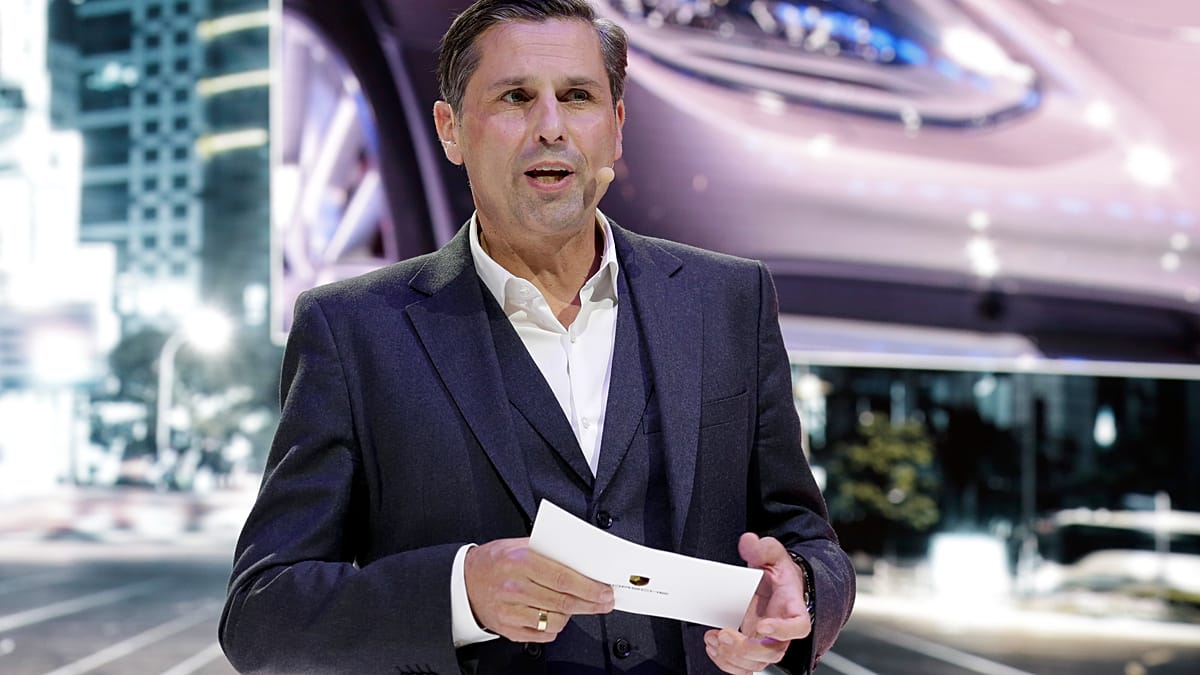
Volvo Cars has found its next long-term leader. The Swedish automaker announced on Sunday that Klaus Zellmer, currently the chief executive of Volkswagen's Škoda brand, will become its new president and CEO no later than 1 October 2027. Håkan Samuelsson, who returned for a second stint as CEO in April 2025, will remain in charge until then to manage the handover.
Zellmer, a German executive with more than three decades in the automotive industry, has led Škoda since 2022. Under his watch, the Czech brand posted record results last year and achieved its highest-ever electric vehicle deliveries in the first half of 2026, cementing its position as one of Europe's best-selling marques. Before Škoda, he sat on Volkswagen's passenger car management board and spent over 20 years at Porsche, including leadership roles in Germany and North America.
Eric Li, Volvo's chairman, praised the appointment in a statement: "Klaus Zellmer combines deep automotive expertise with broad international leadership experience and a strong record of guiding organisations through transformation and changing market conditions."
Zellmer acknowledged the scale of the task ahead. "After almost 100 years, Volvo Cars' ability to reinvent itself time and again is both a remarkable achievement and an ongoing challenge," he said.
A company mid-overhaul
Zellmer inherits a company already deep in transformation. Samuelsson returned to the helm in April 2025 to steady Volvo after American tariffs hit its exports hard—most of its US-bound cars are built in Europe. He launched an 18 billion Swedish krona (€1.6bn) cost and cash plan, cut 3,000 jobs, and scrapped Volvo's earlier pledge to go fully electric by 2030.
Last week, at an investor event in Stockholm, Samuelsson outlined the next phase. Volvo is targeting an operating margin above 8%, up from just 3.5% in 2025, through a 13-model electrified lineup split between seven cars for Western markets and six for China. The strategy also involves a much deeper reliance on majority owner Geely for parts and suppliers.
"One global car won't work, and just adapting it with different colours or trim will not be enough," Samuelsson told investors.
Global sales have continued to decline, and Samuelsson had previously indicated that his successor should come from within the industry and understand Swedish culture—a combination he admitted narrowed the field of candidates. Zellmer, who has worked across Europe and the US, fits that profile.
The appointment comes as Volvo navigates a complex geopolitical landscape, including tensions with Russia and broader European industrial challenges. Zellmer's experience at Škoda, which has deep roots in Central Europe, may prove valuable as Volvo balances its Western and Chinese operations.
Analysts will watch closely whether Zellmer can replicate his Škoda success at Volvo, where the brand's premium positioning and safety heritage offer a different set of opportunities and constraints. The transition period of nearly two years gives him time to prepare, but the pressure is already on.