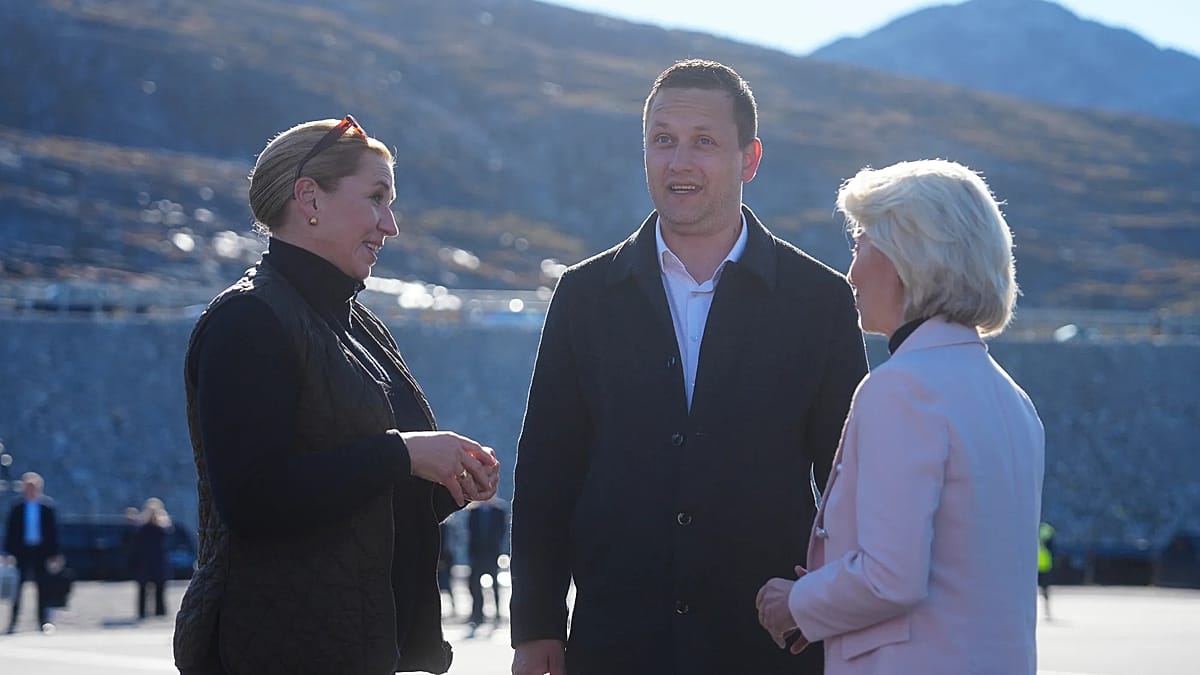
European Commission President Ursula von der Leyen is making a two-day visit to Greenland this weekend, a clear signal of the bloc's commitment to the Arctic island amid renewed US interest in acquiring it. The trip, which began on Sunday, is set to culminate in the signing of a joint declaration between the EU and the Danish autonomous territory on Monday.
Since returning to the White House in January 2025, President Donald Trump has repeatedly asserted that the United States needs to take control of Greenland for its "national security," arguing that either China or Russia would otherwise seize the island. Those remarks have drawn sharp responses from European leaders, who have stressed the importance of respecting Greenland's sovereignty.
In January, von der Leyen and European Council President António Costa issued a joint statement underscoring the EU's stance on "territorial integrity and sovereignty" and expressing "full solidarity with Denmark and the people of Greenland." The visit is a concrete follow-up to that political declaration.
Investment and security in the Arctic
Speaking at the World Economic Forum's annual meeting in Davos earlier this year, von der Leyen said the EU was working on a "massive European investment surge" in Greenland to bolster Arctic security. That pledge is now taking shape: the European Commission has proposed allocating €530 million to Greenland under the EU budget for the 2028–2034 period, reflecting what it calls the island's "growing geostrategic importance in the Arctic."
According to the Financial Times, von der Leyen is expected to announce an additional €200 million in funding during her visit, bringing the total EU commitment to more than €700 million. The funds are intended to support sustainable development, infrastructure, and security-related projects on the island.
The visit comes as the US maintains a military presence in Greenland, though far smaller than during the Cold War. At its peak, Washington operated 17 military facilities and stationed more than 10,000 troops on the island. Today, only the Pituffik Space Base remains—the US Department of Defense's northernmost installation.
In May, Trump's special envoy to Greenland, Jeff Landry, who is also the governor of Louisiana, made his first trip to the territory since his appointment in December 2025. Speaking from the capital, Nuuk, Landry told Agence France-Presse that the US should "put its footprint back" on the island, citing national security operations and the potential repopulation of certain bases.
"Everyone that I've talked to in Greenland would love to see the US repopulate those bases," Landry said, adding that the territory "needs the US." His comments, however, stand in contrast to the views of Greenland's political leadership.
In January, the leaders of five political parties in Greenland's parliament issued a joint statement with a clear message to Washington: "We do not want to be Americans, we do not want to be Danes; we want to be Greenlanders." That sentiment underscores the delicate balance between external security interests and the island's push for greater autonomy.
The EU's engagement with Greenland is not new—the island is an associated territory of the bloc, and cooperation has long covered areas such as education, research, and fisheries. But the current visit marks a more explicit alignment of EU policy with Arctic security, a theme that has gained urgency as melting ice opens new shipping routes and resource extraction opportunities.
Von der Leyen's trip also dovetails with broader European efforts to assert a presence in the High North. The EU has been developing an Arctic strategy that balances environmental protection, sustainable development, and geopolitical interests. As she recently warned about Russian sabotage activities across Europe, the Arctic is increasingly seen as a potential flashpoint.
While the US remains a key NATO ally, the EU's message is clear: Greenland is not for sale, and Europe is ready to invest in its future. Whether that investment will be enough to counter the allure of American security guarantees remains to be seen, but the symbolic weight of a Commission president setting foot on the island is not lost on observers.