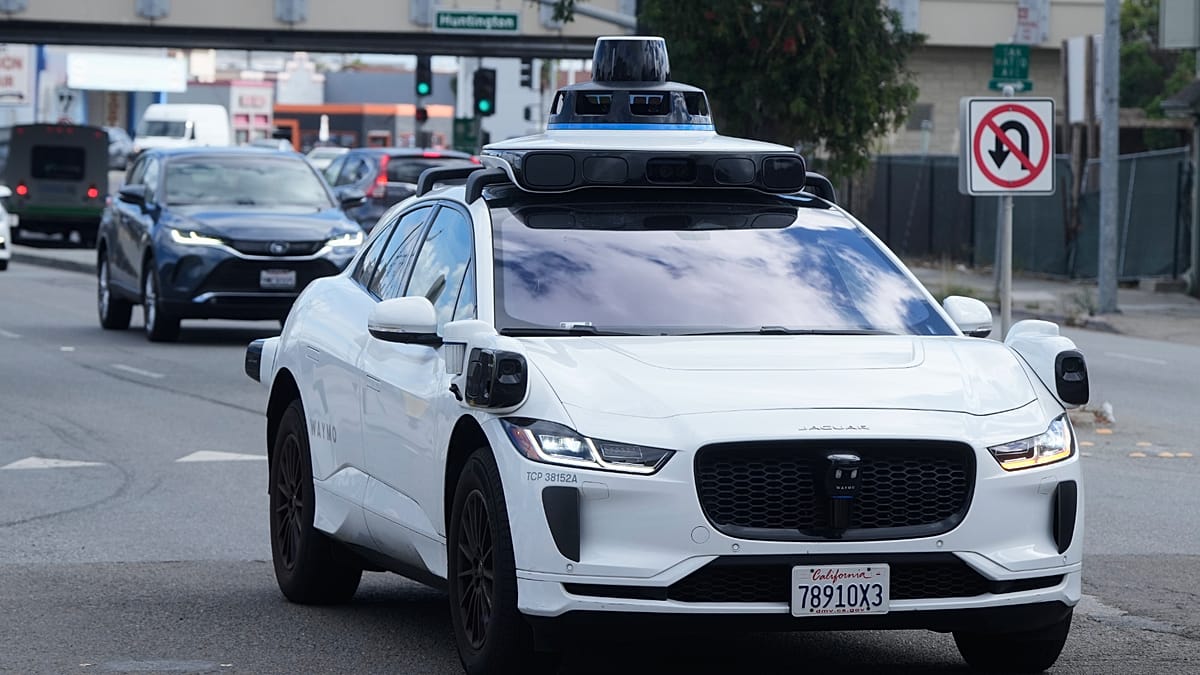
Waymo, the US autonomous vehicle pioneer, has chosen Munich as the launchpad for its first European robotaxi service. The Bavarian capital will become the company's third city outside the United States, following London and Tokyo, marking a significant step in the global rollout of driverless technology.
The announcement comes at a time when Europe's AV sector is showing signs of momentum. Earlier this year, Dutch regulators approved Tesla's Full Self-Driving Supervised (FSD) software, prompting a wave of similar decisions in Denmark, Lithuania, and Estonia. That domino effect has given European drivers more options to test semi-autonomous features, but Waymo's arrival represents a more ambitious leap: fully driverless taxis operating on public streets.
Safety data that demands attention
The case for autonomous vehicles has long rested on the promise of reducing human error, which is responsible for the vast majority of road accidents. Nobel laureate Daniel Kahneman predicted years ago that machines would eventually outperform humans in driving decisions. Now, data from major US cities is backing that claim.
According to Waymo's figures, its AV taxis are between 12 and 20 times safer than human-driven taxis, preventing thousands of accidents and injuries. In Europe, where roughly 20,000 people die on roads each year and 67% of crashes are attributed to driver fault, the potential impact is hard to ignore.
For policymakers in Brussels and national capitals, the question is no longer whether AVs can be safe, but how quickly they can be integrated into a continent with diverse traffic rules, infrastructure, and legal frameworks. The EU has yet to adopt a unified regulatory approach, leaving member states to move at different speeds.
Economic and practical benefits
Beyond safety, robotaxis could reshape urban mobility in Europe. A taxi ride from Munich's airport to the city centre typically costs between €80 and €90. Waymo's entry could introduce competitive pressure that lowers fares, benefiting passengers in remote areas or those who rely on late-night transport.
Ride-hailing apps have already disrupted traditional taxi markets across Europe, and AVs are poised to intensify that competition. But Waymo and similar companies should not be viewed as adversaries of the automotive industry. Rather, they are developing the software and systems that could one day serve as the 'driver' for vehicles made by European manufacturers.
For Germany's automotive sector, this is a strategic opportunity. Partnerships between AV firms and local manufacturers could lead to a future where visitors to Munich are chauffeured in driverless BMWs or Audis, built in Bavaria and powered by Waymo's technology. Such collaboration would help Europe retain its industrial edge while embracing innovation.
Challenges ahead
Despite the optimism, hurdles remain. Europe's regulatory landscape is fragmented, and public acceptance of AVs is not guaranteed. A recent car ramming in Munich has heightened concerns about vehicle safety, even if the incident involved a human driver. Meanwhile, the recalls by Stellantis and other manufacturers highlight the importance of software reliability in modern vehicles.
Waymo's Munich launch will be closely watched by regulators and competitors alike. If successful, it could accelerate the adoption of AVs across the EU, prompting other cities to follow suit. The potential benefits—fewer deaths, lower costs, and greater mobility—are too significant to ignore.
As Europe debates the future of mobility, the arrival of Waymo in Munich is a concrete test case. It offers a glimpse of a safer, more efficient road network, but only if policymakers and industry can navigate the complexities of a continent that is both deeply integrated and proudly diverse.