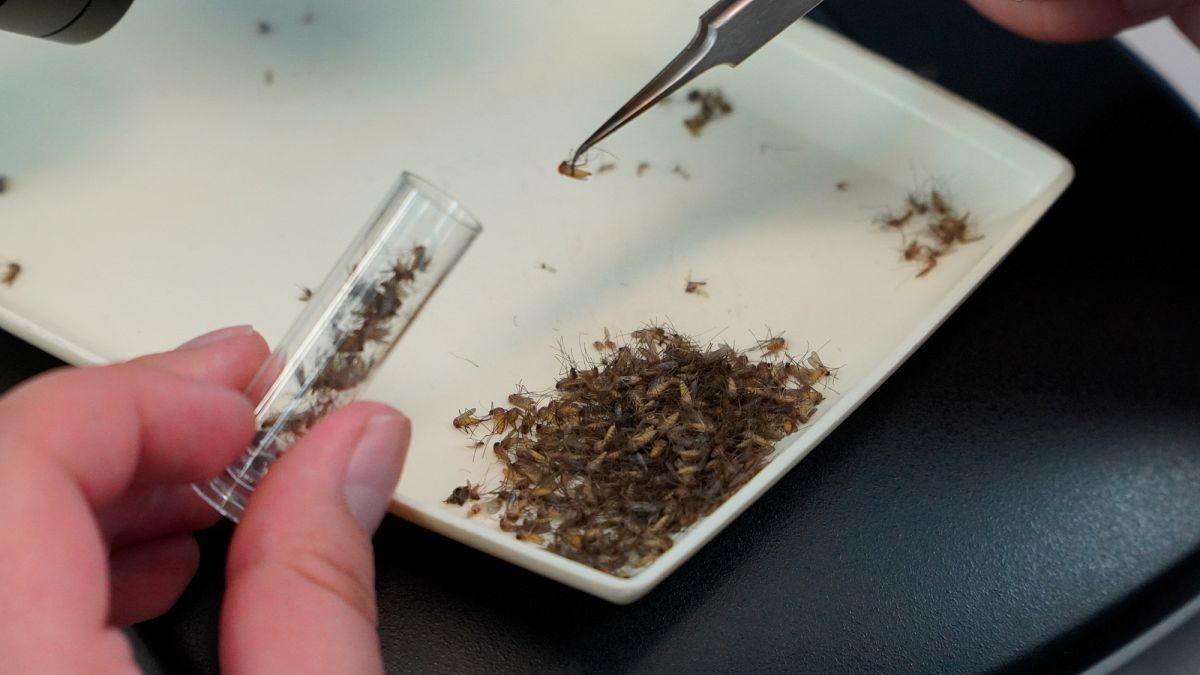
West Nile virus is spreading more actively across Europe this summer, with Greece and Italy reporting the highest levels of infection. Greek health authorities say the number of cases is climbing, and the true scale of the outbreak is likely far larger than official figures suggest.
According to Greece's National Public Health Organisation (EODY), 23 new infections were confirmed in the past week. Since the transmission season began in spring, 65 cases have been recorded up to 5 August. Of these, 54 involved severe neurological complications such as encephalitis, meningitis, or acute flaccid paralysis, while 11 patients had mild or no central nervous system symptoms. Six people have died, all over the age of 65 with severe neurological disease.
EODY warns that the virus is circulating widely but often unnoticed. Based on seroepidemiological data, for every confirmed case with central nervous system involvement, an estimated 140 people are infected without developing severe symptoms. This means the reported numbers represent only a fraction of the actual spread.
Italy leads Europe's case count
The outbreak is not confined to Greece. Data from the European Centre for Disease Prevention and Control (ECDC), updated to 29 July, show human cases in Italy, Romania, France, North Macedonia, Spain, and Germany. Italy has the highest number of infections with 94, followed by North Macedonia and Spain with seven each, Romania with five, France with two, and Germany with one.
In total, 49 affected areas have been identified across seven European countries: 30 in Italy, eight in Greece, four in Romania, two each in France, North Macedonia, and Spain, and one in Germany. The ECDC map illustrates the virus's broad geographic footprint this season.
Greece's cases are concentrated in 25 municipalities across Attica, Thessaly, and Central Macedonia. Attica, the region around Athens, is seeing particularly intense transmission, according to EODY. Of the 65 Greek patients, 20 remain hospitalised—12 in general wards and eight in intensive care—while 38 have been discharged and one did not require hospital care.
The rise in West Nile cases comes as Europe grapples with other public health challenges. For instance, the Ebola outbreak in the DRC has prompted WHO warnings, though it remains geographically distant. Closer to home, health systems are also adapting to new pressures, such as the NHS's plan to use robots in surgeries by 2035.
West Nile virus is transmitted primarily through the bite of infected mosquitoes, which breed in stagnant water. Public health officials across Europe are urging people to use insect repellent, wear long sleeves during dawn and dusk, and eliminate standing water around homes. The ECDC continues to monitor the situation and advises blood safety authorities to consider deferrals for donors returning from affected areas.
As the summer progresses, the number of cases is expected to rise, particularly in southern Europe where warm temperatures and humidity favour mosquito populations. The pattern mirrors previous years, but the early and widespread detection this season underscores the need for vigilance.