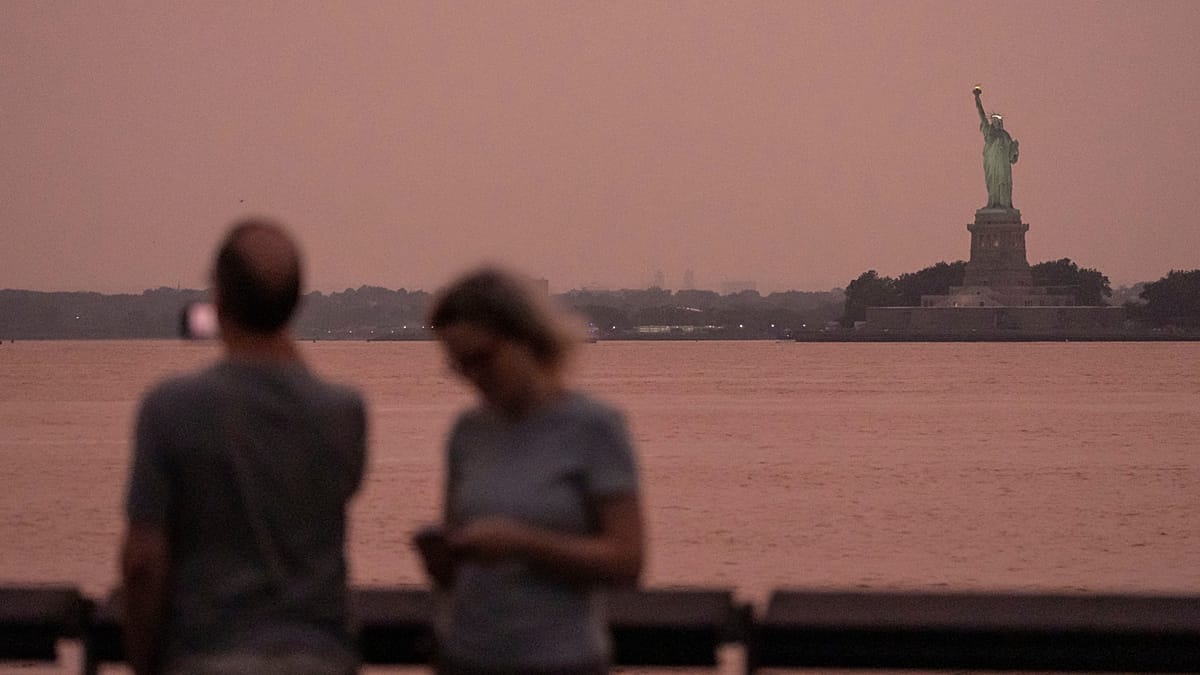
Wildfire smoke is emerging as a significant threat to maternal health, according to new research that tracks how climate-driven fires are eroding decades of progress in reducing air pollution. The study, published in Frontiers in Environmental Health, analyzed exposure to fine particulate matter (PM2.5) from wildfires across the United States between 2003 and 2019, revealing a troubling trend that resonates well beyond North America.
While emissions from vehicles and factories have declined thanks to stricter regulations, the researchers found that smoke from increasingly frequent and intense wildfires is offsetting those public health gains. Over the 17-year period, prenatal exposure to wildfire smoke more than doubled, particularly in western US states where fire seasons now stretch longer. On roughly 65% of days when air quality exceeded safe levels for pregnancy, wildfire smoke was the primary culprit.
“Increasing wildfire activity is systematically offsetting prenatal air quality gains from [human activity emissions] reductions, disproportionately burdening low-income, rural, and Indigenous communities, with the potential to further erode progress as wildfire activity intensifies,” the authors wrote. The study highlights a paradox that policymakers across Europe are beginning to confront: cleaner cities do not necessarily mean cleaner air when climate change fuels new sources of pollution.
Why wildfire smoke is more dangerous
PM2.5 consists of microscopic particles that can penetrate deep into the lungs and enter the bloodstream. Long-term exposure has been linked to adverse pregnancy outcomes, including preterm birth and low birth weight. The researchers note that wildfire-generated PM2.5 may be even more toxic than pollution from traffic or industry because of its complex chemical composition, which includes a mix of burned vegetation, soil, and building materials.
The findings are likely to resonate far beyond the US. Europe has experienced successive summers of devastating wildfires, from Greece and Portugal to Spain and southern France. In 2023, Greek crews battled fires near Athens as winds threatened to spread the flames, and the EU has repeatedly activated its largest firefighting response, exposing a gap between emergency reaction and long-term prevention.
The European Union's climate monitoring service and health agencies have warned that rising temperatures are increasing the frequency and intensity of wildfires, exposing millions of Europeans to smoke that can travel hundreds or even thousands of kilometres across borders. Smoke from fires in the Balkans, for example, has drifted as far as central Europe, affecting air quality in cities like Vienna and Munich.
As climate change accelerates, experts argue that governments may need to expand public health guidance for vulnerable groups, including pregnant women. This could involve improving smoke forecasting, issuing earlier health alerts, and ensuring access to clean indoor air during major wildfire events. The EU has begun shifting its strategy from response to prevention, but the pace of change may be too slow for the growing threat.
The research also underscores the disproportionate impact on disadvantaged communities. In the US, low-income, rural, and Indigenous populations bear the brunt of wildfire smoke exposure, a pattern likely mirrored in Europe where rural and economically marginalised regions often lack the resources to adapt. Regenerative farming practices are emerging as a potential shield in Spain, but such measures remain patchy.
For pregnant women, the stakes are particularly high. Studies have shown that even brief exposure to high levels of PM2.5 can trigger complications, and the cumulative effect of repeated wildfire seasons could have lasting consequences for maternal and child health. The researchers call for integrated policies that address both climate mitigation and air quality management, recognising that the two are inextricably linked.
As Europe grapples with its own wildfire crisis, the lessons from this US study are clear: reducing emissions from traditional sources is no longer enough. Climate change is creating new pollution pathways that require innovative public health responses. The question is whether governments can adapt quickly enough to protect the most vulnerable.