Plovdiv, a city in southern Bulgaria, claims a title few can dispute: Europe's oldest continuously inhabited settlement, with archaeological evidence of human presence dating back to 6000 BC. While Rome and Athens draw the crowds, Plovdiv offers a quieter, layered history—Thracian, Macedonian, Roman, Ottoman, and Bulgarian—all within a compact, walkable centre. As the city vies to host Eurovision in 2027, now is the time to visit before the secret gets out.
Roman Remnants and Ottoman Echoes
Start at the Stadium of Philippopolis, built in the 1st century AD for 30,000 spectators. Only a portion is visible at the end of the main pedestrian street; the rest lies beneath shops. Nearby, the Dzhumaya Mosque—one of the oldest Ottoman religious buildings in the Balkans—stands in stark contrast. Built in the 15th century on the site of an earlier mosque, its brick-and-stone architecture blends Byzantine and Old Bulgarian influences. Visitors must cover up to enter.
Just steps away, rub the knees of Milyo the Crazy, a local eccentric immortalised in bronze. Locals say rubbing both knees simultaneously brings luck in love—though the exact origin of the tradition remains a mystery.
Old Town and Bulgarian Revival
Plovdiv's Old Town, on UNESCO's tentative list since 2004, is a maze of cobblestone streets lined with Bulgarian Revival houses. The Hindliyan House, built in 1834, is a well-preserved example, with original furnishings and décor. Alternatively, the Ethnographic Museum offers a broader look at Bulgarian culture, from traditional costumes to musical instruments.
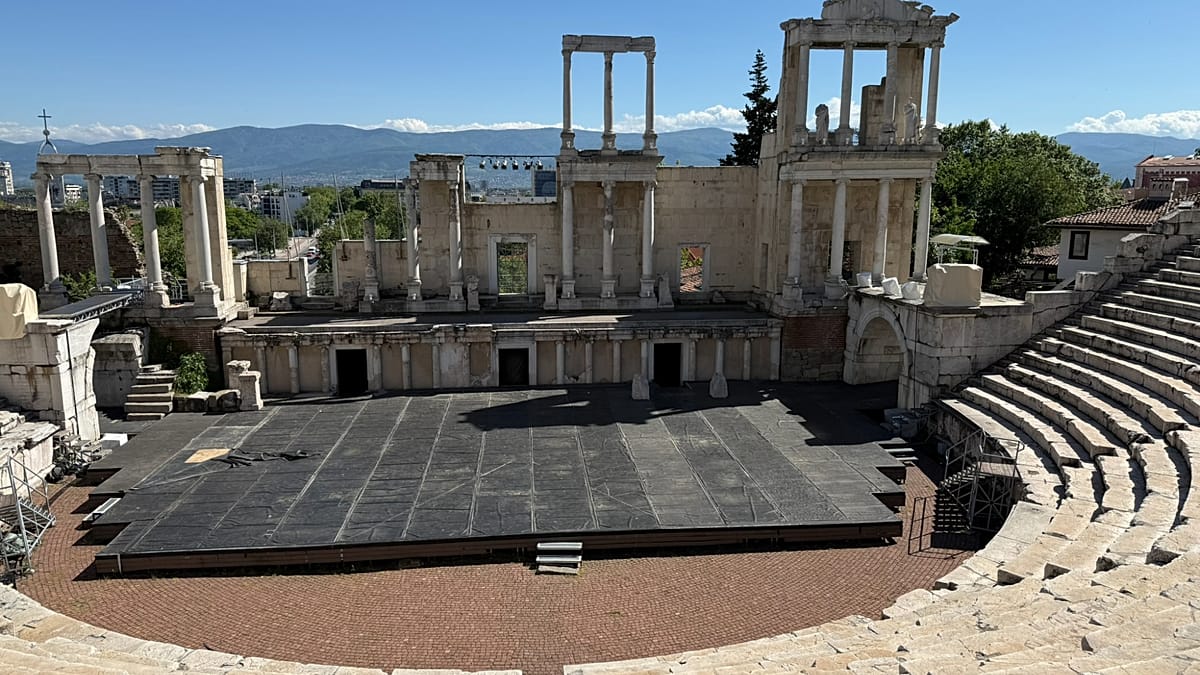
The Ancient Theatre of Philippopolis, dating from the 1st century AD, was destroyed by fire or earthquake in the 5th century, then rediscovered and restored in the 1980s. Today, it hosts concerts and performances, including the Opera Open festival from June to September. Daytime visits are free; evening shows offer a chance to experience the space as intended.
Sunset at Nebet Tepe
Climb Nebet Tepe, one of Plovdiv's seven syenite hills, for panoramic views. The archaeological complex here reveals settlements from 4000 BC, with fortifications added by successive rulers. Sunset is the ideal time to appreciate the city's layered history—and to plan your next stop.
For a deeper dive into Roman infrastructure, consider exploring OmnesViae, a digital tool that maps the empire's roads and travel times. And as travel patterns shift across Europe, Plovdiv's blend of ancient and modern fits neatly into the growing trend of slow tourism, where quality of experience trumps quantity of sights.