Across Europe, the rapid expansion of cheap solar panels has sparked a debate: will photovoltaic systems consume valuable farmland, or can they coexist with agriculture? In Bavaria, a region in southern Germany known for its startup culture, one company is proving that a double harvest is possible. Feld.energy, a two-year-old startup, is working with over 800 farmers to install agri-PV systems on some 900 hectares, combining crop production with solar energy generation.
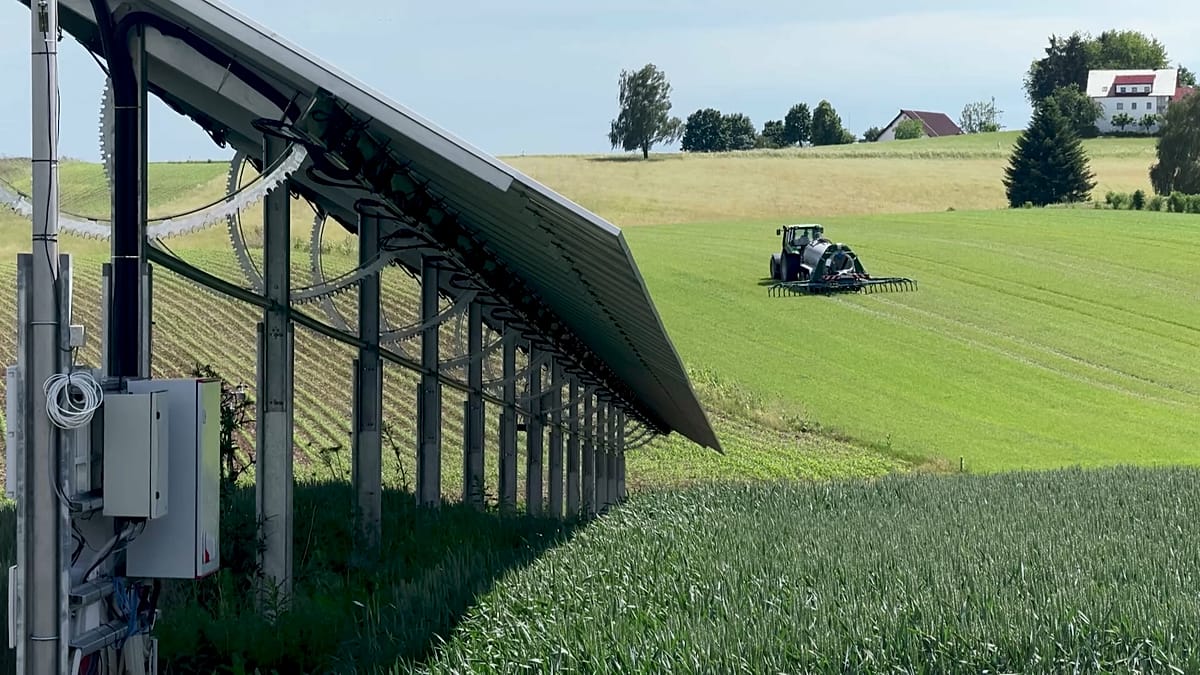
At the farm of Georg Bockmaier in Grasbrunn, a village on the outskirts of Munich, heavy machinery is being brought in by a Slovakian construction crew to build an agri-PV installation with a sophisticated solar tracking system. Bockmaier, who grows potatoes and cereals as his father and grandfather did, is clear that this innovation does not threaten his livelihood. “That's something new, I can go on with farming,” he says. “If I take my combine harvester with a cutting width of 6.60 or even 7.50 metres, I get through the rows of panels without any problem. We can also position the PV-panels vertically.”
Scaling Up Across Europe
Nikolai Voitiouk-Blum, feld.energy’s vice president of operations, outlines an ambitious plan. “Our vision for the next four years is clear,” he explains. “We want to expand into other European countries, such as Italy, so that we can bring one gigawatt of PV-capacity online, the equivalent of an entire nuclear power plant.” This expansion reflects a broader trend: as solar power has saved Europe billions in gas imports, the technology is becoming central to the continent’s energy transition.
The agri-PV approach addresses a key concern: the loss of arable land to solar farms. By elevating panels and spacing them to allow machinery to pass, farmers can continue cultivating crops while generating electricity. This dual-use model is particularly relevant in regions like Bavaria, where land is scarce and agriculture is a cultural mainstay. The startup’s systems are designed to be compatible with standard farming equipment, from combine harvesters to tractors, ensuring minimal disruption.
Bavaria’s startup ecosystem has been a catalyst for such innovations. The region is a hot-spot for smart farming solutions, and feld.energy is one of several companies exploring agri-PV. Earlier projects, such as solar panels above hop gardens, have demonstrated the potential for combining renewable energy with specialty crops. Now, the technology is being scaled to staple crops like potatoes and cereals.
The economic case is compelling. Farmers can diversify their income by selling electricity to the grid or using it on-site, while reducing their carbon footprint. For Europe, which has seen solar power hit a record 25% of EU electricity in June, agri-PV could help meet renewable energy targets without sacrificing food production. The European Commission has identified agri-PV as a promising technology in its strategy for sustainable agriculture.
Challenges remain. The upfront cost of installation is high, and regulatory frameworks vary across member states. In Germany, feed-in tariffs and subsidies have supported early adoption, but other countries lag. Feld.energy’s expansion into Italy will test whether the model can adapt to different climates and farming practices. The company is also exploring partnerships in Eastern Europe, where large-scale agriculture could benefit from solar integration.
As climate change reshapes Europe’s farmland, with new indexes mapping its impact by 2100, innovations like agri-PV offer a practical solution. By generating clean energy while preserving agricultural land, they address two of the continent’s most pressing challenges: energy security and food sovereignty. For farmers like Bockmaier, the future looks bright—and shaded by solar panels.