Antarctica has registered a winter temperature anomaly that scientists describe as “absolutely crazy.” On 6 June, the Argentinian Esperanza base on the Trinity Peninsula recorded 15.4°C, breaking the previous record set at the same station in 1998 by 2°C. The reading came during a prolonged heatwave that kept daily maximum temperatures above zero for three consecutive weeks.
Raúl Cordero, a climate professor at the University of Groningen, told The Guardian the event was about 20°C above the seasonal norm. “That is a huge anomaly,” he said. The unusual warmth was driven by strong northerly winds that swept across much of the Antarctic Peninsula, pushing temperatures well above historical averages.
Melting Ice and Bare Ground
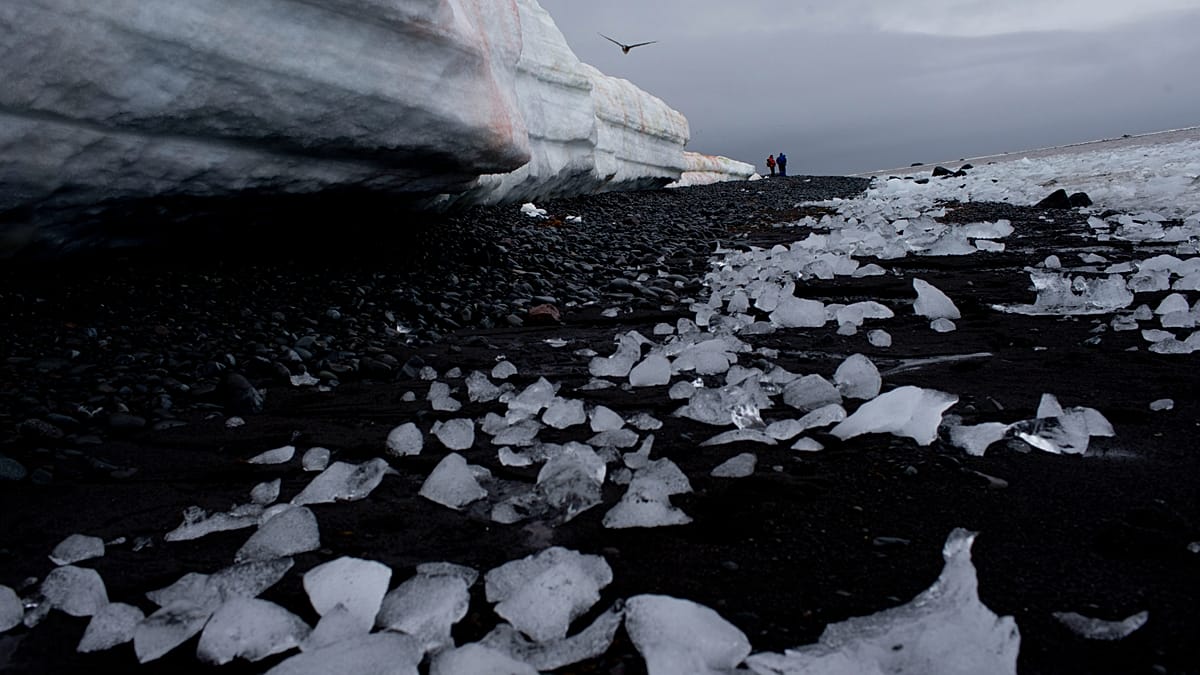
Other stations confirmed the trend. Chile’s Boonen Rivera weather station recorded nearly 13°C. On King George Island, 160 kilometres from Esperanza, researchers reported large patches of bare ground after the mercury hit 4.6°C on 6 June. “Last weekend was very strange. The temperatures here went very high so everything outside melted,” said Luis Muñoz, a Chilean glaciologist. “Usually there is 20 cm of snow and a lot of ice on the ground at this time.”
Even at the 500-metre summit of the nearby Collins glacier, Muñoz observed rain melting the ice. “There was a direct impact on the glacier, which should be receiving snow now. It should not be suffering ablation at this time of the year. This is obviously not good for the glacier,” he added.
The event echoes broader concerns about the continent’s stability. Earlier this year, a study in Frontiers in Environmental Science modelled best- and worst-case scenarios for the Antarctic Peninsula under human-caused climate change. Under the highest emissions pathway, sea ice coverage could fall by 20 per cent, threatening species such as krill, a key prey for whales and penguins. Higher ocean warming would also stress ecosystems and contribute to extreme weather.
These findings align with recent extreme events linked to fossil fuel burning, including the deadly Valencia floods of 2024 and last year’s monsoon storms in Asia. Researchers warn that the continent’s future “depends on the choices we make today,” arguing that cutting emissions could avoid the most “important and detrimental” impacts.
For Europe, the Antarctic heatwave is a distant but direct signal. The continent’s ice sheets influence global sea levels, and their melt contributes to rising waters that threaten coastal cities from Rotterdam to Venice. The European Union’s Copernicus programme has repeatedly highlighted the link between polar warming and record heatwaves across Europe. Meanwhile, the El Niño pattern has amplified global temperature extremes, compounding the risks.
As the Antarctic winter continues, scientists will watch for further anomalies. The current heatwave has already exposed the vulnerability of the region’s glaciers and ecosystems. Whether this becomes a recurring pattern depends on the pace of global emissions reductions—a choice that remains firmly in human hands.