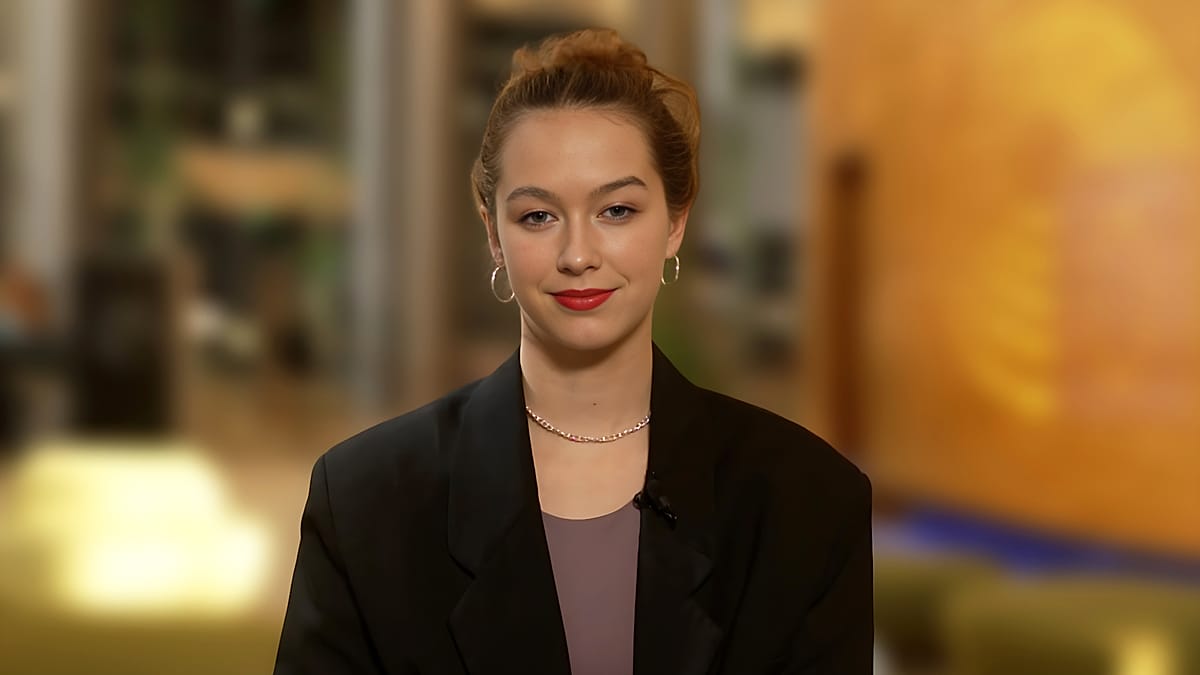
Green MEP Lena Schilling has spoken publicly for the first time about the discovery of nude deepfake images of herself, describing the moment she learned of their existence as an “immense shock.” The Austrian politician, who sits in the European Parliament for the Greens/EFA group, said the images were part of a coordinated effort to strip her of her dignity and intimidate her out of public life.
The revelation came through a report by Agora Digital Transformation, a Berlin-based think tank, which identified at least 50 MEPs—46 women and four men—who have been targeted by AI-generated pornography. The images, created using so-called “nudifier” apps, superimpose victims’ faces onto explicit content without their consent. Schilling is among the most prominent figures affected.
In an interview with European media, Schilling said the experience was “unseen” in its humiliation and warned that it could have a chilling effect on young women considering a career in politics. “This is not just a personal attack; it is a threat to democracy,” she said. “If this is what happens to women who speak up, we are telling the next generation that they will be punished for their ambition.”
The report’s findings have reignited debates across the EU about the regulation of AI-generated content. While the bloc’s landmark Artificial Intelligence Act includes provisions on deepfakes, critics argue that enforcement remains weak and that the tools used to create such images are still widely accessible. Schilling is now calling for a ban on AI nudifier apps, which she says have no legitimate purpose and should be treated like other harmful technologies.
Deepfakes as a political weapon
The targeting of MEPs is part of a broader pattern of AI-generated disinformation aimed at undermining European institutions. Earlier this year, a fake AI-generated selfie of Vladimir Putin circulated online, highlighting how easily such content can spread. More recently, pro-Russian networks have distributed fake videos alleging ballot fraud in Germany, and AI-generated protest videos have been used to stoke far-right sentiment across the continent.
Schilling’s case is particularly striking because of her age and profile. At 31, she is one of the youngest members of the European Parliament and has been a vocal advocate for climate action and digital rights. Her experience underscores the gendered nature of online abuse, which disproportionately targets women in politics. According to a 2022 study by the European Parliament, 85% of women MEPs have experienced online harassment, with many saying it has made them consider leaving politics.
The psychological toll is significant. Schilling said she felt “violated” and “powerless” when she first saw the images, which were shared on social media platforms before being taken down. She praised colleagues and party allies for their support but stressed that the burden should not be on victims to fight back. “We need systemic solutions, not just individual resilience,” she said.
Legal experts point out that while many EU member states have laws against non-consensual intimate imagery, these often do not cover AI-generated content. In Austria, for example, the criminal code was amended in 2021 to include deepfake pornography, but enforcement remains patchy. At the EU level, the Digital Services Act requires platforms to remove illegal content, but the definition of “illegal” varies by country, creating a patchwork of protections.
Schilling’s call for a ban on nudifier apps has gained traction among digital rights groups, who argue that such tools are inherently abusive. “There is no legitimate use case for an app that turns photos of real people into pornographic images without their consent,” said one campaigner. “Banning them would be a clear signal that this behaviour is unacceptable.”
The European Commission has not yet responded to the proposal, but the issue is likely to be raised in upcoming discussions on the AI Act’s implementation. The law, which entered into force in August 2024, includes transparency requirements for deepfakes but does not explicitly ban nudifier apps. Some MEPs have suggested that the law should be amended to close this loophole.
For Schilling, the fight is personal as well as political. She said she hopes her decision to speak out will encourage other victims to come forward and will push policymakers to act. “I refuse to be silenced,” she said. “If they think this will make me disappear, they are wrong. I will keep fighting—for myself, for my colleagues, and for every woman who refuses to be intimidated.”
The report by Agora Digital Transformation is expected to be followed by further research into the scale of the problem, including the role of social media platforms in hosting such content. In the meantime, Schilling’s message is clear: the creation and distribution of deepfake pornography is not a harmless prank but a serious violation of human dignity and a direct assault on democratic participation.