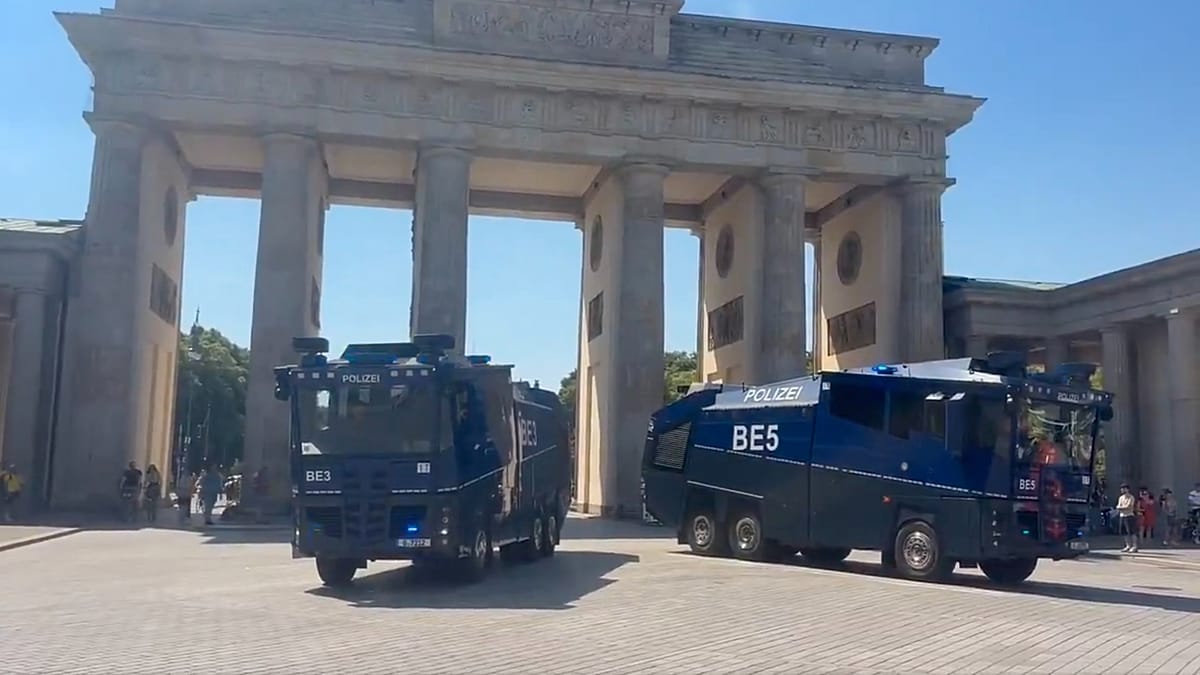
As Germany swelters under its most intense heatwave of the year, Berlin police have taken an unusual step: deploying two water cannons normally reserved for protest control to cool down residents and tourists. The vehicles, which sprayed a gentle mist rather than high-pressure jets, toured iconic locations including the Brandenburg Gate, Potsdamer Platz, and the Reichstag building, delighting crowds seeking relief from the oppressive heat.
The move underscores the severity of the current heatwave, which has gripped Germany for several days. According to provisional data from the German Weather Service (DWD), last night was Germany’s warmest since records began. The highest minimum temperature was recorded in Kubschütz, eastern Saxony, where the mercury did not fall below 29.4 degrees Celsius. A provisional daytime high of 41.5 degrees was measured on Saturday at 16:20 in Möckern-Drewitz, Saxony-Anhalt.
Heatwave Peaks, Then Eases
Sunday is expected to mark the peak of the heatwave, with the DWD forecasting temperatures between 37 and 41 degrees Celsius. Localised thunderstorms may bring torrential rain, hail, and strong gusts later in the day and into the night. However, relief is on the horizon: overnight temperatures are set to drop to between 23 and 19 degrees, and Monday will see highs of only 27 to 31 degrees, with periods of rain and isolated thunderstorms.
The lack of nighttime cooling has been particularly taxing, with temperatures remaining high even after dark. This phenomenon, known as tropical nights, exacerbates health risks, especially for vulnerable populations. As Copernicus Director: Europe Must Adapt to Extreme Heat or Face Deadly Consequences highlights, such conditions are becoming more frequent across the continent, demanding urgent adaptation strategies.
Berlin’s water cannon initiative is a creative, albeit temporary, response to the crisis. While the vehicles are typically associated with crowd control, their repurposing for public cooling has been met with enthusiasm. Social media posts showed locals and tourists alike gathering around the misting sprays, a rare moment of communal relief in a city known for its resilience.
The heatwave is part of a broader pattern affecting Europe. Recent studies have shown that extreme heat stress is adding up to 40 extra days of dangerous conditions annually across the continent. As Extreme Heat Stress: Europe's Deadly New Normal as Study Reveals 40 Extra Days notes, this trend has profound implications for public health, infrastructure, and daily life. In Rome, for instance, the Bioparco zoo has deployed frozen treats and chilled pools to protect animals, as reported in Rome's Bioparco Deploys Frozen Treats and Chilled Pools to Protect Animals from Heatwave.
While Berlin’s water cannons offer a momentary respite, they also serve as a symbol of the lengths to which cities must go to cope with rising temperatures. As Europe faces a future of more frequent and intense heatwaves, such measures may become less of a novelty and more of a necessity.