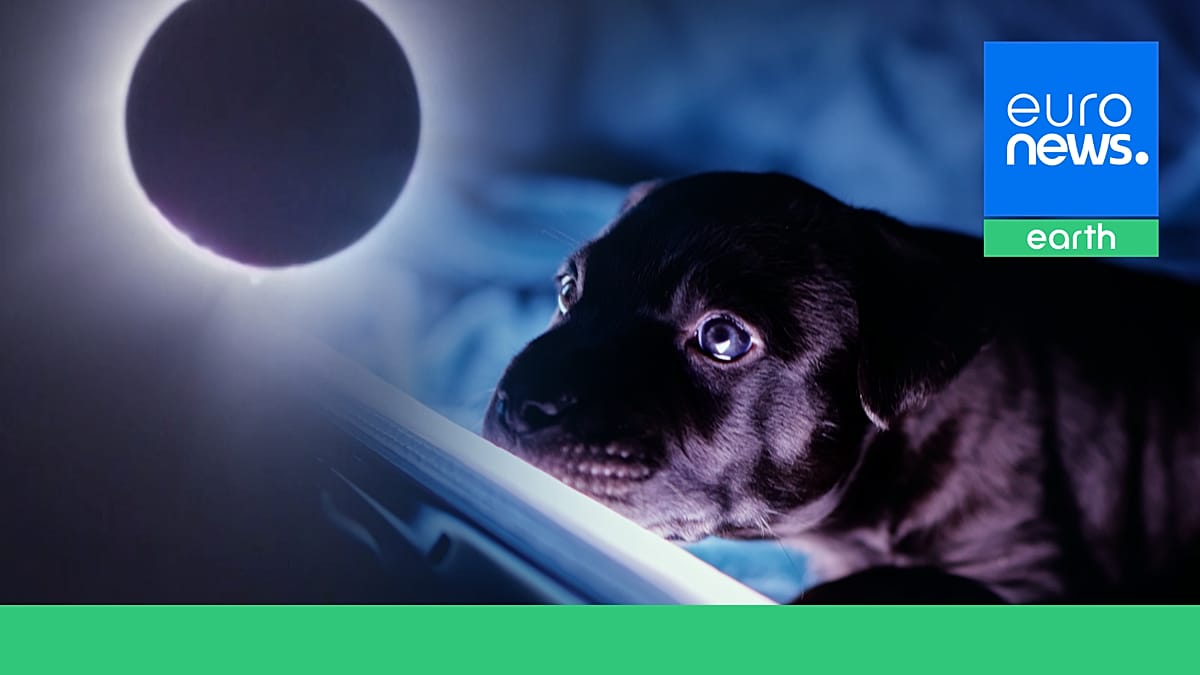
For skywatchers from Reykjavík to Madrid, a total solar eclipse is a moment of awe. But for the animals sharing those skies, the sudden plunge into darkness in the middle of the day is something else entirely: a bewildering disruption of the natural rhythms they rely on to survive.
Unlike humans, who can read forecasts and don protective glasses, animals have no way to prepare for the moon sliding in front of the sun. As light fades and temperatures drop, the environmental cues that guide their daily routines—brightness, warmth, the position of the sun—change abruptly. The result, scientists say, is a brief but genuine period of confusion, stress, or opportunistic behavior.
What the science shows
Researchers who have studied animal behavior during eclipses have built a fairly consistent picture, even if individual species react differently. One of the most commonly reported effects is the sudden silence. Birds that sing throughout the day often stop the moment darkness falls, as though evening has arrived hours early. In contrast, nocturnal animals such as owls may become active, treating the eclipse as an early dusk.
Zoo observations across Europe have provided vivid examples. Elephants have been seen heading straight for their night-time enclosures, interpreting the darkness as the usual lock-up signal. Gorillas have charged the glass of their exhibits, while giraffes have paced and swayed—clear signs of agitation. Domestic pets are not immune either: dogs have been reported to whine, pace, or seek comfort from their owners, while cats may become unusually alert or hide.
The effects are not limited to vertebrates. Bees and other insects often return to their hives or nests as if night were falling, and some butterflies have been observed settling on leaves. The brief totality—usually just a few minutes—means these disruptions are short-lived, but they are nonetheless real.
A European perspective
Europe has been a natural laboratory for such studies. During the 1999 total eclipse that crossed parts of France, Germany, and Austria, researchers documented changes in bird song and insect activity. More recently, the 2015 eclipse visible from the Faroe Islands and Svalbard offered similar insights. With the upcoming total eclipse on 12 August, which will pass over Iceland and parts of Spain, scientists and amateur naturalists are preparing to observe again.
For those planning to watch, the spectacle is not just about the sky. Iceland is bracing for the event, and Spain is offering incentives to reduce electricity use during the darkness. But for animals, there is no such preparation.
As the eclipse passes, the return of sunlight is just as sudden as its disappearance. Birds resume their songs, bees take flight again, and zoo animals settle down. The brief disruption ends, but it leaves a lasting impression on those who witness it—and a reminder that our planet's rhythms are shared by all its inhabitants.