El Salvador's president, Nayib Bukele, confirmed on Wednesday that his security forces had bombed and destroyed the luxury residence of Jeff Larose, one of Haiti's most powerful gang leaders. The strike, carried out with helicopters, targeted a mansion in the Canaan area north of Port-au-Prince. Whether Larose was inside or survived the attack remains unknown.
Bukele shared a video on X showing Larose posing in front of his property, followed by footage of Salvadoran helicopters approaching and opening fire. Plumes of smoke rise from the compound in the clip. In a post, Bukele called the operation "my gift to the Haitian people on the anniversary of the Battle of Vertières," referencing the 1803 battle that secured Haiti's independence from France and established it as the world's first black republic.
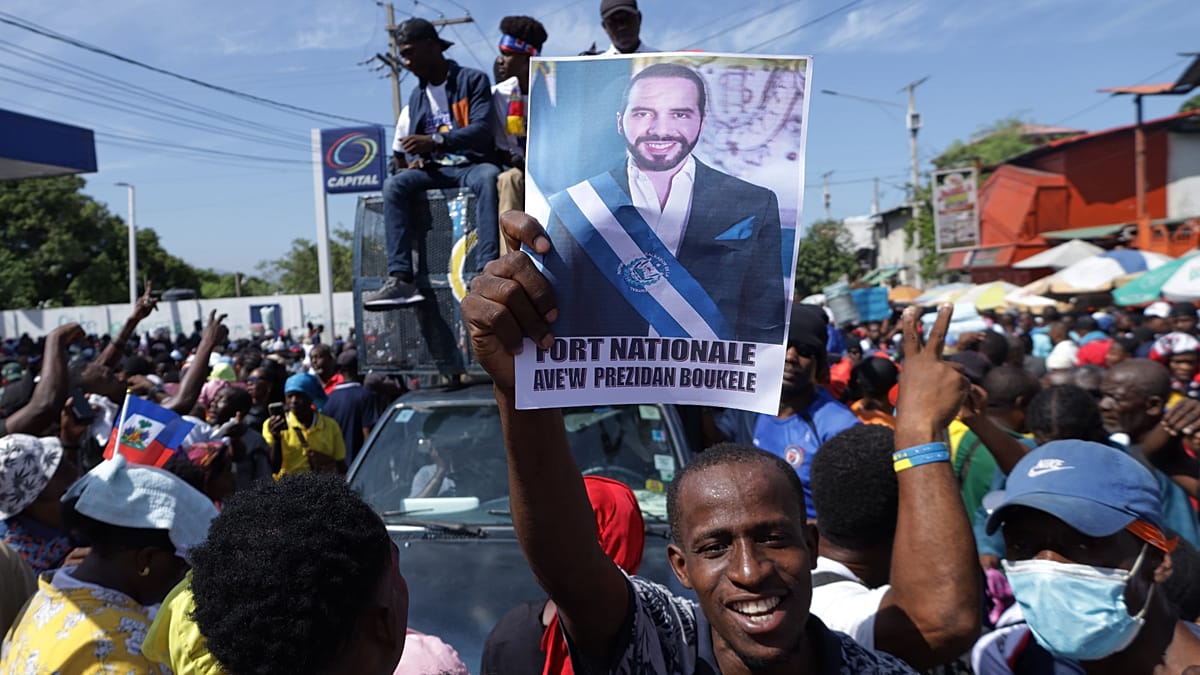
The announcement comes amid a broader Salvadoran deployment in Haiti, part of a bilateral security pact. Thousands of Haitians have taken to the streets of Port-au-Prince for a second consecutive day, chanting Bukele's name and celebrating the strike. "Jeff is a criminal and I hope he is dead. We asked for help and Bukele answered us," said Mario Jean-Pierre, a 45-year-old vendor.
Who is Jeff Larose?
Larose, also known as Jeff Canaan, Jeff Gwo Lwa, or Taliban, leads a gang that has controlled the Canaan community for years. According to Diego Da Rin, a Haiti expert at the International Crisis Group, his organisation is one of the country's most structured criminal groups and holds significant territorial control. The gang is known for extortion, kidnappings, and violent clashes with rivals.
The airstrike follows a similar operation on 8 November, when Salvadoran forces attacked the residence of Wilson Joseph, leader of the 400 Mawozo gang. Joseph and Larose were allies and are considered two of the main criminal bosses in the capital. The recent strikes signal an escalation in the joint Haitian-Salvadoran campaign against gang leadership.
Civilian safety concerns
Bukele deployed around 2,500 troops to Haiti last month, after four Salvadoran soldiers were attacked on 18 October in gang-controlled territory and went missing. The use of helicopters and explosive drones has intensified operations but also raised the risk of civilian casualties. Experts warn that retaking territory is only the first step; maintaining control and preventing reprisals against residents remain major challenges.
The operation has drawn international attention, including in Europe, where security cooperation with non-EU partners is a growing topic. The formalised security pact between Haiti and El Salvador has been met with both support and skepticism. Some European observers question the effectiveness of militarised approaches, while others point to the need for robust action against criminal networks that destabilise the region.
In Brussels, EU officials have been discussing broader security cooperation with Latin American countries, though no direct link to the Haiti operation has been made. The situation in Haiti remains a humanitarian concern, with gangs controlling large parts of the capital and displacing thousands. The Dublin summit earlier this month focused on EU unity in foreign policy, but Haiti was not on the agenda.
Bukele's approach, which has been praised by some Haitians, also draws criticism from human rights groups who fear extrajudicial actions. The Salvadoran president has not indicated whether further strikes are planned. For now, the fate of Jeff Larose remains uncertain, and the people of Canaan wait to see if the operation brings lasting change or further instability.