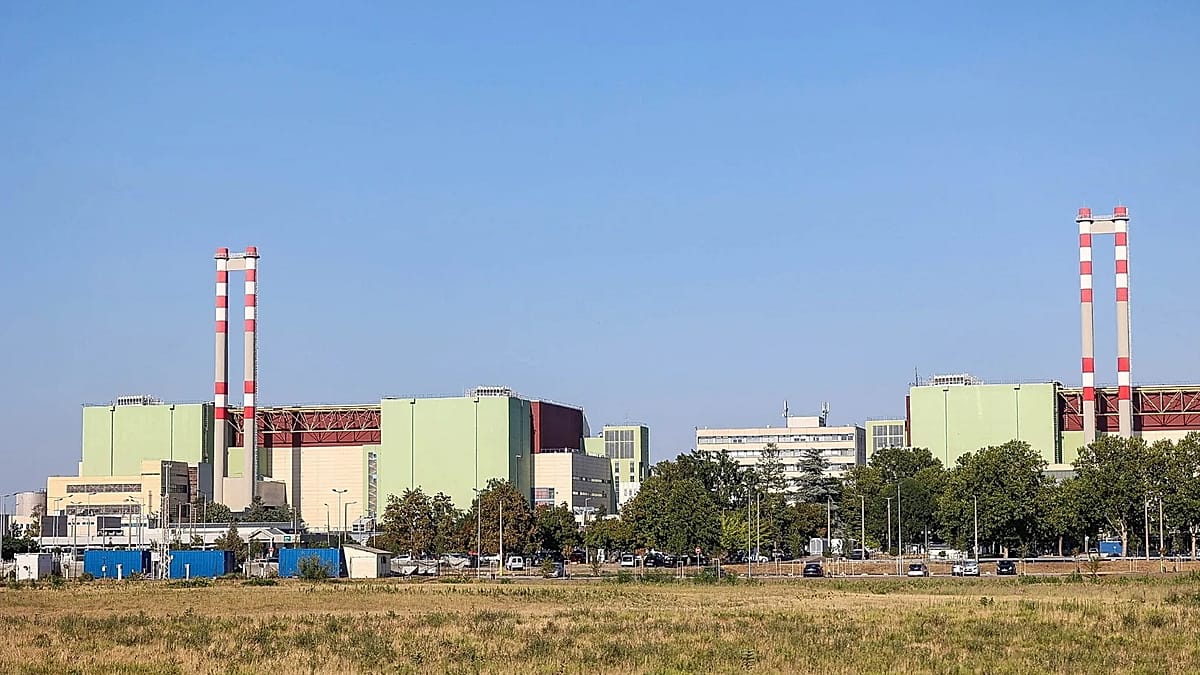
After weeks of historic drought, the Danube's water level at Paks, south of Budapest, has finally begun to recover, allowing the MVM Paks Nuclear Power Plant to restart a second generating turbine. The river rose by about 19 centimetres from its record low, enough to restore safe cooling conditions and bring the unit back online from Monday evening.
The restart marks a cautious step back from the crisis that gripped the plant in early August, when the Danube plummeted to minus 134 centimetres at Paks — its lowest level on record. That forced operators to shut down three of the four reactor units in a controlled sequence, leaving only a single turbine running and cutting output to a minimal 240 megawatts.
From crisis to controlled recovery
The turnaround came after sustained rainfall in Austria's catchment areas sent a flood wave downstream along the Danube's upper reaches. That wave has now reached the Paks section, lifting the water level enough to guarantee adequate pump pressure for the plant's cooling systems. The cold-water channel pumps, which had struggled to maintain efficiency during the low-water period, are now operating normally, ensuring the condensers can be cooled effectively.
With the second turbine back in service, the plant's output to the Hungarian grid will rise to 500 megawatts. But the reconnection is not being rushed. As operators stress, nuclear safety takes absolute precedence over electricity production. Before the turbine could be started, engineers had to create a sufficient vacuum in the condenser and verify the quality of the secondary-circuit water. The reactor's thermal output and steam volume are being adjusted step by step, synchronised with the generator's grid connection according to a strict timetable.
The systems that cool the reactor core and the spent fuel pools never stopped working, even during the worst of the drought. Their flawless operation was a precondition for the restart, and they remain under continuous monitoring.
The Danube's recovery is not just a local relief. Across the region, the river's extreme lows have exposed sandbanks, stranded boats, and even revealed a WWII motorbike near Budapest's parliament. The unusual sights along the riverbed have drawn attention to the broader pressures on Europe's water reserves. As leaks, overuse, and pollution strain supplies, the Paks incident underscores how dependent critical infrastructure is on stable water levels.
The European Union has been grappling with these challenges, unveiling a resilience plan to address the continent's deepening water crisis. For now, however, the immediate concern at Paks is the safe return to fuller operation. The plant's four units, which together provide about half of Hungary's electricity, are vital to the country's energy security.
As the flood wave continues downstream, operators will keep a close eye on water levels. If the Danube maintains its recovery, further turbines could be restarted in the coming days, each step subject to the same rigorous checks. The process is deliberately incremental, reflecting the principle that in nuclear power, caution is never optional.