The European Union is increasingly confident that Hungary will soon drop its contentious veto on a €90 billion loan for Ukraine, ending a months-long political standoff that has paralysed the bloc's collective response to Russia's war. The resolution could also clear the way for a new package of sanctions against Moscow.
High Representative Kaja Kallas told reporters on Tuesday morning: "We expect some positive decisions tomorrow on the €90 billion loan. Ukraine really needs this loan, and it is also a sign that Russia cannot outlast Ukraine. This is extremely important at this moment."
The deadlock stems from Hungarian Prime Minister Viktor Orbán's demand that Russian oil flows resume through the Druzhba pipeline before he lifts his veto. Following a bruising electoral defeat, Orbán has signalled he will relent once the pipeline restarts, citing "indications" from Brussels that this is imminent. EU ambassadors could resolve the matter as early as Wednesday if Orbán follows through.
Disbursement Plans and Conditions
The loan, designed to cover Ukraine's financing needs through 2027, is split into two tranches. For 2026, Brussels intends to disburse €45 billion, with €16.7 billion allocated for financial support and €28.3 billion for military aid. Payments will be conditional on Kyiv meeting reform benchmarks, including anti-corruption measures. If Ukraine weakens its fight against corruption, payments could be suspended.
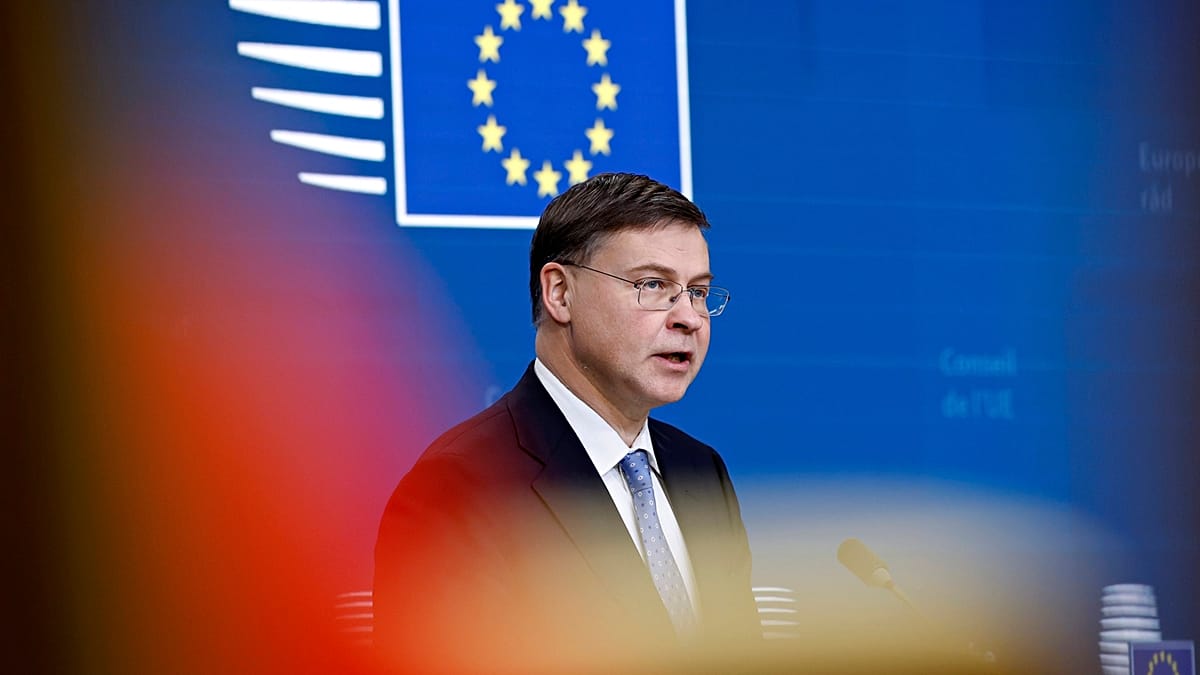
The remaining €45 billion is earmarked for 2027, covering two-thirds of Ukraine's funding needs. Western allies are expected to cover the outstanding third. Valdis Dombrovskis, the European Commissioner for the Economy, noted that even if the veto persists temporarily, Kyiv has sustainable financing until late May or early June thanks to contributions from other allies.
Dombrovskis said he could not rule out the veto being lifted "this week," but added: "There may be some movement still while Orbán is in office. In a sense, I don't want to claim it too prominently before I see it happening, because we have seen many delays and a lot of back and forth. If it happens, great. If not, we will have to wait for a new prime minister. But all in all, I think it's clear that we will be able to unblock this situation." A transition of power in Budapest is expected in early May.
Sanctions Package Held Hostage
The dispute over the Druzhba pipeline has also blocked approval of a new EU sanctions package against Russia, which includes a full ban on maritime services for Russian oil tankers. This measure aims to raise costs for the Kremlin and reduce revenues financing the invasion. However, Malta and Greece have raised concerns that the ban could harm their flagging and shipping industries, respectively, and want it introduced only if there is a G7-level agreement.
Dombrovskis acknowledged the broader effectiveness of G7 action but stressed: "We should not be making ourselves dependent on this. We should not put ourselves in a situation where if there's no G7 agreement, we are not able to act ourselves. In this case, we need to act as the EU and sustain and increase this sanctions pressure on Russia."
The G7 agreement is far from certain after the White House extended sanctions relief for Russian oil, a measure introduced to cope with price spikes from the closure of the Strait of Hormuz. US Treasury Secretary Scott Bessent initially declined to renew the waiver, raising European hopes, only to issue a new waiver until 16 May two days later. Dombrovskis, who met Bessent last week, called the policy U-turn "difficult to understand."
"Now it's not the time to release pressure on Russia. We need to continue with sanctions, we need to continue with the G7 price cap, because it's exactly what Russia is benefiting from: higher oil prices," Dombrovskis said. According to the International Energy Agency, Russia's revenue from crude and refined products rose sharply to $19 billion (€16 billion) in March, compared to $9.7 billion (€8.2 billion) in February, partly due to the US-Iran war.
The broader context of EU-Ukraine relations remains complex. As Zelenskyy has demanded full integration rather than symbolic membership, the loan's approval is seen as a critical test of European solidarity. Meanwhile, EU leaders in Cyprus recently tackled the intertwined crises of Ukraine, the Hormuz situation, and mutual defence. The Druzhba pipeline restart is now the key to unlocking both the loan and the sanctions package.