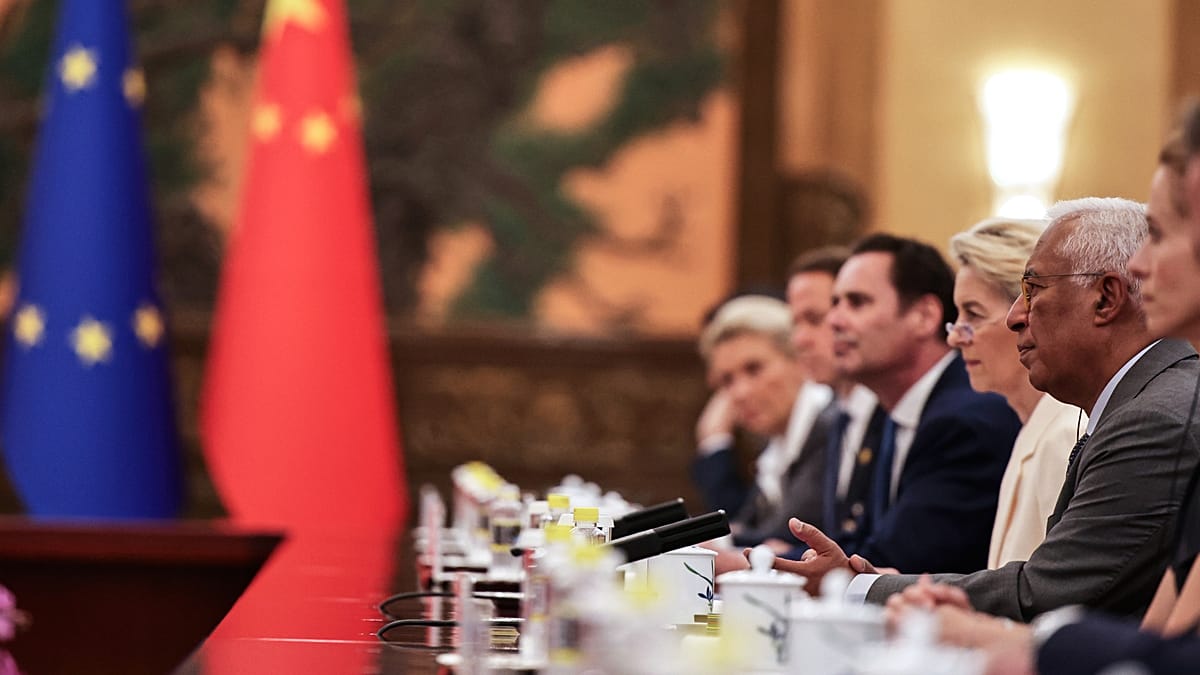
Brussels is pressing Beijing to accept quotas on Chinese exports to the European Union as negotiations enter their final stretch, with the European Commission threatening trade measures unless tangible progress is made by next month. The talks, which began in June, are part of a broader effort to rebalance a trade relationship that many in Europe see as increasingly lopsided.
According to a person familiar with the matter, the Commission—which negotiates trade on behalf of the 27 member states—wants China to agree to voluntary export restrictions on specific products. Such a system would see Beijing voluntarily limit its shipments to the EU under a negotiated deal, sparing Brussels from having to impose defensive measures that could be seen as aggressive by China.
However, it remains unclear whether Beijing would accept such quotas and, more importantly, how they would be enforced. Chinese officials have so far pushed back against the idea, with the country's trade minister publicly rejecting the proposal for electric vehicles earlier this month.
Trade defence mechanisms delayed
To give negotiations a chance, the Commission has delayed the adoption of trade defence mechanisms aimed at protecting the EU's chemical industry, according to another person familiar with the matter. The chemical sector is one of the most exposed to Chinese competition, and the delay is seen as a goodwill gesture to keep talks alive.
The stakes are high. EU Industry and Trade Commissioner Stéphane Séjourné told Euronews last week that rebalancing the trade relationship is “existential” for Europeans. The threat from Chinese competition extends beyond chemicals to other sectors, including electric vehicles, steel, and pharmaceuticals.
Technical negotiations are now in their final stretch as the October deadline approaches. Ditte Juul Jørgensen, Director General of DG Trade, travelled to China last week for two days of heated discussions. EU Trade Commissioner Maroš Šefčovič is due in Beijing on 8 and 9 October for political talks, ahead of a key meeting of EU leaders in Brussels.
The outcome of these talks will have significant implications for Europe's industrial base and its ability to compete globally. As the cognac export crisis has shown, EU trade policy must balance defensive measures with the risk of retaliation. A failure to secure quotas could prompt Brussels to adopt more aggressive measures, potentially triggering a trade war with China.
Meanwhile, the EU is also watching developments in Washington, where Trump and Xi have extended their trade truce, a reminder that global trade dynamics are shifting. For Europe, the challenge is to secure a fair deal without alienating a major trading partner.
The Commission's approach has been to seek voluntary export restrictions rather than unilateral tariffs, which could be challenged at the World Trade Organization. But Beijing's resistance suggests that the EU may have to consider other options if no agreement is reached by the October deadline.
As the talks enter their final days, the pressure is on both sides to find a compromise. The EU's leaders will be watching closely, knowing that the outcome will shape the bloc's trade policy for years to come.