Europe's ongoing drought has driven river levels to unprecedented lows, unveiling a trove of historical artifacts that have been submerged for decades or even centuries. From the Elbe to the Danube, the receding waters are offering a rare glimpse into the continent's past, while also underscoring the severity of the current climate crisis.
Hunger stones resurface on the Elbe and Rhine
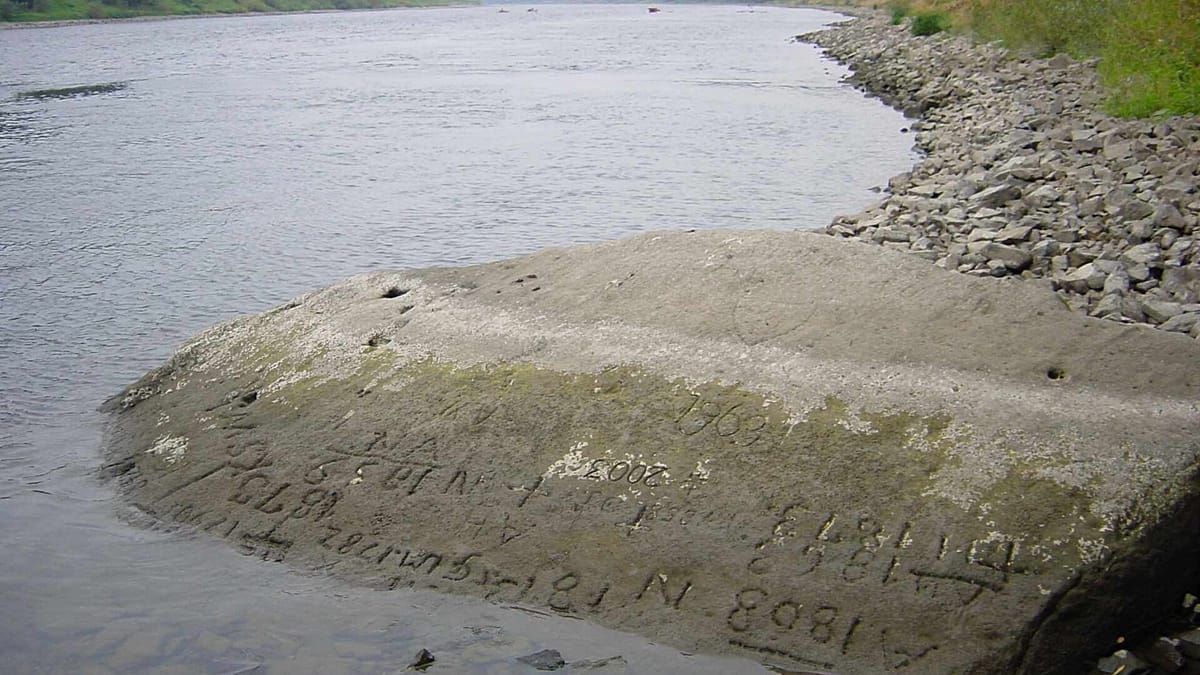
In Germany, the Elbe River near Pirna, close to the Czech border, has revealed a large hunger stone in the Oberposta district. This stone, one of the largest and most famous in the country, is etched with dates from past droughts, the oldest dating back to 1707. Hunger stones were traditionally used as warnings, signaling that low water levels could lead to crop failures, shipping disruptions, and even famine. Their reappearance is a stark reminder of the hardships that extreme dryness has historically brought.
Further west, the Rhine's low water levels have exposed similar stones near Leverkusen, north of Cologne. One stone bears the date 1959, while historical records mention another with the inscription "If you see me, you will weep," though that particular stone has yet to emerge.
WWII warships and relics in the Danube
The Danube, Europe's second-longest river, has also given up its secrets. Near the Serbian-Romanian border, the wrecks of Nazi Germany's Black Sea fleet have reappeared on sandbanks. These ships were deliberately scuttled in September 1944 to impede the Soviet advance, and historians estimate up to 200 vessels were sunk. Many still contain explosives, making salvage operations risky. The Serbian government has attempted recovery in the past, but most wrecks remain in place.
In Hungary, the drought has exposed a nearly intact Wehrmacht motorcycle near Budapest, along with ammunition and anti-tank mines. According to the Hungarian Institute of Military History, this stretch of the Danube may have been used as a dumping ground for war debris after the siege of Budapest in 1944-45. Further south, near Mohács, the wreck of a WWII warship has emerged, and in Baja, the Sugovica branch has dried up enough for people to cross on foot.
Bulgaria has yielded an even older find: the skeleton of a woolly mammoth, uncovered near the village of Ryahovo. Experts believe the remains date back thousands of years, and their exposure is a direct result of the river's record-low levels.
Beyond history: the drought's modern impact
The drought is not just a window into the past; it is also straining modern infrastructure. In Hungary, the Paks nuclear power plant's cooling system has been threatened by low water levels, which briefly fell to near the minimum required for operation. In Romania, ferry services have been suspended, barges are stranded, and irrigation is becoming increasingly difficult. Serbia has seen hydropower generation decline, while sandbanks have turned into makeshift beaches.
These developments echo broader concerns about Europe's energy and agricultural resilience. As hydropower hits record lows, the continent's reliance on fossil fuels may grow, complicating climate goals. The drought has also exposed vulnerabilities in other regions, such as Poland's coal plants faltering on the Vistula, and has prompted farmers in places like Alsace to bet on pulses as a more resilient crop.
The reappearance of these relics is a powerful symbol of the challenges ahead. As the climate continues to warm, such extreme events may become more frequent, and the stones that once warned of hardship may become a more common sight.