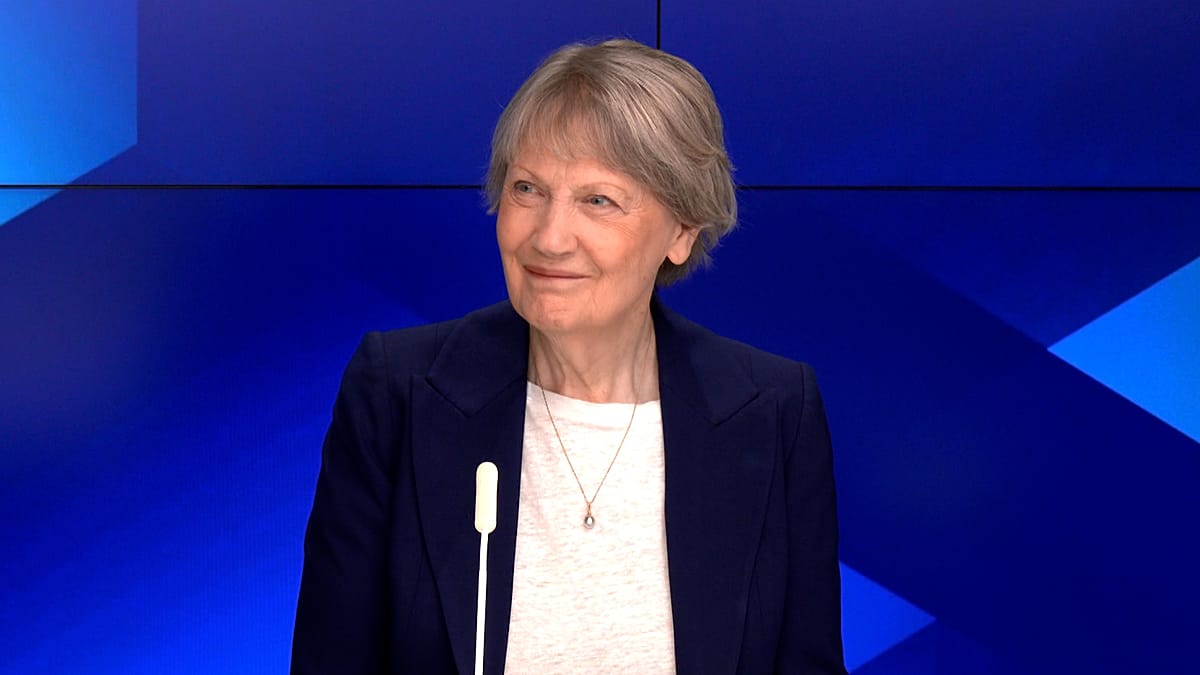
Helen Clark, who led New Zealand from 1999 to 2008, has thrown her weight behind the idea of an EU associate membership for her country, describing it as a "very interesting" prospect. Speaking during a visit to Brussels, Clark said such an arrangement, similar to the one proposed for Canada, could offer Wellington a meaningful foothold in the world's largest trading bloc.
Clark, a former administrator of the United Nations Development Programme, argued that access to the EU's single market would be particularly valuable for a "distant trading country" like New Zealand. "For a country like ours, which is geographically remote but deeply connected to Europe through history and values, a structured relationship with the EU makes sense," she said.
The idea of associate membership has gained traction in recent years as Brussels explores ways to deepen ties with like-minded democracies beyond its borders. The proposal for Canada, which would grant Ottawa a seat at certain EU tables without full voting rights, has been floated as a model for such partnerships. Clark's endorsement adds a prominent voice from the Asia-Pacific region to the debate.
Engaging with China
Clark also urged the European Commission to maintain a pragmatic line with Beijing, even as trade tensions simmer. Her comments come as Maroš Šefčovič, the Commission's trade chief, visits China for talks aimed at easing frictions over market access and subsidies. The EU has been walking a tightrope between protecting its industries and preserving a vital economic relationship with the world's second-largest economy.
"China is a huge economy, and we have to work out how we engage and how we interact with it," Clark said. She cautioned against a purely confrontational approach, noting that Europe and China share interests in areas such as climate change and global stability. Her remarks align with those of European leaders who argue that decoupling from Beijing is neither feasible nor desirable.
The EU's trade agenda has become increasingly complex, with talks with China entering a decisive phase as Brussels seeks concrete results. At the same time, the bloc is grappling with internal challenges, including reforms needed before further enlargement. Clark's suggestion that New Zealand could be part of a broader network of EU partners adds another dimension to these discussions.
For New Zealand, the potential benefits of associate membership extend beyond trade. It would give Wellington a formal channel to influence EU regulations and standards, which often become global benchmarks. It would also signal a deepening of political ties at a time when both sides are looking to diversify their partnerships.
Clark acknowledged that the details would need careful negotiation, but she expressed optimism about the prospects. "The EU has shown creativity in its external relations, and I believe there is room for a new kind of partnership," she said.
Her comments have resonated in Brussels, where officials are increasingly open to innovative arrangements with countries that share the EU's values. Whether New Zealand becomes a test case remains to be seen, but Clark's endorsement has put the idea firmly on the table.