France is increasingly the odd one out in Europe's economic picture. While its main partners continue to expand, the French economy is stalling, according to the national statistics office Insee. After a 0.2% contraction in the first quarter and flat output in the second, Insee has sharply downgraded its 2026 growth forecast to just 0.4%, down from the 0.7% it had previously projected.
The contrast with neighbouring economies is stark. Over the first two quarters, Germany grew by 0.4% and then 0.3%, Italy by 0.3% and 0.2%, and Spain by 0.6% and 0.7%. The United Kingdom also outpaced France, with growth of 0.6% and 0.4% in the same period.
Domestic demand seizing up
Insee describes the situation bluntly: all the engines of domestic demand are seizing up. Household consumption remains weak, and investment is falling, partly due to a slowdown in public projects linked to the municipal electoral cycle. The institute also points to the impact of heatwaves, which have hit agriculture particularly hard, and a labour market that is in a worse state than elsewhere in Europe, with rising unemployment and sluggish wage growth.
The deterioration in public finances is also limiting the government's ability to provide fiscal support. Insee expects a slight pickup in the second half of the year, with growth of 0.1% in the third quarter and 0.2% in the fourth. But for the year as a whole, French expansion will remain roughly three times lower than that of its eurozone peers and the UK.
Inflation and purchasing power
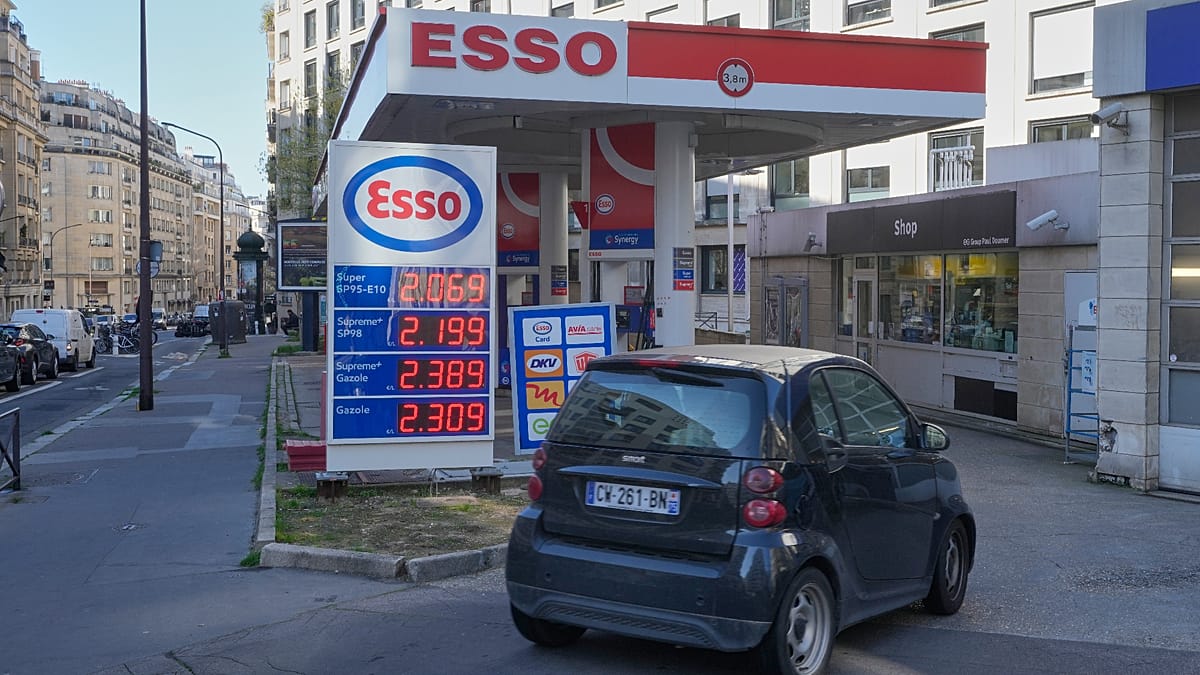
Households face more bad news on prices. Inflation is expected to keep rising, reaching 2.9% by the end of the year, up from 2.4% in August. As a result, purchasing power is projected to fall by 0.4% over the year, driven by declining paid employment and higher prices. Insee warns that a large share of households is likely to be affected.
Consumption, traditionally the main driver of the French economy, is forecast to grow by only 0.3% in 2026. Households are also expected to dip further into their savings, with the savings rate falling from 17.8% of gross income in 2025 to 17.3% this year. Business investment is set to decline by 0.3%, while household investment is projected to fall by 1.3%.
Insee stresses that some uncertainties remain, notably the impact of heatwaves on third-quarter activity and developments in the Middle East.
Budgetary pressure mounts
The downgrade complicates the government's fiscal plans. Just two months ago, the government had already cut its 2026 growth assumption from 0.9% to 0.7%. Weaker growth will put further strain on public finances, even though the government had set a target of reducing the deficit to 5% of GDP in 2026, from 5.1% in 2025. Prime Minister Sébastien Lecornu has admitted he is not very optimistic about hitting that goal.
The news comes as France also grapples with other challenges, including a health alert over contraceptives and protests over proposed sexual violence legislation. Meanwhile, Italy's growth, while modest, still outpaces France, and political divisions in the far-right camp continue to make headlines.
For now, the French economy appears stuck in a low-growth rut, with little relief in sight. The government's ability to revive growth will be crucial, but with limited fiscal room and rising inflation, the path forward looks narrow.