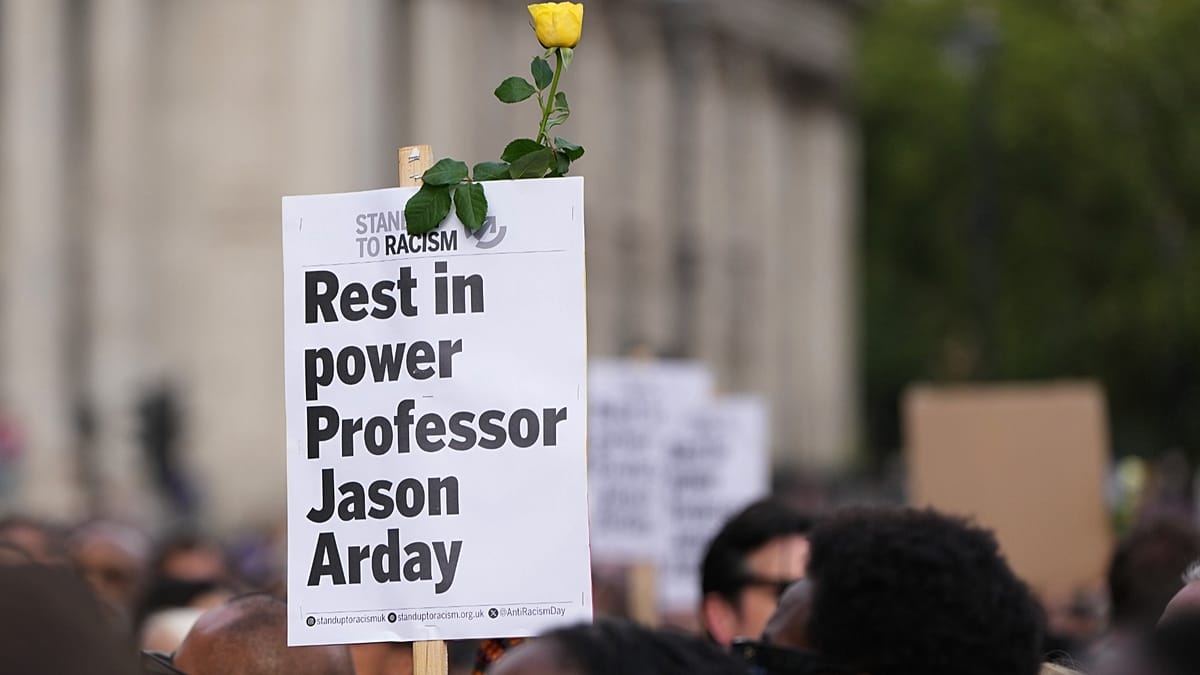
A Belgian university has suspended an American researcher who was central to the plagiarism allegations against Jason Arday, the former Cambridge professor found dead last week at the age of 41.
Nathan Cofnas, a postdoctoral researcher at Ghent University who describes himself as a “race realist” and was previously dismissed from a Cambridge post, announced the suspension on X on Thursday. “I was just suspended by Ghent University. They will almost certainly fire me,” he wrote.
Ghent University did not name Cofnas but confirmed it had opened a “preliminary disciplinary investigation” into a postdoctoral researcher involved in the controversy, adding that the individual had been suspended “as a precautionary measure.”
Arday, who in 2023 became the youngest Black professor in Cambridge’s history, was found dead on Friday. He had faced mounting accusations that he plagiarised parts of his doctoral thesis and overstated some personal achievements. Diagnosed with autism and other developmental difficulties as a child, Arday denied the allegations but resigned on 5 August, saying he had “reached the limits of what any person should reasonably be expected to endure.”
The plagiarism concerns first surfaced years ago but were not pursued after a journalist backed down following a legal threat from Arday. Last month, however, Cofnas came forward claiming he had identified numerous instances of plagiarism in Arday’s work, and the case quickly gained widespread media attention in Britain and the United States.
British media and right-wing commentators seized on the row, suggesting Arday had unfairly benefited from diversity, equality and inclusion (DEI) policies. The controversy has also prompted a UK petition demanding an inquiry into the harassment Arday faced, and his family has condemned the harassment following his death.
University defends academic freedom but sets limits
In a statement on Wednesday, Ghent University said it was “shocked” by Arday’s death and took “very seriously” public statements made by its researcher regarding the former professor. The university’s rector, Petra De Sutter, and vice-rector, Herwig Reynaert, emphasised that the institution “stands for respect for human dignity and opposes discrimination, hatred and racism.”
“We attach great importance to academic freedom and to open academic debate, even when views are controversial,” the statement added. “However, that freedom is not unlimited. It goes hand in hand with responsibility and may be restricted in order to protect the rights of others.”
The university said it was now “assessing” whether there were sufficient grounds to launch full disciplinary proceedings against the researcher. The case has reignited debates across European academia about the boundaries of free speech, the role of DEI policies, and the responsibilities of researchers when making public accusations.
Arday’s death has also drawn attention to the pressures faced by academics in the public eye. His resignation letter, in which he described the limits of what he could endure, has been widely quoted. The circumstances of his death remain under investigation, and a deeper look at the plagiarism scandal shows how quickly the situation escalated.
As Ghent University moves forward with its internal process, the academic community is left to grapple with the consequences of a case that has raised fundamental questions about fairness, accountability, and the treatment of individuals in the crosshairs of public controversy.