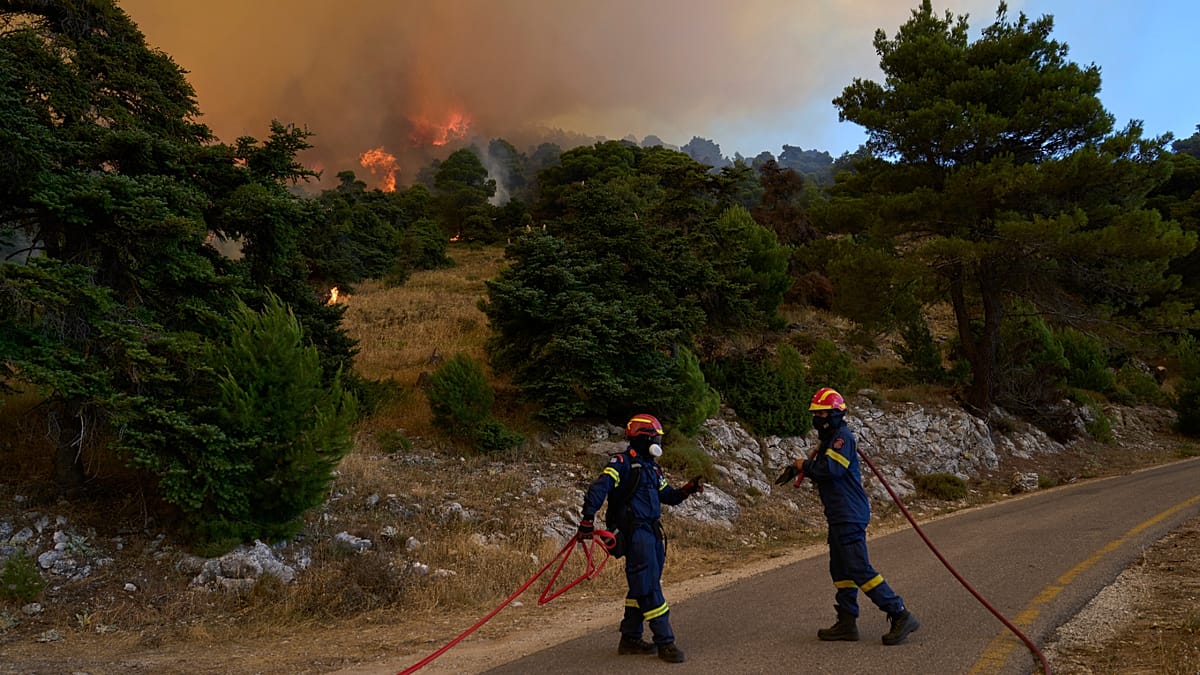
A large wildfire is raging west of Athens, forcing Greek authorities to deploy hundreds of firefighters supported by helicopters and water-dropping planes. The blaze, which broke out amid strong winds and unseasonably high temperatures, has been burning through pine forest and scrubland, sending thick smoke over parts of the Attica region.
Firefighting efforts under strain
More than 300 firefighters, backed by ground crews and a fleet of aerial assets, have been working to contain the flames. Water-bombing aircraft have been making repeated sorties, but gusty winds have made their task difficult, at times grounding helicopters and forcing crews to focus on protecting inhabited areas.
Local authorities have issued evacuation orders for several settlements near the fire front, and residents have been urged to follow instructions from civil protection services. Police have closed some roads in the area to allow emergency vehicles through, and volunteers have been assisting with evacuations.
The fire is the latest in a series of blazes that have hit southern Europe this summer, as the continent grapples with the effects of a prolonged heatwave. In recent weeks, wildfires have raged across southern Europe, from Portugal to Greece, straining national firefighting resources and raising concerns about the impact of climate change on the region.
Regional context and climate concerns
Greece is no stranger to summer wildfires, but the intensity and frequency of recent blazes have prompted renewed debate about forest management and fire prevention. The country has invested in new firefighting equipment and early warning systems, but officials acknowledge that extreme weather conditions are making the task harder.
Elsewhere in the Mediterranean, similar challenges are playing out. In Spain, a wildfire in Huelva forced 800 evacuations as drought conditions persist, while in Italy, a blaze above Lake Garda forced the evacuation of 200 residents and tourists. The pattern is consistent: hot, dry weather combined with strong winds creates a dangerous environment for fires to spread rapidly.
Scientists point to a clear link between rising global temperatures and an increased risk of wildfires. A recent study highlighted that wildfire smoke can threaten pregnancy outcomes, adding to the public health concerns associated with these events. As Europe warms faster than the global average, the continent is likely to face more frequent and intense fire seasons.
Response and outlook
Greek Prime Minister Kyriakos Mitsotakis has been briefed on the situation, and the government has pledged additional resources if needed. The European Union has also offered assistance through its Civil Protection Mechanism, which coordinates cross-border firefighting support.
Firefighters are expected to work through the night to establish containment lines, with weather forecasts suggesting that winds may ease slightly in the coming hours. However, the risk of new outbreaks remains high, and authorities are urging vigilance.
For residents of the affected areas, the immediate priority is safety. Many have spent the day watching plumes of smoke rise from the hills, hoping that the wind will shift and the flames will be brought under control. The coming days will be critical in determining the full extent of the damage.
As Europe faces another challenging fire season, the need for coordinated action and long-term investment in fire prevention has never been clearer. From the hills of Attica to the forests of Iberia, the message is the same: preparation and resilience are essential to protect communities and landscapes.