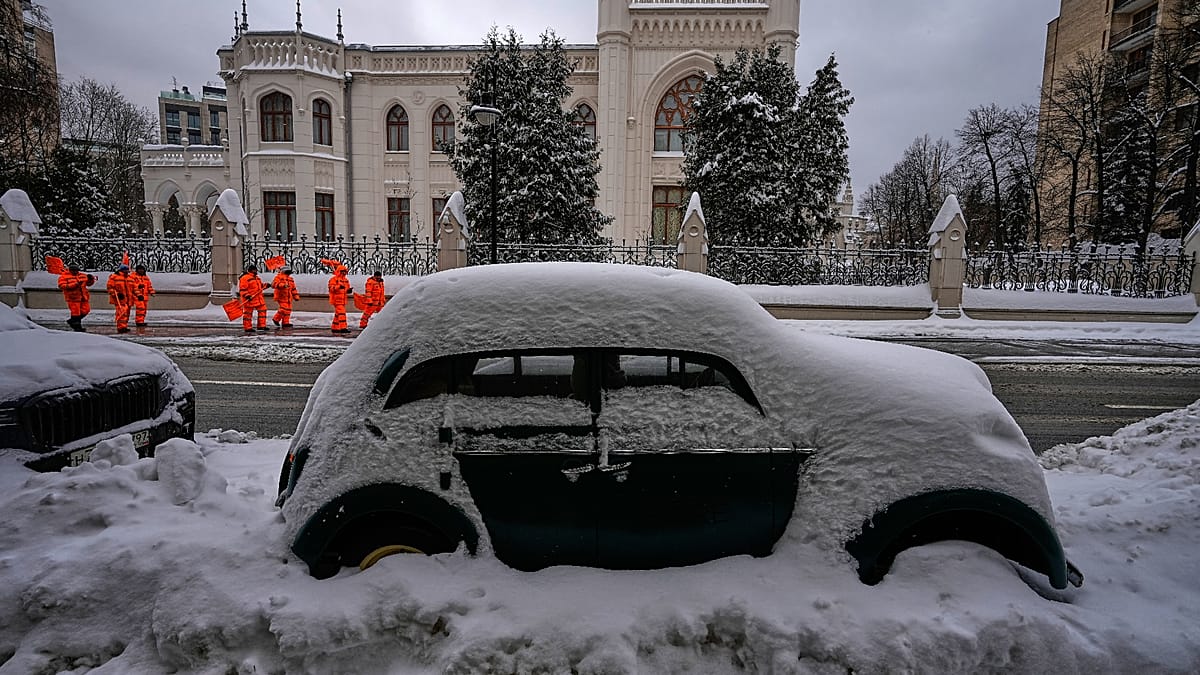
An unusually early and heavy snowfall has paralysed road transport in Russia's Magadan region, a remote territory in the country's Far East. Video footage circulating on social media shows articulated lorries sliding and stuck on snow-covered highways, while local authorities have suspended intercity bus services until further notice.
The storm, which struck overnight, dumped several centimetres of wet, dense snow on roads that were still not equipped for winter conditions. In Magadan, the regional capital, municipal crews have been working around the clock to clear the main arteries, but side streets and rural routes remain impassable. The regional transport ministry said that all intercity bus routes, including those connecting Magadan with the towns of Arman and Ola, would remain suspended until the weather improves.
Logistical strain in a remote region
Magadan is one of Russia's most isolated regions, accessible by road only via the Kolyma Highway, a notoriously challenging route that links the city to the rest of the country. The highway, often referred to as the “Road of Bones” due to its history, is now buried under snow, cutting off the region's main land link. Local truckers, many of whom were caught off guard by the sudden change in weather, have been forced to wait for hours in freezing conditions.
“This is not normal for this time of year,” said Viktor Petrov, a long-haul driver from Yakutsk, in a phone interview with a local news outlet. “We expected cold, but not this much snow. The wheels just spin, and you can't see the road ahead.”
The Russian meteorological service has issued a storm warning for the region, forecasting continued snowfall and strong winds over the next 48 hours. Temperatures are expected to drop to minus 15 degrees Celsius, which could turn the wet snow into a hard, icy crust, making road clearance even more difficult.
Broader context: Russia's Far East under pressure
The disruption comes as Russia's Far East faces a range of challenges, from infrastructure decay to the economic strain of the war in Ukraine. While the region is far from the front lines, the Kremlin's increased defence spending has diverted resources away from civilian projects, including road maintenance and snow removal equipment. According to a recent analysis, Russia's 2027 budget slashes cancer funding as defence consumes 35% of spending, a trend that has also affected regional budgets.
Magadan's governor, Sergei Nosov, has declared a state of emergency in the region, allowing the use of federal funds to hire additional snowploughs and bring in supplies. However, local residents have expressed frustration over the slow response, noting that similar snowfalls in past years were handled more efficiently.
The snowstorm also highlights the vulnerability of Russia's remote regions to climate variability. While autumn snow is not uncommon in Magadan, the intensity of this event is exceptional. Climate scientists have pointed to the warming Arctic as a factor that can lead to more erratic weather patterns, including sudden heavy snowfalls in regions that are not fully prepared.
In the meantime, the region's airports remain operational, but flights have been delayed due to low visibility. The local emergency ministry has advised residents to stay indoors and avoid non-essential travel. For those already stranded, emergency shelters have been set up at roadside cafes and petrol stations along the Kolyma Highway.
This is not the first time this year that Russia's Far East has faced extreme weather. In January, a series of blizzards caused widespread power outages in the Primorye region, and in March, an avalanche in Kamchatka killed two skiers. The frequency of such events is raising concerns about the region's preparedness for a changing climate.
While the immediate focus is on clearing the roads and ensuring the safety of residents, the longer-term question remains: how will Russia's remote territories cope with increasingly unpredictable weather, especially when federal resources are stretched thin by other priorities?