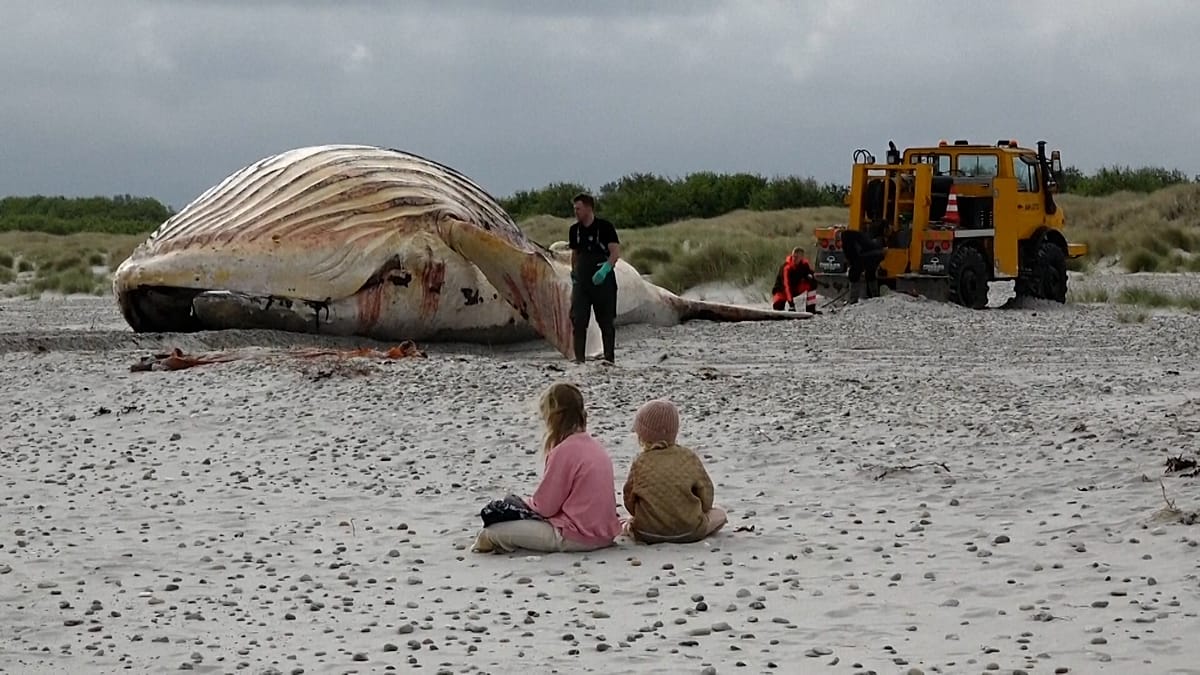
After months of captivating onlookers along Germany's Baltic coast, the humpback whale known as 'Timmy' has been found dead and hauled ashore on the Danish island of Fehmarn. The carcass was recovered from shallow waters and brought to a beach where marine biologists hope a thorough examination will reveal what caused the animal's demise.
Timmy first drew attention in the summer of 2024 when it was spotted swimming in the Bay of Kiel, an unusual sight for a species more commonly associated with open ocean. The whale, believed to be a juvenile male, became a local celebrity, with residents and tourists flocking to coastal viewpoints to catch a glimpse. Its presence sparked discussions about marine mammal behavior and the health of the Baltic Sea ecosystem.
GPS Tracker Confirms Death
Earlier this week, a GPS tracker attached to Timmy stopped transmitting, raising concerns among researchers. The device had been fitted by scientists from the German Oceanographic Museum in Stralsund to monitor the whale's movements. When the signal ceased, a search was launched, leading to the discovery of the carcass in Danish waters near Fehmarn.
The decision to tow the body to a Danish beach was made jointly by German and Danish authorities. 'It is important to bring the whale ashore for a necropsy,' said Dr. Helena Møller, a marine biologist at the University of Copenhagen. 'We need to understand whether human activities, such as ship strikes or pollution, played a role in its death.'
The necropsy, scheduled for later this week, will examine tissue samples for signs of disease, parasites, or trauma. The results could provide valuable insights into the threats facing humpback whales in European waters, where sightings have become more frequent in recent years.
Baltic Sea Challenges for Marine Life
The Baltic Sea is a challenging environment for large whales. Its shallow depths, heavy maritime traffic, and limited food sources make it a less-than-ideal habitat. Humpback whales, which can grow up to 16 meters in length, typically migrate between feeding grounds in polar regions and breeding grounds in tropical waters. Timmy's prolonged stay in the Baltic raised questions about whether it was lost or simply exploring.
This incident is not isolated. Across Europe, marine mammals face increasing pressures from shipping, fishing, and climate change. The controversy over orca whales from a closed French park being moved to a Spanish zoo highlights ongoing debates about animal welfare and conservation. Similarly, the death of Timmy underscores the need for better monitoring and protection of marine species in European seas.
Local authorities on Fehmarn have cordoned off the beach where the carcass lies, advising the public to keep a safe distance. The whale's body will be removed after the necropsy, with plans to either bury it or dispose of it at sea. 'It is a sad end for a creature that brought so much joy,' said a spokesperson for the Fehmarn municipality. 'But we hope the scientific work will help prevent such deaths in the future.'
The story of Timmy has resonated across the continent, serving as a reminder of the fragile connection between humans and the natural world. As European nations grapple with urban heat islands and other environmental challenges, the fate of a single whale can galvanize public attention and spur action.