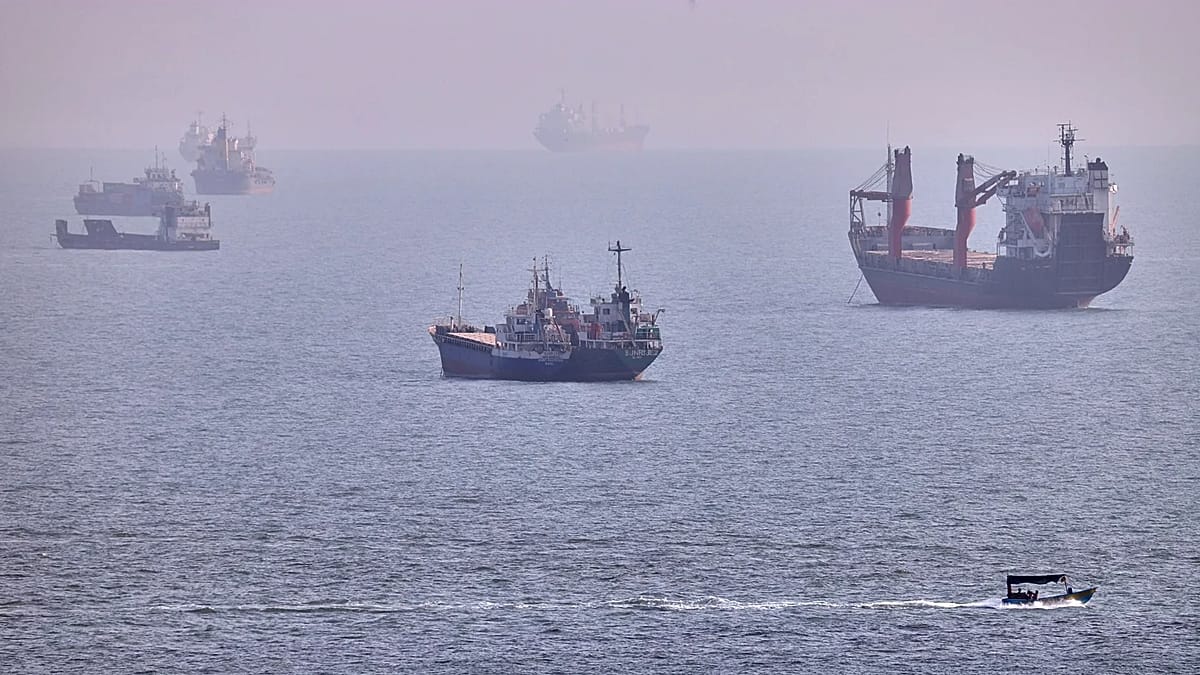
Tehran and Muscat are closing in on an arrangement to manage shipping through the Strait of Hormuz, with Iran's deputy foreign minister confirming that military vessels would be excluded from the waterway under the proposed terms. Kazem Gharibabadi told state television on Tuesday that commercial traffic entering the Persian Gulf would pass through Iranian waters, while outbound vessels would use a mix of Iranian and Omani waters.
The temporary routes are designed to restore some order to a passage that has been largely closed to normal traffic for nearly six months, since the outbreak of the Iran war. Gharibabadi said the two countries would need to negotiate a permanent maritime traffic plan within 30 to 60 days.
US pressure on Oman
The emerging deal has drawn sharp criticism from Washington. President Donald Trump has threatened to bomb Oman if it “gets in the way,” and his administration has told Omani officials it opposes key elements of the plan, particularly the joint management of the exit route. Washington believes Oman has been too lenient in its talks with Iran and objects to Muscat's willingness to collect voluntary fees from vessels, even if those charges are tied to security and environmental protection.
The United States has also stepped up economic pressure on Tehran. Treasury Secretary Scott Bessent this week declared an “economic onslaught” aimed at cutting Iran off from global markets. In a letter to the United Nations, Iran's Foreign Minister Abbas Araghchi urged the world body to condemn the move, describing it as a deliberate targeting of civilians through the “intentional deprivation of access to food, medicines, medical equipment, energy and other necessities.”
The standoff has had ripple effects far beyond the Gulf. European fuel import bills have risen by an estimated €41 billion as a result of the crisis, according to a recent report. The disruption has also stalled regional trade and driven up energy and transport costs across the Middle East and beyond.
Trump's remarks on Iran's leadership
In an interview with Al Jazeera on Wednesday, Trump said he believes the United States is “winning very big” as the conflict nears its six-month mark. “I have no time schedule; whatever it takes,” he told the Qatari broadcaster. He also said he thinks Iran's supreme leader, Ayatollah Mojtaba Khamenei, is “very seriously wounded” but not dead. Mojtaba Khamenei assumed the role after his father, Ayatollah Ali Khamenei, was killed at the start of the war. The younger Khamenei has remained out of public view since being badly injured in the attacks.
Meanwhile, Qatar has been pushing daily diplomacy to restart US-Iran talks and reopen the strait, though Trump indicated he is in no hurry to resume negotiations.
Dubai airport sees sharp passenger drop
The war's impact on air travel has been stark. Dubai International Airport, one of the world's busiest hubs, reported a sharp decline in passenger numbers for the first half of the year. The airport handled 31.5 million passengers in the first six months, down 31.3% year-on-year, with 13 million in the second quarter alone. Aircraft movements fell 32.1% to 150,600 in the same period.
CEO Paul Griffiths said the disruption, which lasted two months, hit traffic hard, but he expressed confidence in a swift recovery. “The events of the disruption, which lasted two months, that had an impact on traffic ... but I'm very confident we'll be back to full operation in a very short space of time,” he said.
The proposed Iran-Oman corridor, if finalized, could ease some of the pressure on global shipping and energy markets. But with Washington's opposition and the ongoing conflict, the path to a permanent arrangement remains uncertain. For European observers, the stakes are high: the strait is a critical artery for oil and gas supplies, and any prolonged disruption has direct consequences for energy prices and economic stability across the continent.