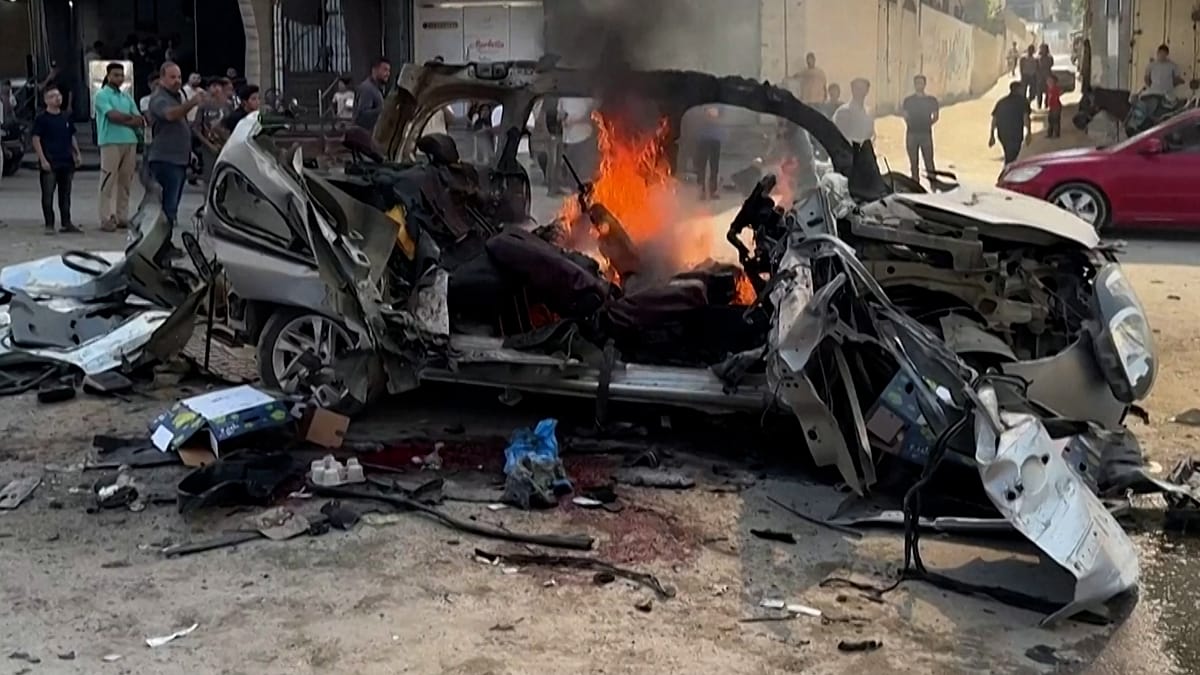
An Israeli airstrike on a car in the Tel al-Hawa neighborhood of Gaza City on Sunday killed at least two people and wounded 13 others, according to local medical sources cited by news agencies. The Israeli military said the strike targeted two Hamas engineers involved in weapons production.
The incident adds to the mounting toll in the Gaza Strip, where violence has persisted despite international calls for restraint. Medical officials in Gaza confirmed the casualties, though the identities of the deceased have not been officially released.
Targeted strike or broader escalation?
Israel's military described the operation as a precision strike against individuals responsible for developing and manufacturing weapons for Hamas. The two engineers were reportedly key figures in the group's rocket and drone programs, which have been used in attacks against Israeli communities.
Hamas has not yet commented on the strike, but previous targeted killings have often prompted retaliatory rocket fire. The situation remains tense, with both sides showing little willingness to de-escalate.
The strike comes amid a broader regional context of instability. In recent weeks, Israeli airstrikes in northern Gaza have also claimed civilian lives, including a family of four. Such incidents have drawn condemnation from human rights groups and raised concerns about the proportionality of Israeli operations.
European governments, which have historically played a role in Middle East diplomacy, are watching the escalation with unease. The European Union has repeatedly called for a ceasefire and a return to negotiations, but its influence has been limited. The bloc's foreign policy chief has urged both sides to avoid actions that could further destabilize the region.
The strike also highlights the ongoing challenge of addressing security threats while minimizing civilian casualties. In densely populated areas like Gaza City, even targeted operations can have unintended consequences. The wounded, according to medical sources, include bystanders who were in the vicinity of the vehicle.
Local hospitals, already strained by months of conflict, are struggling to cope with the influx of casualties. Medical supplies are reportedly running low, and aid agencies have warned of a worsening humanitarian situation.
The broader conflict has also drawn in regional actors. Drone strikes from Iraq have disrupted oil infrastructure in Saudi Arabia, while Russian strikes in Ukraine continue to cause civilian casualties. These parallel crises underscore the fragility of security across multiple regions.
For now, the focus remains on Gaza, where the cycle of violence shows no sign of abating. As international mediators struggle to broker a truce, the human cost continues to rise. The European Union, along with other international actors, has called for an immediate cessation of hostilities, but without a unified strategy, the prospects for peace remain dim.