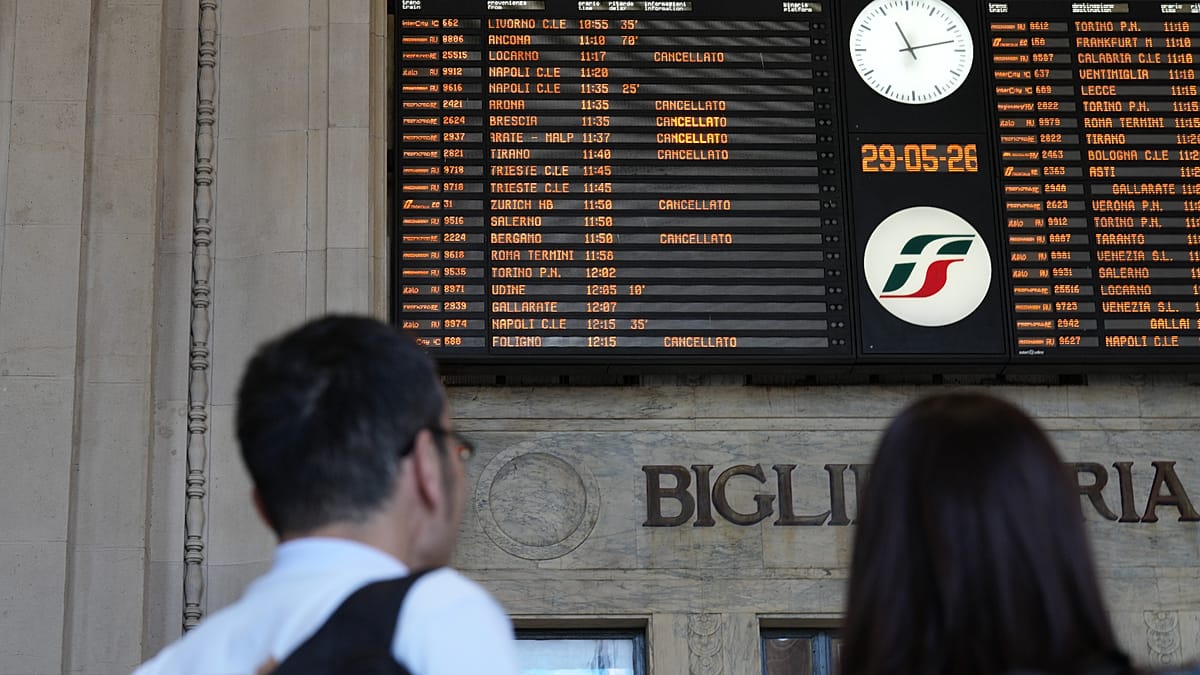
Rail passengers in Italy should prepare for widespread disruption as rail staff across the country stage a 24-hour strike starting at 9pm on Monday 7 September and ending at 9pm on Tuesday 8 September. The walkout, called by several unions, is expected to affect both regional and long-distance services, with knock-on delays possible in the hours before and after the stoppage.
What to expect on regional trains
For those relying on regional trains, there are guaranteed service periods during the strike, but outside these windows trains may be cancelled, delayed, or rerouted. On weekdays, the protected slots are from 6am to 9am and from 6pm to 9pm. Outside these times, passengers face significant uncertainty across the national network.
Trenitalia, the state-owned operator, has urged travellers to check the status of their service before heading to the station, either through its official app or website. The same advice applies to high-speed Frecce trains and Intercity services, which are not covered by any guaranteed service periods during the strike.
Refunds and rescheduling
Passengers are entitled to a full refund, but the deadline for requesting one varies depending on the type of service. For Frecce and Intercity trains, refund requests can be made from the moment the strike is announced up until the scheduled departure time of the train. For regional trains, the request must be submitted by midnight on the day before the strike.
Alternatively, travellers can reschedule their journey to another service under the same conditions, subject to seat availability. This option is often more flexible for those who can adjust their plans.
Why are the unions striking?
The industrial action is driven by demands for better working conditions, improved safety measures, and more organised shift patterns across the railway sector. Unions argue that chronic understaffing and poorly planned rosters have left workers exhausted and compromised safety standards.
This strike comes at a time when Italy's rail network is under increased scrutiny. A recent safety study linked Ryanair's 737 stairs to 85 falls in Italy, highlighting broader concerns about passenger safety in the country's transport infrastructure.
Broader context
The strike also lands amid a politically sensitive period for Italy. Prime Minister Giorgia Meloni's government, which has become Italy's longest-lasting since World War II, has faced criticism over its handling of labour disputes and public services. The rail strike is likely to test the government's ability to mediate between unions and state-owned enterprises.
For travellers, the key takeaway is to plan ahead. Check your train's status before leaving, consider alternative routes or times, and be aware of the refund deadlines. While the strike is scheduled for a specific 24-hour window, the ripple effects could extend beyond that, so allow extra time for your journey.
As with any major disruption, it's wise to stay informed through official channels. Trenitalia and other operators will update their websites and apps with real-time information, and station staff can provide assistance for those already at the platform.
For those who can, rescheduling to a day outside the strike may be the simplest option. But for many, particularly daily commuters, the strike will mean adapting to the guaranteed service windows or finding alternative transport.
The unions have signalled that further action could follow if their demands are not met, so passengers should remain vigilant for future announcements.