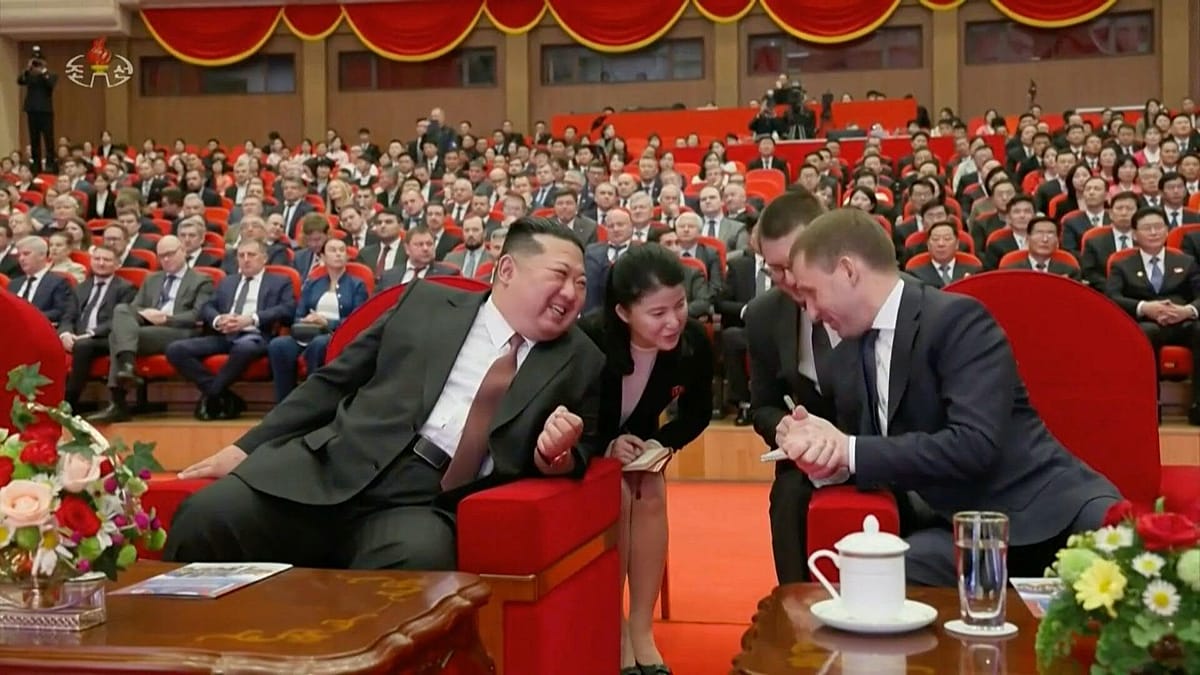
North Korean leader Kim Jong Un has attended a performance by a Russian artistic troupe in Pyongyang, the latest public display of the deepening relationship between the two countries. The event took place on 26 November at the East Pyongyang Grand Theater, with Kim accompanied by his wife, Ri Sol Ju, and Russia's Minister of Natural Resources and Ecology, Alexander Kozlov.
The performance featured Russian singer Larisa Dolina and musicians from the Osipov State Academic Russian Folk Orchestra, according to North Korean state media. Such cultural exchanges have become more frequent as Moscow and Pyongyang have strengthened their partnership since Russia's full-scale invasion of Ukraine in 2022.
European security implications
While the event itself is a cultural affair, it carries broader geopolitical weight. The growing alignment between Russia and North Korea has drawn concern from European capitals, particularly as reports emerge of North Korean ammunition and missile supplies being used by Russian forces in Ukraine. This cooperation is part of a wider pattern of Russian efforts to offset its isolation from Western institutions.
For European policymakers, the Russia-North Korea axis adds another layer of complexity to an already volatile security environment. The European Union has repeatedly condemned the military cooperation between the two countries, and NATO has warned of the risks it poses to stability in Europe and the Indo-Pacific. The recent NATO deployment of AWACS surveillance aircraft to Poland following Russian missile incursions underscores the heightened alertness along the alliance's eastern flank.
Russia's deepening ties with Pyongyang also come as Moscow continues its aggressive posture toward Europe, including deadly missile and drone strikes on Ukrainian cities and repeated violations of NATO airspace. These actions have prompted responses such as the Estonian decision to close all five road crossings on its Russian border, a move that reflects growing unease in the Baltic region.
Some European officials argue that the EU must accelerate its enlargement to counter Russian influence, as highlighted by calls for faster EU enlargement. The bloc's eastern partners, including Ukraine and Moldova, have sought closer integration as a bulwark against Moscow's ambitions.
Meanwhile, the cultural performance in Pyongyang serves as a reminder that Russia is actively cultivating allies beyond Europe. For the Kremlin, such displays of solidarity with North Korea are part of a broader narrative of a multipolar world order, in which Russia positions itself as a counterweight to Western dominance.
For European observers, the event is a symbol of how far Russia has drifted from the cooperative security framework that once defined its relations with the continent. As Moscow deepens its ties with Pyongyang, European leaders are left to grapple with the consequences for regional stability and the rules-based international order.