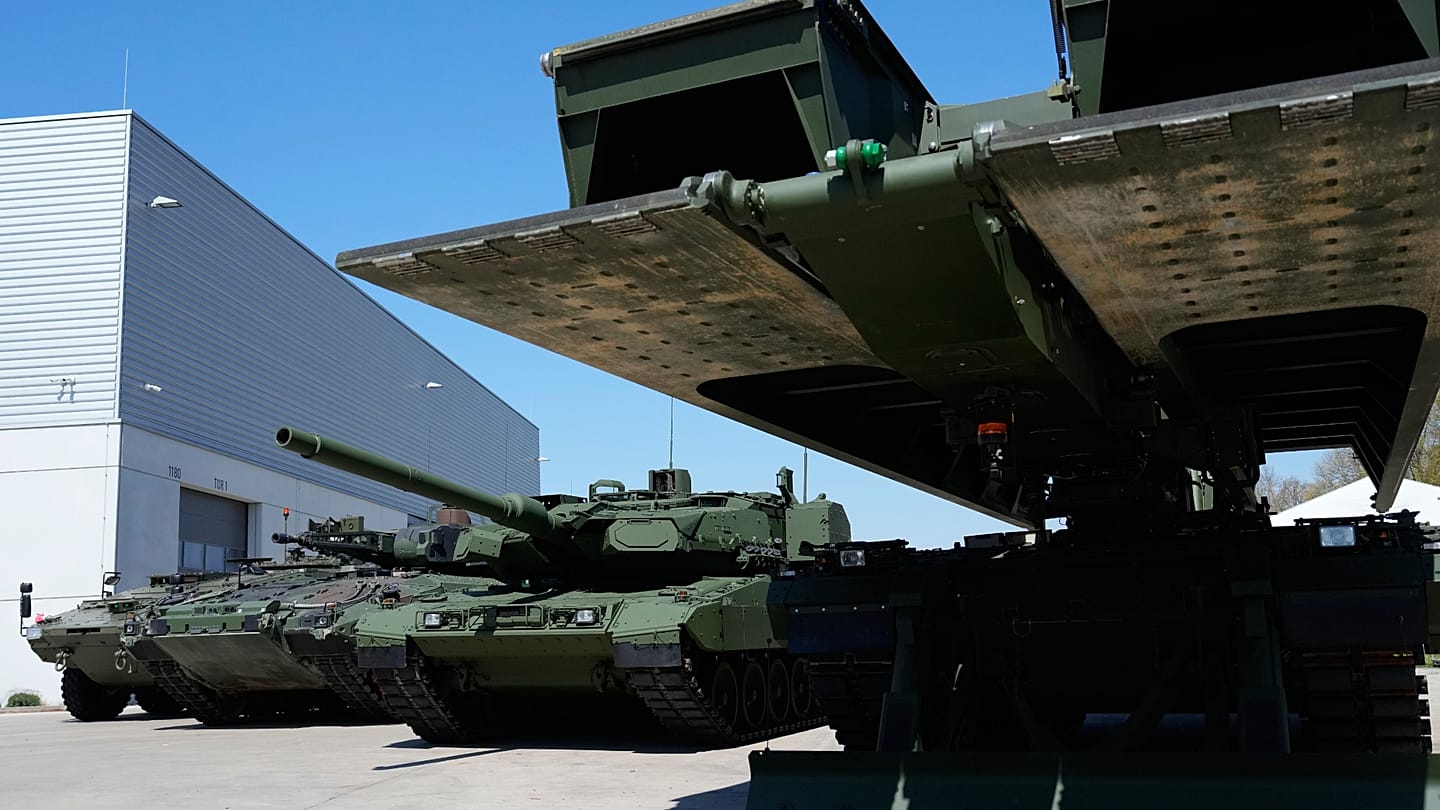
The Franco-German defence manufacturer KNDS, known for producing the Leopard and Leclerc battle tanks, has officially announced its intention to launch an initial public offering (IPO) in the coming weeks. The company plans to list shares on the stock exchanges in Paris and Frankfurt, aiming for a valuation of up to €15 billion.
KNDS, a joint venture between Germany's Krauss-Maffei Wegmann and France's Nexter, is positioning itself to benefit from Europe's accelerating efforts to strengthen its military capabilities. The IPO comes as European Union member states, including Germany and France, have pledged significant increases in defence spending following Russia's full-scale invasion of Ukraine.
Strategic Timing Amid European Rearmament
The listing is timed to take advantage of a surge in demand for defence equipment across the continent. European governments are racing to modernize their armed forces, with a particular focus on land systems such as main battle tanks and armoured vehicles. KNDS's Leopard 2 tank, used by the German Bundeswehr and several other European armies, has seen renewed interest, while the Leclerc remains a cornerstone of French armoured forces.
According to industry analysts, the IPO could provide KNDS with the capital needed to expand production capacity and invest in next-generation technologies, including unmanned systems and digital battlefield integration. The company has also been exploring partnerships with other European defence firms to consolidate the fragmented sector.
The move reflects a broader trend of defence companies seeking public listings to fund growth. Earlier this year, Germany cancelled a €2.3 billion frigate project, causing shares of rival Rheinmetall to tumble, highlighting the volatility in the sector. However, KNDS's focus on land systems may offer a more stable investment profile given the immediate needs of European armies.
Franco-German Industrial Cooperation
The IPO also underscores the deep industrial ties between France and Germany in the defence sector. KNDS was created in 2015 as a joint venture to combine the tank-making expertise of both countries, with the aim of reducing duplication and fostering collaboration. The company's headquarters are in Amsterdam, but its operational centres remain in Munich and Versailles.
French President Emmanuel Macron and German Chancellor Olaf Scholz have both emphasized the importance of European strategic autonomy in defence. The IPO could serve as a test case for whether private investment can help bridge the gap between national defence priorities and the need for a more integrated European defence industrial base.
However, challenges remain. The European defence market is still largely fragmented, with national procurement rules and export restrictions complicating cross-border sales. KNDS has faced delays in joint projects, such as the Main Ground Combat System (MGCS), a next-generation tank programme with Germany and France. The IPO may provide the financial firepower to accelerate such initiatives.
Investors will also be watching the political landscape. Spanish Prime Minister Pedro Sánchez is beset by a corruption scandal as EU defence chiefs meet in Berlin to discuss Ukraine, adding a layer of uncertainty to European defence policy. Meanwhile, the EU's defence chief has warned of more Russian attacks on European soil after a killing in Poland, underscoring the urgency of the security situation.
KNDS's listing is expected to proceed within weeks, with banks including BNP Paribas and Deutsche Bank reportedly advising on the deal. The company has not yet set a final price range, but sources close to the matter indicate that a valuation of €12 billion to €15 billion is being targeted.
For European investors, the IPO offers a rare opportunity to gain exposure to a pure-play defence manufacturer at a time when governments are committing to long-term spending increases. Whether the listing will attract the same enthusiasm as recent tech IPOs remains to be seen, but the strategic imperative behind European rearmament is likely to provide a solid foundation for demand.