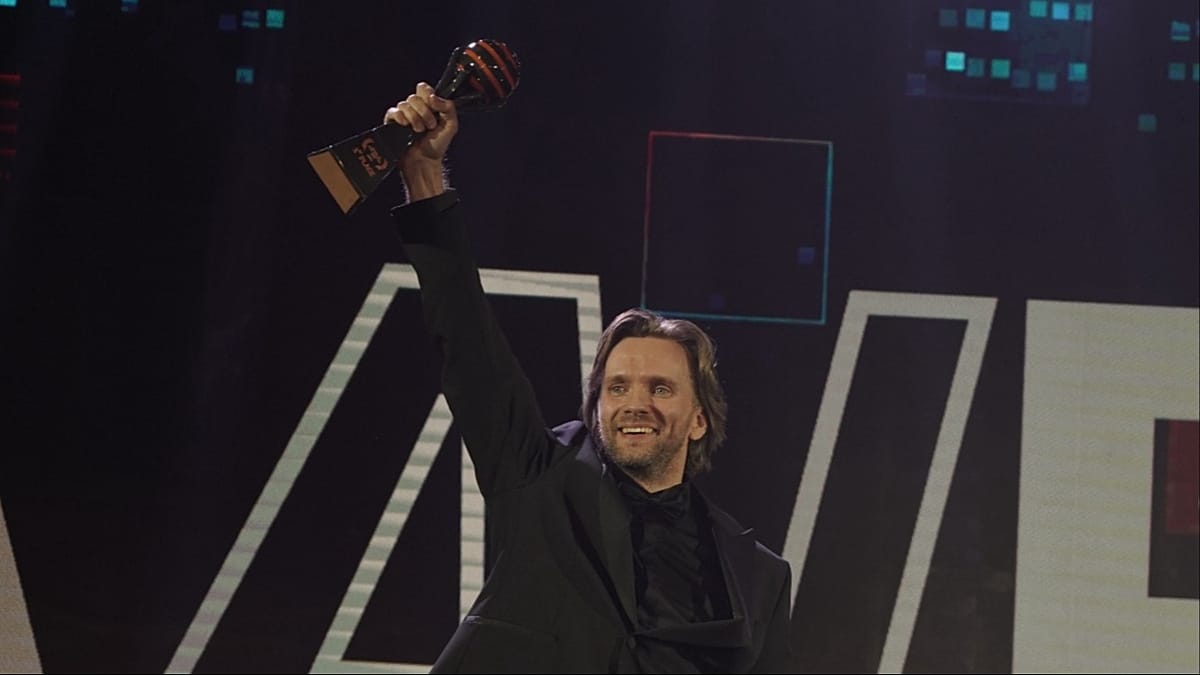
The inaugural Astana AI Film Festival wrapped up in Kazakhstan's capital with a Latvian director taking the top honour. Nikolay Shestak received the Grand Prix — worth €400,000 — for his short film The First Honest Day, created using generative artificial intelligence tools.
Shestak, who began directing only four years ago and turned to AI-assisted filmmaking two years later, admitted he was surprised by the jury's decision. "Honestly, I didn't expect to win. There were so many incredible works and different genres here that I'm curious myself why the jury chose my film," he said. He plans to reinvest the prize money into new productions and further development of his projects.
The film explores how people's actions define who they become: bad deeds make characters physically uglier, while good deeds transform them for the better. It was one of 25 finalists selected from more than 8,000 submissions originating in 125 countries. The final programme spanned 19 genres and employed over 80 different generative AI models.
A festival with a global reach
The competition's total fund reached €1.8 million, with half going to prize money and the other half earmarked as investment capital for promising AI teams and film production in Kazakhstan. The funding came from the Freedom Shapagat Corporate Foundation, part of Freedom Holding Corp.
Indian filmmaker Abhik Banerjee took second place and €178,000 for SITARA, while Spain's Ernest Desumbila earned €89,000 for third place with Looking For Perseida. In the open competition, five category winners each received €44,000. Kazakh director Myrzakhan Zhumakhan won Best Character for his comedy It Was Just a Joke; China's 2xLabs took Best Story for The Last Span; Italy's Jacopo Zanetti won Best Visual for What's the Job?; fellow Italian Jacopo Reale received Best Direction for The Fracture; and American Zachary London won Best Concept for Pomegranate.
The jury evaluated not only the technical use of AI but also artistic vision, storytelling, coherence, and how organically the technology served the creative concept. The panel included Audrey Azoulay, former Director-General of UNESCO and former French Culture Minister; Ping Ma of China Film Group; Wang Hao of Beijing Film Academy; entrepreneur and investor Balaji Srinivasan; and BytePlus executive Long Li.
Kazakhstan's ambitions in AI and film
President Kassym-Jomart Tokayev, who opened the festival, stressed how artificial intelligence is lowering barriers in the industry. "Filmmakers and production crews no longer need to knock on the doors of production companies or look for sponsors. The barrier to entry has become significantly lower," he said. He added that AI would not replace the creative role of filmmakers but could become "an indispensable tool for everyone who has devoted their life to creativity."
Tokayev also linked the festival to Kazakhstan's youthful population — the average age is 33 — describing them as "educated, open to new ideas, intelligent and thoughtful."
For Aizat Kussainov, co-founder and creative director of the festival, the rapid pace of AI development was the main motivation. "The driving force of this festival was FOMO. We had a fear of missing the opportunity because the technology is moving very fast," he said. "But no one had actually created a festival like this, and we wanted to be the first in the world — and we did it. We had the biggest AI film festival in the world."
Kussainov's ambitions extend beyond the event itself. "The main goal actually was not the festival. It was bringing the whole creative community here to Astana and making them see how our country is developing. We want them to move here and start creating their new movies from here," he said.
The festival's success highlights a growing trend of using AI in filmmaking across Europe and Central Asia. For those interested in the region's cultural developments, the Uzeyir Hajibeyli festival in Azerbaijan offers another example of cross-cultural exchange. Meanwhile, Kazakhstan's broader economic diversification efforts, such as using crypto miners to burn oil-field gas, show the country's willingness to embrace new technologies.