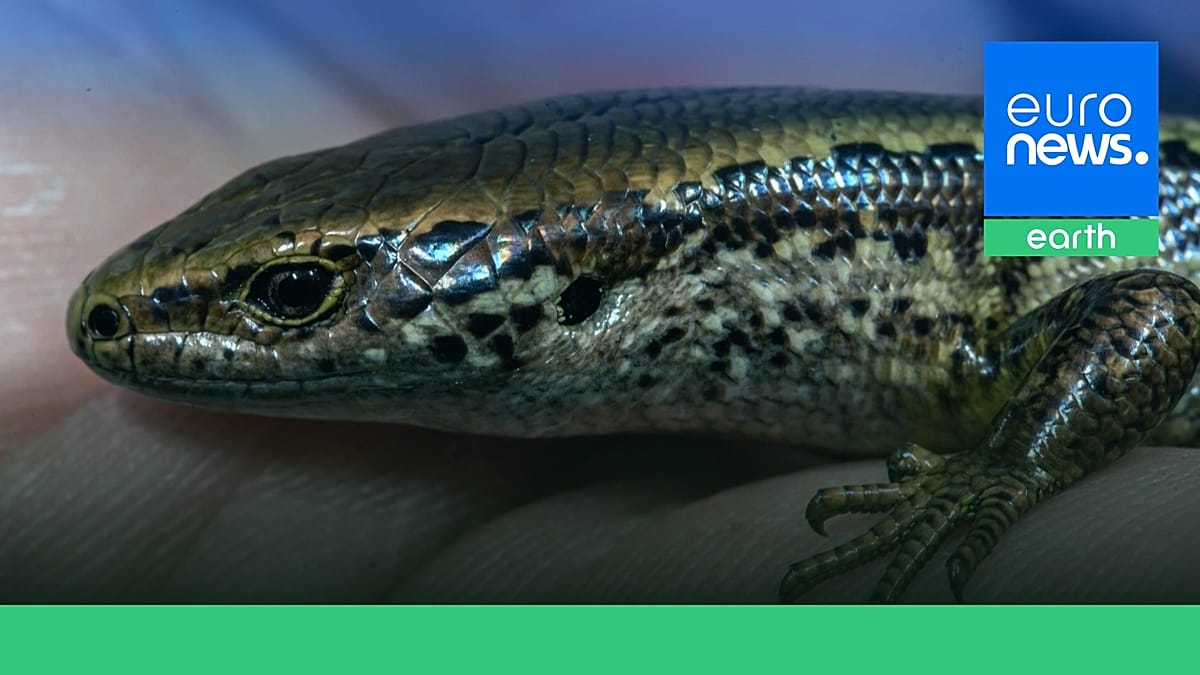
In a remote wetland near Reefton on New Zealand's South Island, a desperate race against extinction is unfolding. The entire known global population of the Alborn skink, a small lizard, is confined to a single five-hectare site. With an estimated 30 individuals remaining, conservationists warn the species could vanish within five years without drastic intervention.
The primary threat emerged from a sharp increase in mice, invasive predators that prey on the skinks, particularly juveniles. "We had very, very high mice numbers in here last year," said ranger Charlotte Crummack. The situation demanded immediate action to prevent the mice from overwhelming the critically small population.
A Fortress Against Invaders
Conservation teams first deployed traps and bait to eliminate mice within the wetland. Their central strategy, however, was the construction of a formidable predator-proof fence. Standing over two metres tall and extending more than a metre underground to block burrowing animals, the barrier is designed to exclude mice as well as other invasive species common to New Zealand, such as stoats and possums.
The results have been promising. "We've managed to knock them back to zero and sustain that for a number of months now," Crummack reported. "So these guys have got a much better future ahead of them." This physical exclusion provides the fragile population with a crucial reprieve from direct predation, allowing for potential recovery within the secured habitat.
Despite this success, the margin for error remains vanishingly small. Principal ranger Gemma Hunt highlighted the persistent vulnerability: "If we get another plague within the fenced area that could wipe out the 30 odd individuals that are left here." The fence is a critical line of defense, but it is not an absolute guarantee against catastrophe.
Creating an Insurance Population
To mitigate this existential risk, conservationists have established a backup population away from the wild site. Eight skinks are now housed in a controlled environment at Auckland Zoo, where keepers meticulously replicate natural conditions using heat lamps and regulated humidity to facilitate essential behaviours like thermoregulation.
This captive breeding program has already yielded two offspring, increasing the number of individuals under managed care. The facility serves as a vital insurance policy, ensuring the species' genetic lineage continues even if disaster strikes the primary wetland population. It represents a classic ex-situ conservation approach, complementing the in-situ protection of the fence.
Sophie Handford of the NZ Nature Fund framed the effort in stark terms. "We're at a really critical moment for the future of this beautiful little lizard," she said. "With only 30 left it's either extinction or conservation and the saving of this species, which is something we all have an opportunity to be a part of." Her statement underscores the project's precarious tipping point.
The long-term viability of the rescue mission now depends on securing continuous funding. Maintaining the specialized fence, monitoring traps, and staffing the site require sustained resources. The current goal is to guarantee financial support for a minimum of five years of active, intensive management to shepherd the population toward a more stable future.
While this story unfolds in the South Pacific, its themes resonate powerfully in Europe. The continent faces its own profound biodiversity crisis, with habitats and species under pressure from development, climate change, and invasive species. The EU's ambitious Green Deal and Biodiversity Strategy for 2030 aim to address similar challenges on a continental scale, making the lessons from focused, last-stand conservation efforts globally relevant.
Furthermore, the ethical and logistical dilemmas of prioritizing resources for a single species with such low numbers mirror debates within European conservation circles. Projects like the reintroduction of predators in the Alps or protecting the last Iberian lynx pose similar questions about cost, feasibility, and symbolic value. The situation also highlights the global interconnectedness of environmental security, where regional conflicts can have far-reaching impacts, much as the enduring crises in regions like Darfur demonstrate how instability exacerbates ecological and humanitarian disasters.
The fight for the Alborn skink is a microcosm of a global struggle. It demonstrates the intense effort and innovation required to pull a species back from the brink, and the ongoing commitment needed to ensure it does not slip back. For a European audience engaged in shaping their own continent's environmental future, it is a case study in perseverance, technical ingenuity, and the sobering reality of modern conservation.