North Korea has poured cold water on hopes for a swift return to diplomacy with Washington, saying that the Trump administration's decision to scale back joint military exercises with South Korea changes nothing about their provocative nature. The response, the first from Pyongyang since the US announced the cutback, came from Kim Yo Jong, the influential sister of leader Kim Jong Un, in a statement carried by state media late on Wednesday.
“We think it's not worth making comments on that and we have no interest in it at all,” Kim Yo Jong said. “The provocative, aggressive nature of the drills won't change even though their duration and size were reduced.” She also pointed to a series of other military exercises conducted by Washington and Seoul earlier this year, as well as South Korea's push to introduce nuclear-powered submarines, as evidence that the allies' posture remains unchanged.
The statement was notably free of the harsh rhetoric that often accompanies North Korean pronouncements. Kim Yo Jong briefly described relations between her brother and President Donald Trump as “still excellent,” recalling Kim Jong Un's past remarks about having “good memories” of Trump. That measured tone suggests Pyongyang is trying to keep channels open with the US president while seeking larger concessions before any resumption of talks.
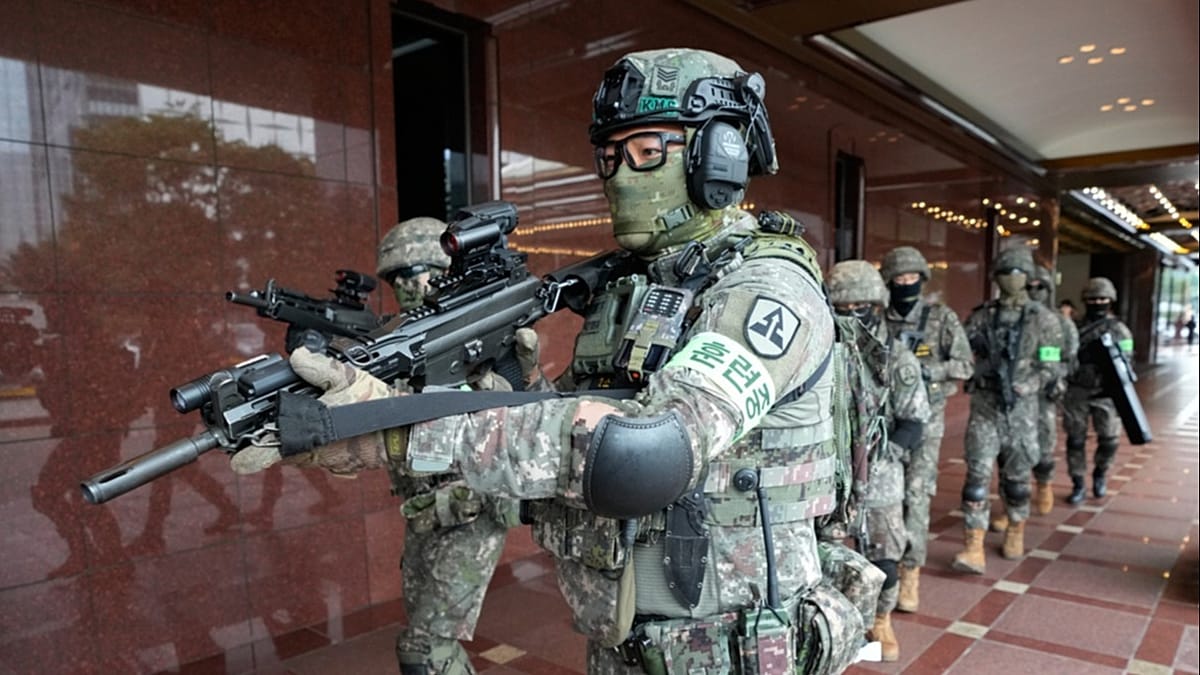
The comments came hours after the South Korean and US militaries confirmed they were cutting short the 11-day Ulchi Freedom Shield exercises. Trump had earlier ordered the Pentagon to “substantially reduce” the drills, citing what he called a “very good relationship” with Kim and South Korea's refusal to back him in his war in Iran. The decision, which took Seoul by surprise, has raised concerns about joint defence readiness and rattled allies across the region, as our analysis of the fallout in Seoul and Tokyo explains.
South Korean officials said Trump's announcement came without prior notice, leaving many in the country baffled. The military confirmed that the allies agreed to adjust the duration and scale of the exercises at Washington's request, with the ongoing drills now ending on Friday instead of 27 August. Some joint field training exercises have also been downsized.
No communication, but a possible opening
Kim Yo Jong denied that there have been any direct communications between Trump and her brother. Earlier this week, Trump told reporters that Kim had responded to his request for a conversation, but Pyongyang's statement contradicts that. When asked on Wednesday whether he would meet Kim this year, Trump said, “Yeah, I will be,” but declined to answer whether he and Kim are exchanging letters, adding only that they get along.
The mixed signals from both sides suggest that while the door to dialogue may not be fully closed, the path to a summit remains fraught. North Korea's demand for substantive concessions—such as sanctions relief or a formal end to the Korean War—has not been met, and the scaled-back exercises are unlikely to satisfy Pyongyang's conditions.
For European observers, the episode underscores the fragility of security arrangements in Northeast Asia, a region where the EU has economic and strategic interests. The US decision to unilaterally reduce military cooperation with a key ally, without prior consultation, raises questions about the reliability of American commitments—questions that resonate in Europe, where NATO allies have long debated the credibility of US security guarantees. As Trump's reasoning for the cutback becomes clearer, the precedent it sets for other alliances is being closely watched.
South Korea's government, led by President Lee Jae Myung, has sought to maintain a balance between its alliance with Washington and its desire for stability on the peninsula. The sudden change in exercise plans has complicated that effort, and the domestic political fallout is likely to grow. Meanwhile, North Korea's response, while dismissive, leaves room for future engagement—if the price is right.
For now, the prospects for an early resumption of diplomacy look dim. Kim Yo Jong's statement, though restrained, makes clear that Pyongyang sees the drill reduction as a cosmetic change, not a substantive shift. The ball remains in Washington's court, but the court itself may be moving.