Brent crude, the international benchmark, surged past $100 a barrel on Wednesday morning, while the US standard West Texas Intermediate hovered near $95. Prices have jumped almost 20% since last week as fighting around the world's most critical oil chokepoint intensifies once again.
The latest escalation began on 8 September, when US Central Command said its forces destroyed five Iranian tankers carrying crude oil. This followed an Iranian ballistic missile attack on a US Navy warship, which was not hit and continued patrolling regional waters. Days earlier, on 5 September, Iranian forces had fired at a US aircraft carrier and a destroyer, both of which evaded the attack; the US responded by disabling or destroying three Iranian tankers.
Tehran retaliated with missile strikes on a US military base in Jordan, where most were intercepted, and renewed threats against tankers in Kuwaiti and Bahraini waters. Iran has also warned vessels against using unauthorised routes through the Strait of Hormuz. Mohsen Rezaei, secretary of Iran's Supreme National Security Council, said Tehran would soon declare an exclusion zone outside the strait, warning that any vessel entering without Iranian coordination would be added to a sanctions list.
Saudi Arabia has been drawn into the conflict as well, with Aramco facilities at Jazan attacked again on Monday, though damage was reported as limited.
Strait of Hormuz: a vital artery under pressure
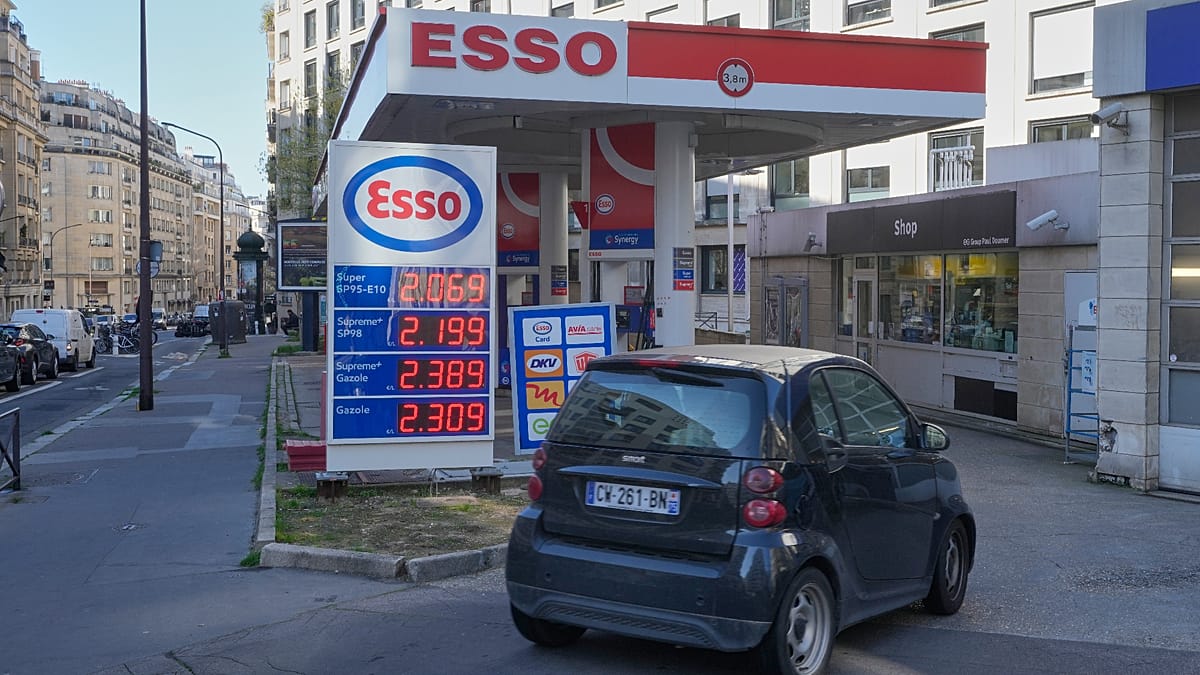
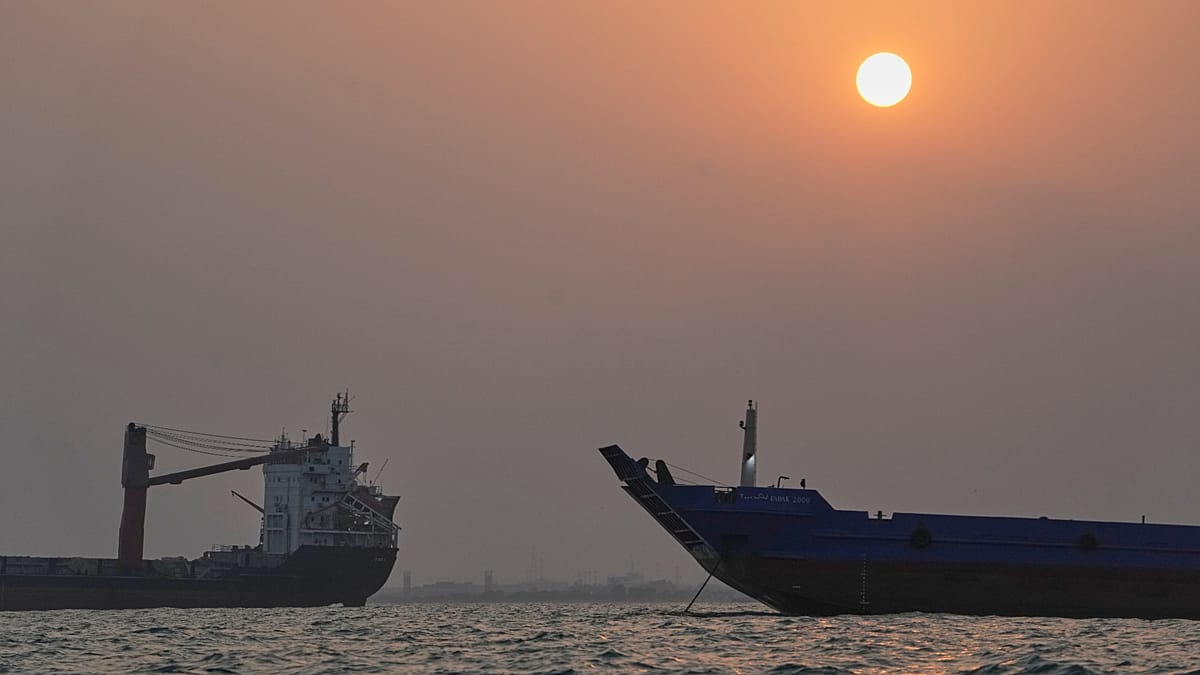
Roughly 7 million barrels a day are still moving through the Strait of Hormuz, against about 20 million before the war began on 28 February. The waterway is crucial for global energy supplies, and its partial closure has already had ripple effects on European fuel prices. As European fuel prices remain stubbornly high despite softer crude in recent months, any further disruption could hit households and businesses across the continent.
The military escalation is running alongside a financial one. Washington launched Operation Economic Outcast in late August, an effort to sever Iran from the global financial system by targeting its access to digital assets, technology, gold, aviation and shipping. The US Treasury designated close to 60 companies, individuals and vessels at the outset and has signalled fresh measures weekly, with the European Union endorsing the campaign this month.
Rhetoric on both sides has hardened. US Secretary of War Pete Hegseth said the country "will destroy [and sink]" Iranian oil tankers if Iran fires on American vessels, while Iranian parliament speaker Mohammad Bagher Ghalibaf replied: "Strike our assets and you get struck."
US President Donald Trump has continued to insist the waterway is functioning, posting on Truth Social last week that "Hormuz volumes are BACK" and claiming 18 million barrels a day were flowing. However, US Energy Secretary Chris Wright put Monday's figure at 17 million barrels of crude and products combined, while acknowledging the multi-day rolling average is considerably lower. During last week's White House press conference, Vice President JD Vance declined to categorise the conflict as a war and stated that "the only reason we do not have a worldwide energy crisis is because of the leadership of the President."
Faced with the latest developments, analysts are adjusting their forecasts upward. Goldman Sachs raised its Brent and WTI predictions by $5 on Monday to $85 and $80, respectively, for December, and warned prices could exceed $120 next year should Gulf output remain 4 million barrels a day below pre-war levels, though the bank does not treat that as its base case.
For Europe, the stakes are high. The continent relies heavily on imported energy, and any sustained spike in crude prices could feed inflation and complicate the European Central Bank's efforts to manage the economy. The ongoing tensions also come as EU defence ministers convene to address broader security threats, including hybrid challenges from Russia, as highlighted in recent discussions in Brussels.
With no end in sight to the US-Iran confrontation, the global economy faces a period of heightened uncertainty. The Strait of Hormuz remains the linchpin, and its partial closure is already reshaping energy markets and geopolitical alliances. As the conflict grinds on, European policymakers and consumers alike will be watching the oil price with growing concern.