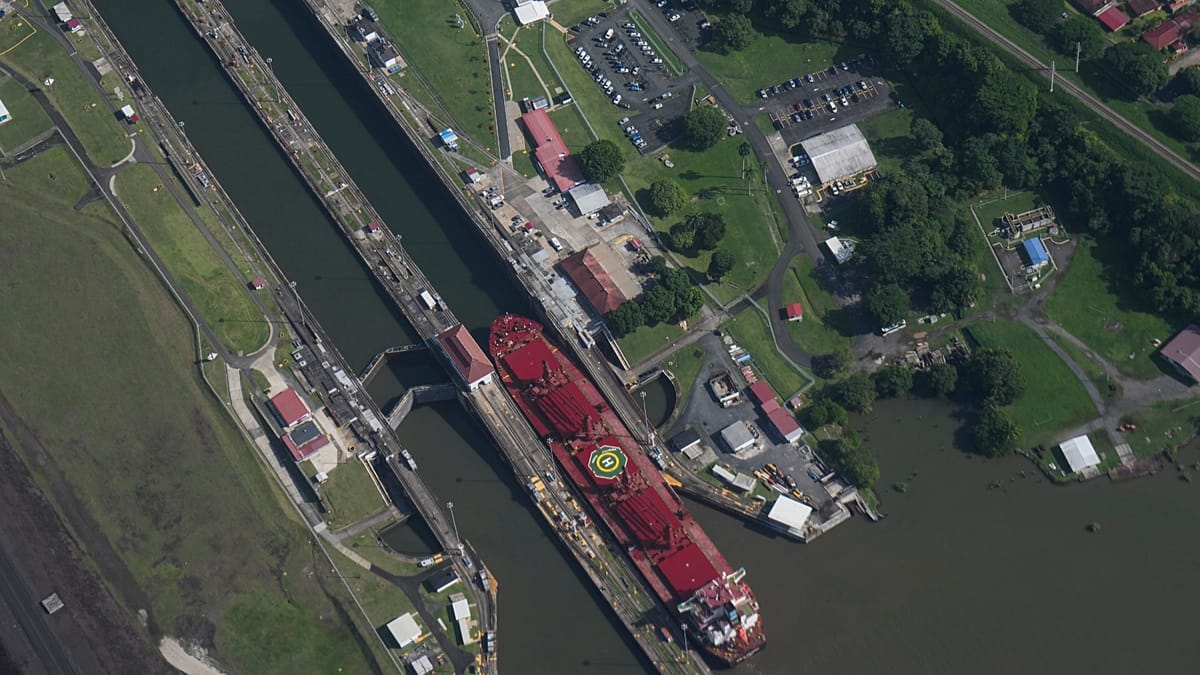
The Panama Canal Authority has announced it will reduce the number of daily ship transits from next month as a severe drought, intensified by the El Niño climate pattern, continues to lower water levels in the artificial lakes that supply the waterway. Starting 3 September, the daily limit will drop from 36 to 34 vessels, and further to 32 from 15 September, the authority said in a statement.
The canal, which handles about 5% of global maritime trade and roughly 40% of US container traffic, is a critical chokepoint for shipping between the Atlantic and Pacific Oceans. Its main users include the United States, China, Japan, Chile, and South Korea, but European shippers and ports also rely on its smooth operation for goods moving between Asia and Europe.
Central America is experiencing one of the most intense droughts in recent memory, driven by El Niño, a phenomenon that warms surface waters in the central and eastern equatorial Pacific and disrupts weather patterns worldwide. In the canal's watershed, rainfall from May to August has been 34% below the historical average, and the authority warns that El Niño could further reduce precipitation.
Water scarcity and operational challenges
The two artificial lakes—Gatún and Alhajuela—that feed the canal's lock system are also the primary source of drinking water for Panama City and surrounding areas, home to about half of the country's 4.2 million people. This dual role makes water management a delicate balancing act, as the canal competes with residential needs during periods of scarcity.
The authority has already implemented other conservation measures, including lowering the maximum draft for the largest vessels, which reduces their cargo capacity. In 2023, water levels were so low that daily transits were cut from 38 to 22, causing significant delays and forcing some ships to take longer alternative routes.
With the upcoming reductions, waiting times for vessels without a reservation are expected to increase. Currently, nine out of ten ships book passage in advance, and the remaining slots are auctioned off. The average winning bid in these auctions was $135,000 (€115,000) before the Iran war, but in April one shipping company paid a record $4 million (€3.4 million) to secure a slot, underscoring the high stakes for time-sensitive cargo.
The operator said it does not rule out further restrictions depending on how much it rains in the coming weeks. This uncertainty adds to the challenges faced by global supply chains, which are already grappling with disruptions from climate-related events across Europe and beyond.
El Niño occurs on average every two to seven years, and this year's event is shaping up to be one of the strongest on record. Its effects are being felt far beyond Central America, with critically low water levels on the Rhine disrupting German industry, and France imposing water restrictions across nearly 70% of its territory. The drought has also knocked out a fifth of France's nuclear capacity due to cooling water shortages, and Hungary's Villány wine region expects a 30% drop in grape harvest.
For the Panama Canal, the immediate priority is to ensure the long-term sustainability of the waterway while balancing the needs of the population. The authority has invested in water-saving measures, such as recirculation systems in the locks, but these are not enough to offset the effects of a prolonged drought.
As climate change makes extreme weather events more frequent and severe, the canal's vulnerability highlights the broader challenges facing global infrastructure. European businesses and consumers, who depend on the smooth flow of goods through this vital artery, will be watching the situation closely.