Archaeologists working in the heart of Lima have uncovered the remains of a colonial-era hospital that once cared for sailors arriving at Pacific ports during the Spanish viceroyalty. The discovery, announced this week, offers a rare glimpse into medical care and religious life in the 16th-century city.
The site, believed to date from the 1570s, was founded by a Greek sailor named Miguel de Acosta and could hold up to 70 beds, according to the chronicle of Spanish Jesuit priest Bernabé Cobo, The History of the Founding of Lima. Sailors contributed a portion of their wages to fund the hospital's upkeep, a practice that underscores the importance of maritime trade to the colonial economy.
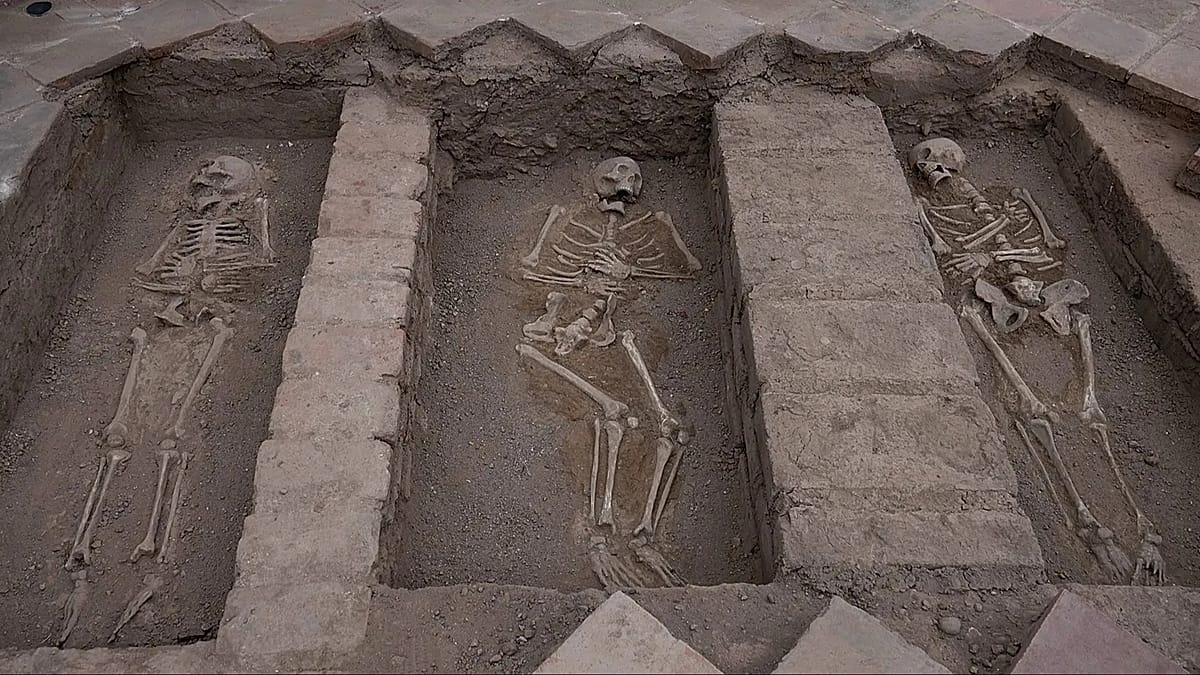
Excavations have revealed six human skeletons, likely those of patients, buried in rectangular structures. A ceramic oil lamp, used to light the dark with candles, was found at hand level of one skeleton—a poignant reminder of the final moments of those who died there.
Church and hospital: a common pairing
The team also located the entrance to an adjacent church, the Church del Espíritu Santo, where mass was held for the sick. Its existence had been documented by Spanish chroniclers who wrote about the founding of Lima in 1535. Placing a hospital next to a church was standard practice at the time, explained Ernesto Olazo, the archaeologist coordinating the excavations, as it allowed patients to attend religious services without leaving the care facility.
“In my view, the most significant aspect is the architecture itself, which preserves traditional materials and techniques, which we have restored, including an 18th-century Valencian tiled floor and an area containing some very interesting pre-Hispanic remains,” Olazo said.
The hospital operated until shortly before 1821, when Peru proclaimed its independence. The reasons for its closure remain unknown, but the site offers a window into the transition from colonial to republican rule.
Other artefacts discovered include two side walls made of stone, brick and adobe, bound with lime, sand and water, and clay tiles coated with opaque white glaze and decorated with mineral pigments. These materials reflect the blending of European and local building traditions that characterised colonial architecture.
The hospital and church were found near the sanctuary of Santa Rosa de Lima, the first Catholic saint born in the Americas, adding to the historical and spiritual significance of the area.
This discovery resonates beyond Peru, echoing similar findings across Europe where colonial-era hospitals and churches are being re-examined. For instance, low waters in the Danube have revealed WWII soldiers' remains, reminding us how history can surface in unexpected ways. And in a different context, remains of Belgian climbers were found in the Swiss Alps after 34 years, showing the enduring traces of the past.
The excavation is part of ongoing efforts to preserve Lima's rich heritage, which includes not only colonial structures but also pre-Hispanic remains. The team plans to continue digging to uncover more about the hospital's daily operations and the lives of the sailors it served.
As urban development threatens many historical sites, this discovery highlights the importance of archaeological work in understanding the complex layers of history that shape modern cities. The hospital's story, once buried, is now being brought to light for future generations.