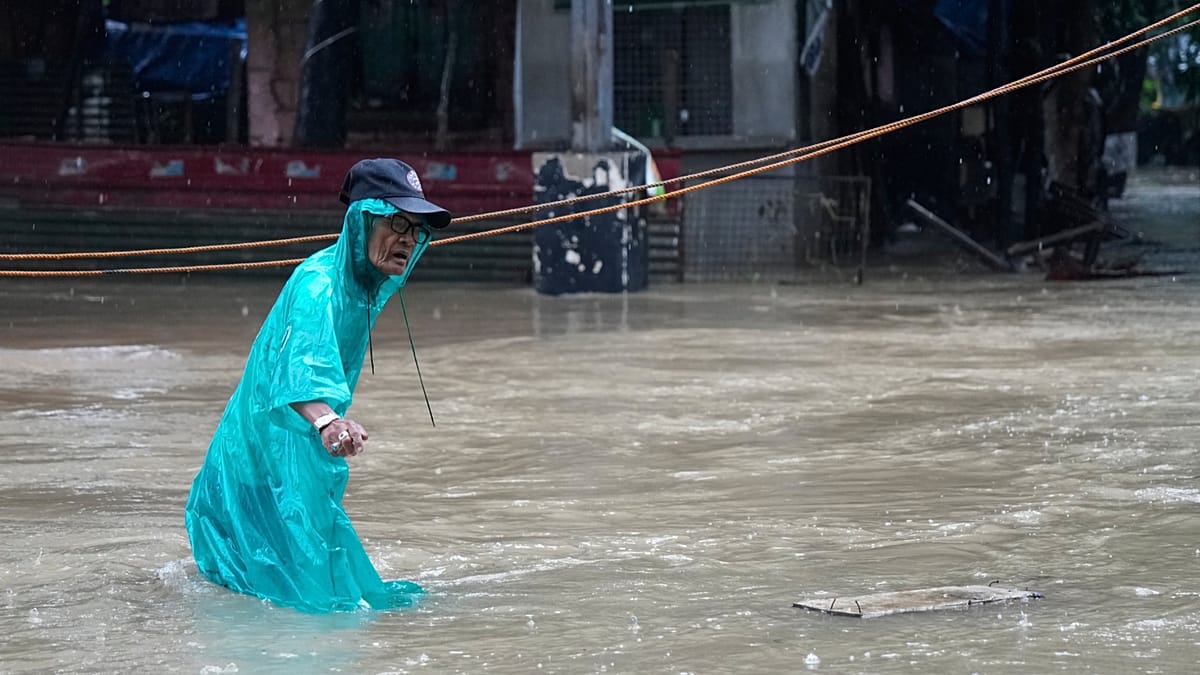
Days of relentless monsoon rain, amplified by tropical storms, have left at least 13 people dead across the northern Philippines, with rescue teams still digging through rubble for six missing residents. The downpour, which in some areas delivered more than a month's worth of rain in just over a week, has triggered floods and landslides on the main island of Luzon and forced widespread closures of schools and government offices.
In the mountain resort city of Baguio, a rain-soaked hillside collapsed onto several houses on Sunday, killing four residents, according to Charles Carame, a city disaster official. Rescuers were working through the debris on Monday, searching for at least six others who remain unaccounted for. The city, a popular getaway about four hours north of the capital Manila, has been hit particularly hard.
State weather forecaster Dan Villamil said Baguio recorded 1,413.2 millimetres of rain between August 1 and 9 — nearly 47 percent more than its typical monthly average of 963.2 millimetres. Parts of Metro Manila, the sprawling capital region, saw rainfall equivalent to about 90 percent of a normal August, he added.
The toll extends beyond Baguio. According to a civil defence office tally, landslides elsewhere on Luzon killed six people, while one person drowned, one was struck by a falling tree, and another was electrocuted. The numbers are expected to rise as floodwaters recede and assessments continue.
Floodwaters receding, but long-term fixes lag
While heavy rain continued into Monday evening, Public Works Secretary Vince Dizon told a news conference that floodwaters were beginning to recede in many areas. “Our interventions are continuing, but we really need to fix the years and decades' worth of faulty flood mitigation interventions,” he said, referring to a long-running scandal over bogus flood-control projects that have cost taxpayers billions of dollars.
The Philippines sits as the first major landmass facing the Pacific cyclone belt, and the archipelago is struck by an average of 20 storms and typhoons each year. This constant exposure has left millions of people in disaster-prone areas trapped in a cycle of poverty, as homes, livelihoods, and infrastructure are repeatedly destroyed.
The latest disaster underscores the broader challenges facing Southeast Asia, where climate change is intensifying rainfall and storm surges. For European readers, the situation offers a stark reminder of the global stakes in climate adaptation — a theme that resonates from the Basque Country's pioneering health research to the EU's own disaster-preparedness funding.
As rescue operations continue, the Philippine government faces mounting pressure to address systemic weaknesses in flood control and urban planning. The scandal over fraudulent infrastructure projects has eroded public trust, and Dizon's comments suggest that meaningful reform will be a long and difficult process.
For now, the immediate priority is finding the missing and supporting the displaced. But the broader lesson — that climate resilience requires sustained investment and accountability — is one that resonates far beyond the archipelago, from the war-torn streets of Kyiv to the flood-prone deltas of Europe.