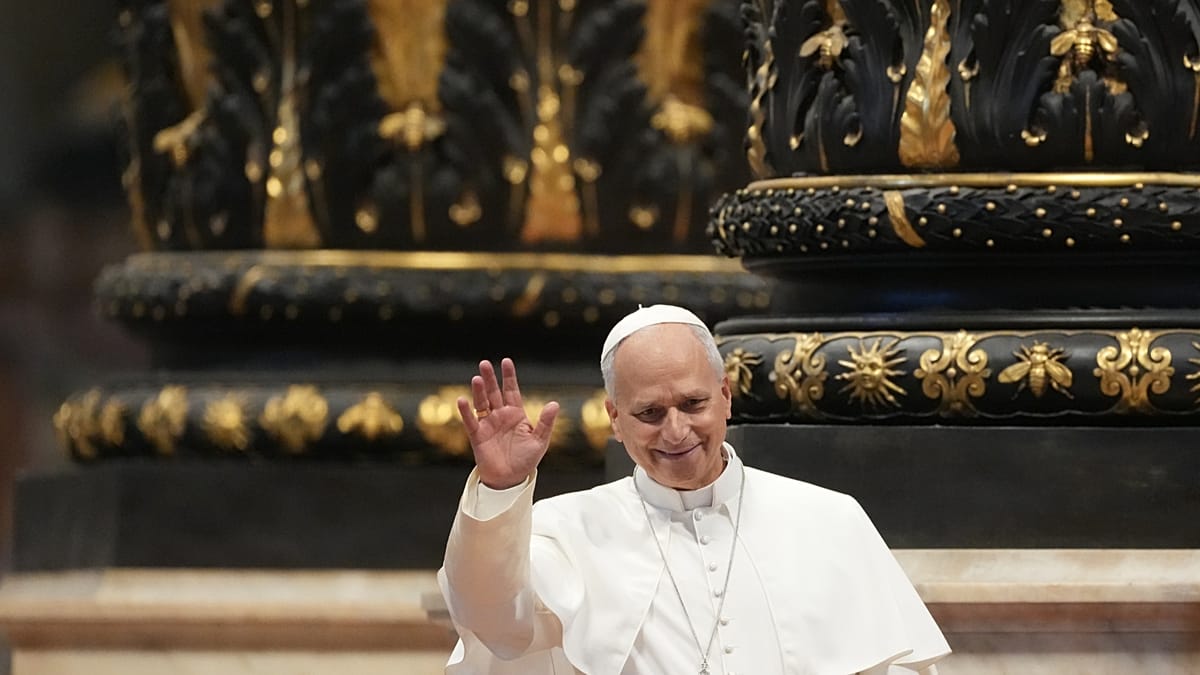
The Vatican confirmed on Wednesday that Pope Leo XIV will travel to Uruguay, Argentina and Peru from 6 to 17 November, marking his first papal visit to South America and a return to the continent where he spent much of his clerical life.
The pope, born Robert Francis Prevost in Chicago, lived in Peru for more than two decades, serving as a missionary and later as bishop of Chiclayo, a city in the country's north. That city will be one of the stops on his Peruvian itinerary, along with Lima, Cusco and Pucallpa.
The Peruvian leg of the journey, scheduled for 11-17 November, will be the final segment of the tour. The pope, who acquired Peruvian citizenship in 2015, will begin his travels in Uruguay, then move to Argentina, marking the first papal visits to those two neighbouring countries in nearly four decades.
A historic return to the Southern Cone
The last pope to visit Argentina was John Paul II in 1987, followed by a trip to Uruguay in 1988. Pope Francis, who was born in Buenos Aires, never returned to his homeland during his pontificate. Pope Leo XIV's predecessor did visit Peru in 2018, but the upcoming trip will be the first by a pontiff to Argentina and Uruguay since the late 1980s.
In Uruguay, the pope will visit Montevideo, Paysandú and Florida from 6 to 8 November. He will then travel to Argentina, where he will stop in Buenos Aires, Córdoba and Luján until 11 November.
The choice of Luján, a major Marian pilgrimage site, underscores the pope's emphasis on popular piety and his pastoral approach. Córdoba, Argentina's second-largest city, is a significant cultural and religious hub, while Paysandú and Florida in Uruguay reflect a focus on smaller, regional communities.
The trip comes at a time when the Catholic Church in Latin America faces challenges, including declining attendance and the rise of evangelical movements. The pope's itinerary, which includes both major urban centres and provincial towns, suggests an effort to connect with a broad spectrum of believers.
Observers note that the pope's personal history in Peru gives the visit a particularly intimate dimension. He has spoken fondly of his years in Chiclayo, where he worked among poor and marginalised communities. His fluency in Spanish and his familiarity with local customs are expected to resonate with the faithful.
The Vatican has not released detailed schedules for each stop, but the trip is expected to include Masses, meetings with clergy and civil authorities, and visits to social projects. The pope's travel to South America also carries geopolitical significance, as the region grapples with political polarisation and economic uncertainty.
In Argentina, the visit will take place against a backdrop of strained relations with some neighbouring countries, as seen in recent diplomatic tensions between Buenos Aires and Brasília. The pope's message of dialogue and reconciliation may offer a counterpoint to regional frictions.
The announcement was made during a routine Vatican press briefing, with officials emphasising the pastoral nature of the journey. The pope has previously expressed a desire to prioritise visits to smaller and less prominent Catholic communities, a preference reflected in the inclusion of cities like Paysandú and Pucallpa.
As preparations begin, local church leaders in all three countries have welcomed the news, expressing hope that the papal visit will invigorate faith communities and draw attention to social issues such as poverty, inequality and environmental degradation.
The trip will be the pope's sixth international journey since his election, following visits to European and African nations. It underscores his commitment to engaging with the global South and his particular affinity for Latin America, a region that has produced a significant share of the world's Catholic population.