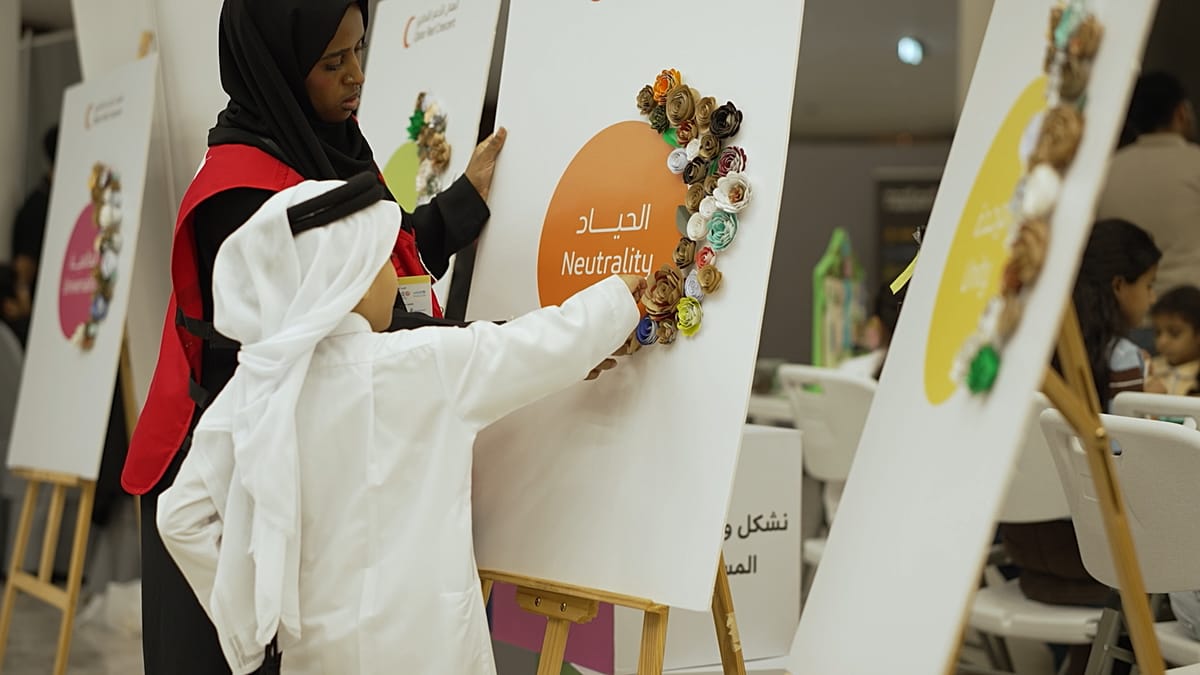
Doha's annual Sustainability Week has wrapped up with a focus on the everyday choices that shape both environmental impact and personal wellbeing. From shopping habits to waste management, schools, businesses, and community groups across Qatar examined how small shifts in behaviour can add up to meaningful change.
At the LuLu hypermarket chain, shoppers were encouraged to bring reusable bags and to return empty bottles and old electronics for recycling. Schoolchildren played a prominent role, speaking directly to customers about the benefits of ditching single-use plastic bags. The campaign mirrors similar retail-driven initiatives seen across Europe, where consumer pressure and regulation have pushed supermarkets to rethink packaging and waste.
From banana peels to pesto: rethinking food waste
At Qatar Foundation's Green Island in Education City, year-round programmes for schools and companies aim to embed sustainability into daily routines. A permanent exhibition by Enbat, a Doha-based waste management firm, illustrates the resources required to bring a meal to the table and what is lost when food is discarded. Visitors learn how banana peels can become taco filling, potato skins can be transformed into crisps, and carrot tops can be blended into pesto.
These demonstrations are not just culinary curiosities; they underscore a broader point about circular economies. In Europe, similar efforts are gaining traction. For instance, the debate over the carbon footprint of Christmas trees highlights how even festive traditions are being scrutinised for their environmental cost. The principles showcased in Doha—reuse, repurpose, and reduce—are universal, but they carry particular resonance for EU policymakers who are pushing for stricter waste targets under the Circular Economy Action Plan.
The event also touched on carbon tracking, a theme that resonates with European businesses preparing for the EU's Carbon Border Adjustment Mechanism. While Qatar's approach is tailored to its own context, the underlying message is clear: measuring emissions is the first step to reducing them. As global fossil fuel emissions are projected to dip in 2026, the need for robust monitoring tools becomes ever more urgent.
Wellbeing was another key pillar of the week. Organisers argued that sustainability is not just about the planet but also about human health—both physical and mental. This holistic view aligns with a growing body of European research linking green spaces and sustainable lifestyles to improved mental health outcomes. Cities like Copenhagen and Amsterdam have long integrated such principles into urban planning, and Doha's initiatives offer a fresh perspective from the Gulf.
Qatar's sustainability push comes at a time when the Gulf state is deepening its engagement with Europe on multiple fronts. The recent EU-Qatar defence talks signal a broader strategic partnership, while energy cooperation remains a cornerstone of bilateral relations. As Europe accelerates its green transition, exchanges on sustainability practices could become a valuable area of collaboration.
For European readers, the lessons from Doha are twofold. First, grassroots engagement—whether through school programmes or retail campaigns—can drive tangible change. Second, the circular economy is not a distant ideal but a practical toolkit that can be applied in kitchens, offices, and factories alike. The challenge now is to scale these initiatives and embed them into policy frameworks, both in the Gulf and across the EU.