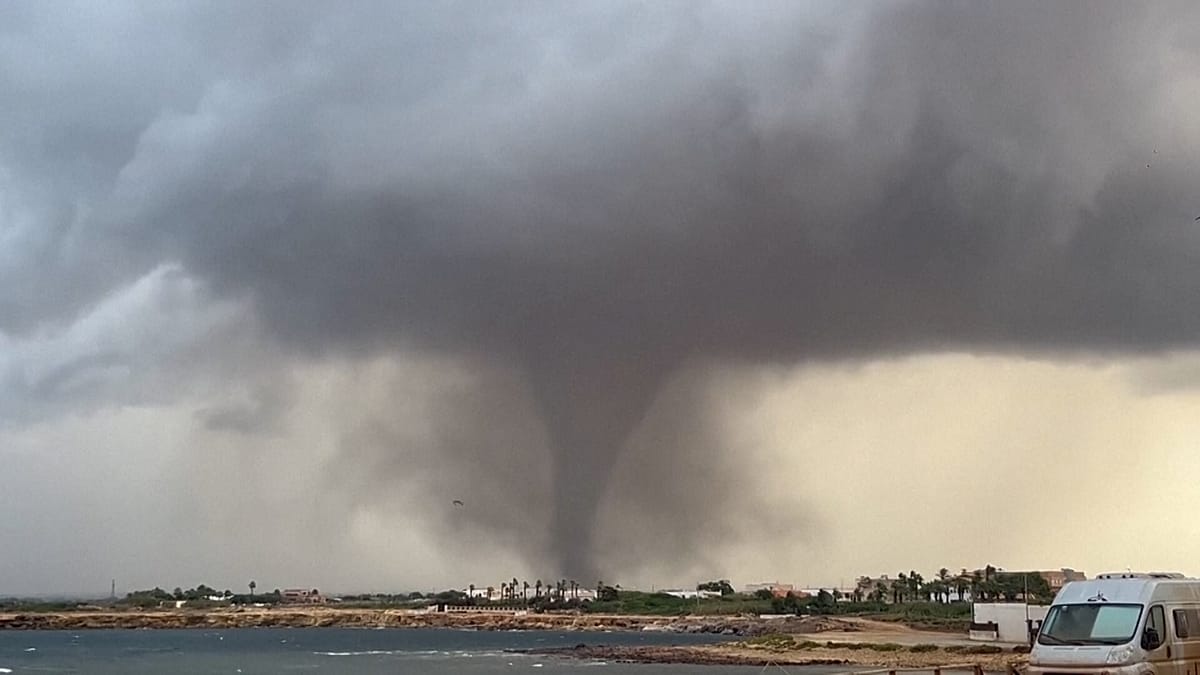
A rare meteorological event unfolded along the western coast of Sicily on Friday as two waterspouts swept ashore, leaving a trail of damage in the towns of Petrosino and nearby areas. The funnels, which formed over the Mediterranean off the coast of Marsala, moved inland toward Trapani, catching residents off guard.
Local authorities reported that the waterspouts damaged residential buildings, vehicles, and a school in Petrosino, a small town known for its vineyards and proximity to the sea. Images circulating on social media showed torn rooftops, shattered windows, and debris scattered across streets. Emergency services were deployed to assess the situation and assist affected families.
Unusual weather for the region
Waterspouts are not unheard of in the Mediterranean, but having two simultaneously strike land is exceptional. Meteorologists noted that the phenomenon was driven by a combination of warm sea surface temperatures and unstable atmospheric conditions, which have become more frequent in recent years due to climate change. The region has experienced a series of extreme weather events, from intense heatwaves to sudden storms, highlighting the growing volatility of the Mediterranean climate.
In Petrosino, the mayor confirmed that the school suffered significant structural damage, though no students were present at the time. "We are grateful that the timing meant no one was injured," he said in a statement. "But the damage is extensive, and we will need state support to repair the damage."
The incident echoes a similar event earlier this year, when a rare twin waterspout struck the same region, injuring two people and damaging schools. That event prompted calls for better early warning systems and infrastructure resilience in coastal communities.
While the immediate focus is on recovery, the repeated occurrence of such phenomena raises questions about preparedness. Italy's civil protection agency has been working on improving local alert systems, but many small towns like Petrosino remain vulnerable to sudden weather extremes.
For residents, the experience was frightening. "I saw the funnel coming from the sea, and within minutes it was on top of us," one local shopkeeper told reporters. "We've never seen anything like this here."
As cleanup efforts begin, the regional government has pledged to assess the damage and provide emergency funds. The school, which serves as a community hub, will likely remain closed for repairs, disrupting classes for hundreds of students.
This event is a stark reminder of the increasing frequency of extreme weather across Europe, from climate-related health impacts to infrastructure challenges. Scientists urge policymakers to invest in climate adaptation, especially in vulnerable coastal zones.
For now, the people of Petrosino are left to pick up the pieces, hoping that such rare phenomena do not become the new normal.